


South Korea considers land permit zones near Gwangju airport for semiconductor cluster development
Translated from Korean, summarized and contextualized by DistantNews.
At a glance
News
Official statement
New plan
- South Korea's Ministry of Land, Infrastructure and Transport is considering designating areas near the Gwangju military airport as land transaction permit zones.
- The move aims to prevent real estate speculation as the area is selected as a site for a semiconductor cluster.
- Similar measures have been used for large development projects like the Yongin semiconductor industrial complex and the Yongsan international business district.
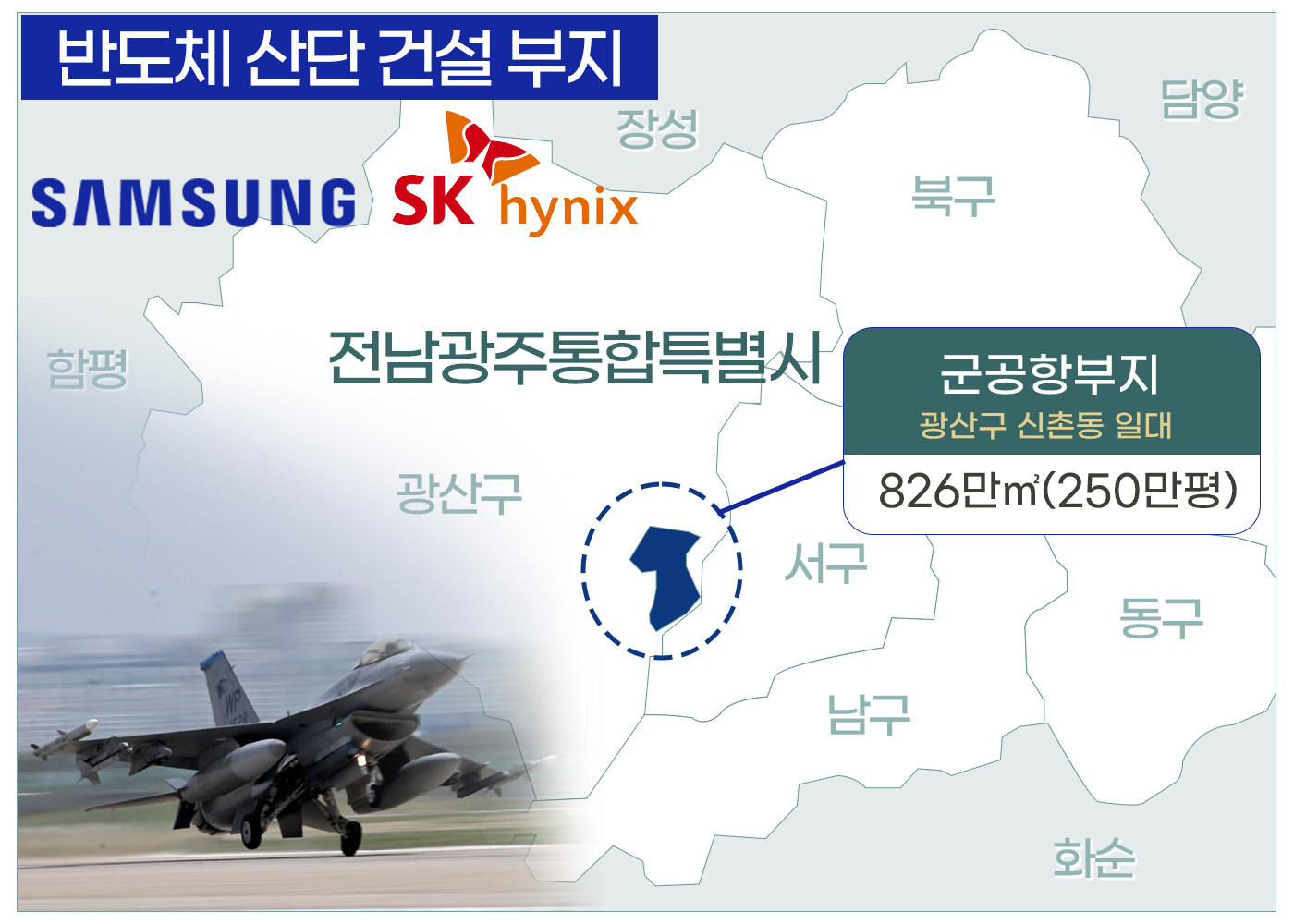
South Korea's Ministry of Land, Infrastructure and Transport is reviewing the designation of land transaction permit zones near the Gwangju military airport. This potential measure comes as the area has been selected as a site for the Honam region's semiconductor cluster. The ministry's goal is to preemptively block speculative demand for real estate, given the scale of the upcoming development project.
The ministry confirmed it is considering designating the vicinity of the Gwangju military airport and the "Jeonnam-Gwangju Special City" as permit zones. Detailed discussions will determine the specific boundaries of the designated areas. Historically, the government has implemented such designations for large-scale development projects to curb speculative trading.
Examples include the designation of Namse-eup and Idong-eup in Yongin, Gyeonggi Province, as permit zones immediately after the announcement of the Yongin semiconductor national industrial complex development plan. Similarly, the Yongsan International Business District in Seoul also saw its project site and surrounding areas designated as permit zones.
When an area is designated as a land transaction permit zone, individuals must obtain permission from the local government chief to trade land above a certain size. This regulation effectively prevents speculative transactions.
DistantNews Editorial
Originally published by Dong-A Ilbo in Korean. Translated, summarized, and contextualized by our editorial team with added local perspective. Read our editorial standards.
More Stories


From Our Blog

What Gets Lost (and Found) When News Is Translated

The Critical Role of Diaspora Media in Global News

What Travellers Should Know About Countries with Restricted Press

A Digital Nomad's Guide to Following Local News

How the Same Story Looks Different in Different Countries
