


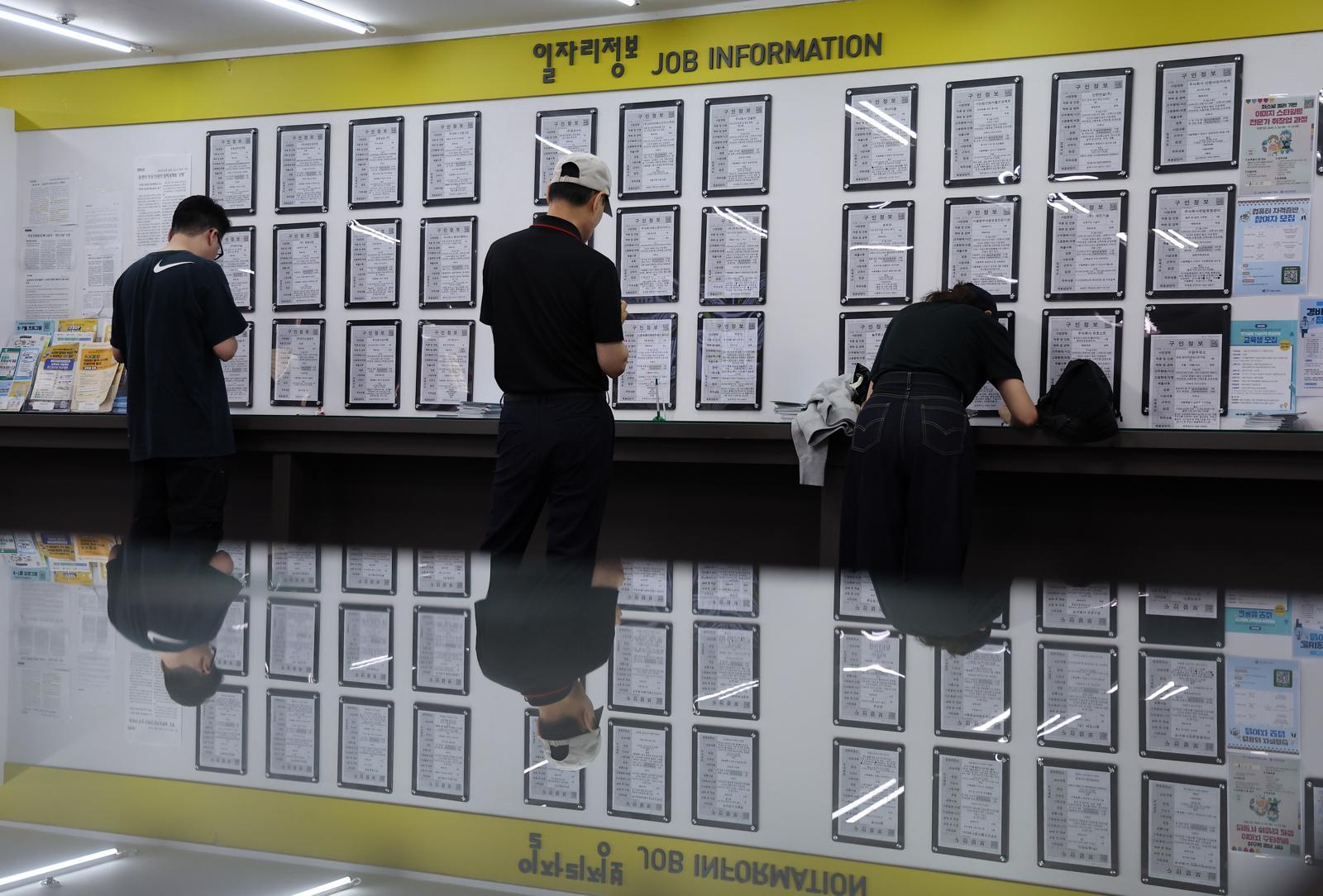
South Korea: Elderly Full-Time Workers Now Outnumber Youth for First Time
Translated from Korean, summarized and contextualized by DistantNews.
At a glance
News
Sources not specified
Context piece
- For the first time, the number of full-time employees aged 60 and over has surpassed that of young people (15-29) in South Korea.
- This shift is attributed to an aging population, companies' preference for experienced workers, and a downturn in manufacturing, making it harder for youth to enter the labor market.
- The trend raises concerns about national growth potential and social stability as quality jobs for young people decline while the elderly workforce expands, particularly in sectors like welfare and healthcare.
South Korea's labor market is undergoing a significant generational shift, with individuals aged 60 and over now outnumbering young workers (15-29) in stable, full-time employment for the first time on record. As of May, there were 2.2 million full-time employees aged 60 and over, compared to 2.12 million in the 15-29 age group, a gap of 76,000.
This phenomenon is driven by a confluence of factors: an aging population, a growing preference among companies for experienced hires, and a slump in the manufacturing sector, which traditionally absorbed many young workers. While the number of young people in the workforce has decreased by 17% over the past four years, the 60+ demographic has seen a remarkable 42.8% surge in full-time employment during the same period.
The current employment market situation should be seen as a side effect of K-shaped polarization growth. The preference for experienced workers by companies, combined with the sluggishness of manufacturing, has led to a shortage of stable jobs for young people to enter. At the same time, elderly people who cannot live on the national pension alone are rushing to enter the job market after retirement.
The decline in quality jobs for young people is particularly concerning. Manufacturing employment, a key sector for job creation, saw its largest year-on-year drop in seven years in May, falling by 140,000 workers. This marks the first time the proportion of manufacturing jobs in the total workforce has fallen below 15% since statistics began in 2013.
Conversely, the expansion of the elderly workforce is fueled by increased life expectancy and the financial pressures of retirement. The healthcare and social welfare sectors, in particular, have seen a boom in employment for older individuals, with their share of total jobs rising from 7.1% in 2016 to 11.9% currently. Experts warn that this shift could weaken the nation's growth potential and social stability if not addressed.
It is not easy to solve the youth employment problem right now, as the semiconductor industry, which drives the Korean economy, does not create many jobs, and other industries are facing a recession. However, policies are urgently needed to provide continuous opportunities for low-skilled young people to be trained and to encourage companies to offer internship programs where young people can gain experience.
DistantNews Editorial
Originally published by Dong-A Ilbo in Korean. Translated, summarized, and contextualized by our editorial team with added local perspective. Read our editorial standards.
More Stories



From Our Blog

What Gets Lost (and Found) When News Is Translated

The Critical Role of Diaspora Media in Global News

What Travellers Should Know About Countries with Restricted Press

A Digital Nomad's Guide to Following Local News

How the Same Story Looks Different in Different Countries
