


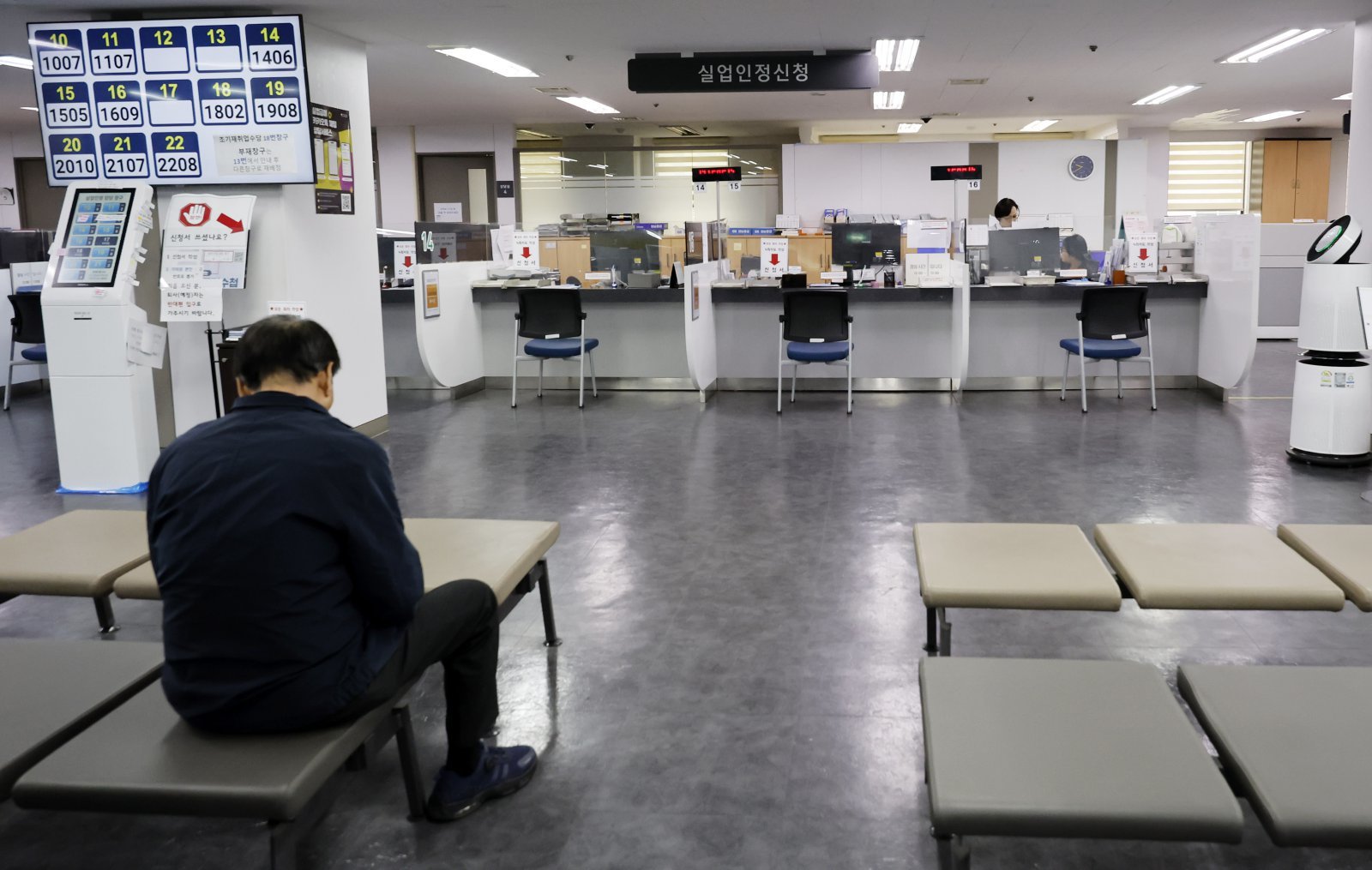
South Korea Faces Million-Strong Unemployment Era; Youth Employment Crisis Demands Urgent Control Tower
Translated from Korean, summarized and contextualized by DistantNews.
TLDR
- South Korea faces a worsening unemployment crisis, with the average number of unemployed individuals surpassing 1 million for the first time since the peak of the COVID-19 pandemic.
- Young people are disproportionately affected, constituting one-quarter of the unemployed, and experiencing their worst employment and highest unemployment rates in five years.
- The article attributes the downturn to the 'AI shock' following the widespread adoption of artificial intelligence, exacerbating existing labor market rigidities and a preference for experienced workers.
The stark reality of 1 million unemployed South Koreans, a figure not seen since the height of the COVID-19 pandemic, demands urgent attention. As Dong-A Ilbo, we observe that this crisis is not merely a cyclical downturn but a structural shift, with young people bearing the brunt of this economic contraction. The data is alarming: one in four unemployed individuals is between 15 and 29 years old, marking the worst youth employment and highest unemployment rates in half a decade.
The average number of unemployed people in the first quarter of this year increased by 5% compared to the same period last year, reaching 1,029,000.
What makes this situation particularly concerning is the emergence of the 'AI shock.' Since the advent of technologies like ChatGPT, artificial intelligence has begun to permeate every sector, leading to job displacement, especially in fields traditionally favored by young graduates. We are seeing a clear trend where AI is not only failing to create sufficient new jobs for the youth but is actively eroding the entry-level positions they once aspired to. This is compounded by a rigid labor market that favors experienced workers, leaving young job seekers in an increasingly precarious position.
More seriously, the main reason is youth unemployment.
The implications extend beyond individual hardship. While companies might see short-term cost savings by reducing new hires, the long-term consequence is a potential deficit of skilled labor. The government, under President Lee Jae-myung's administration, has acknowledged the severity, with plans for a 'Youth New Deal' initiative. However, as we at Dong-A Ilbo argue, the immediate need is a robust 'control tower' for youth employment policy. Without decisive action and a dedicated governmental body focused on this crisis, South Korea risks a future where a generation is left behind, unable to gain the skills and experience necessary to thrive in an AI-driven economy. This is a uniquely Korean challenge, demanding solutions tailored to our specific industrial structure and demographic pressures, which often go unaddressed in broader international analyses.
The employment rate and unemployment rate for youth recorded their lowest and highest in five years, respectively.
DistantNews Editorial
Originally published by Dong-A Ilbo in Korean. Translated, summarized, and contextualized by our editorial team with added local perspective. Read our editorial standards.
More Stories


From Our Blog

What Gets Lost (and Found) When News Is Translated

The Critical Role of Diaspora Media in Global News

What Travellers Should Know About Countries with Restricted Press

A Digital Nomad's Guide to Following Local News

How the Same Story Looks Different in Different Countries
