


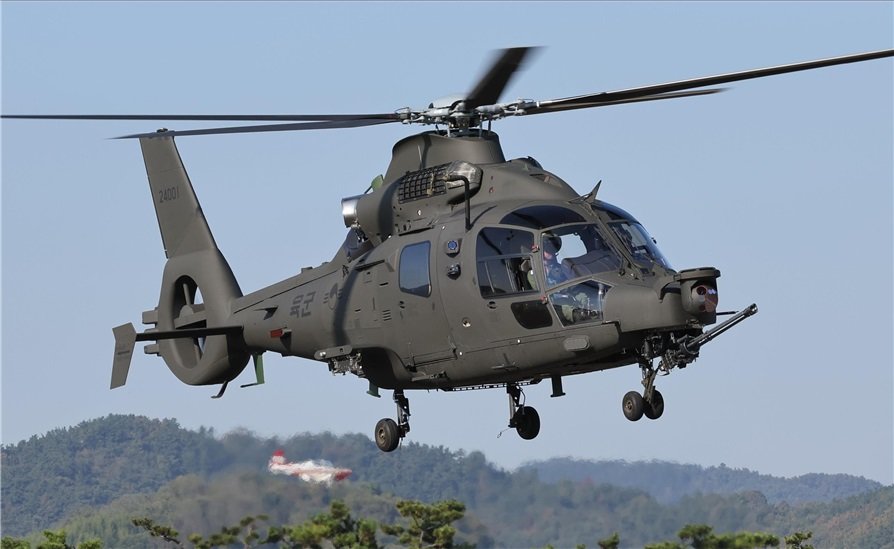
South Korea grounds new Miron attack helicopter over engine defects
Translated from Korean, summarized and contextualized by DistantNews.
At a glance
News
Sources not specified
Ongoing story
- South Korea's next-generation LAH-1 Miron attack helicopter has been grounded due to engine defects found in most of the assembled units.
- Of 57 engines, 47 showed corrosion and 38 had cracks in the diffuser component, leading to a flight suspension for 15 operational aircraft.
- The Defense Acquisition Program Administration is investigating the cause, improving manufacturing processes, and strengthening quality control to minimize delays in the helicopter's planned deployment.
South Korea's domestically developed LAH-1 Miron attack helicopter faces a significant setback as widespread engine defects have grounded the fleet. Of the 57 engines assembled by Hanwha Aerospace, a staggering 47 exhibited corrosion, with 38 showing cracks in the critical diffuser component. These issues were discovered in 15 aircraft already deployed by the Army's aviation school.
The relevant part (diffuser) is a domestically developed item, and we are currently conducting a detailed analysis of the cause of the defect with relevant agencies and the manufacturer.
The Defense Acquisition Program Administration (DAPA) confirmed the flight suspension, which began in April after the engine anomalies were detected. DAPA stated that the diffuser is a domestically developed part and that a joint investigation with relevant agencies and the manufacturer is underway to pinpoint the exact cause of the defects.
We are also implementing necessary measures to ensure the supply of engines with secured safety and reliability by improving the manufacturing process based on the cause analysis results and further strengthening quality inspection procedures such as visual and non-destructive testing.
In response, DAPA is implementing measures to enhance safety and reliability. These include improving the manufacturing process based on the investigation's findings and reinforcing quality inspection procedures, such as visual and non-destructive testing. The administration aims to expedite repairs and follow-up actions to minimize the impact on the helicopter's deployment schedule, which plans for over 160 units by 2031. This incident has raised concerns about potential delays in the deployment timeline and pilot training for the Miron, intended to replace aging 500MD and Cobra attack helicopters.
We plan to minimize the impact on the deployment schedule by promptly proceeding with defect repair and follow-up measures in close cooperation with relevant agencies and companies.
DistantNews Editorial
Originally published by Dong-A Ilbo in Korean. Translated, summarized, and contextualized by our editorial team with added local perspective. Read our editorial standards.
More Stories



From Our Blog

What Gets Lost (and Found) When News Is Translated

The Critical Role of Diaspora Media in Global News

What Travellers Should Know About Countries with Restricted Press

A Digital Nomad's Guide to Following Local News

How the Same Story Looks Different in Different Countries
