


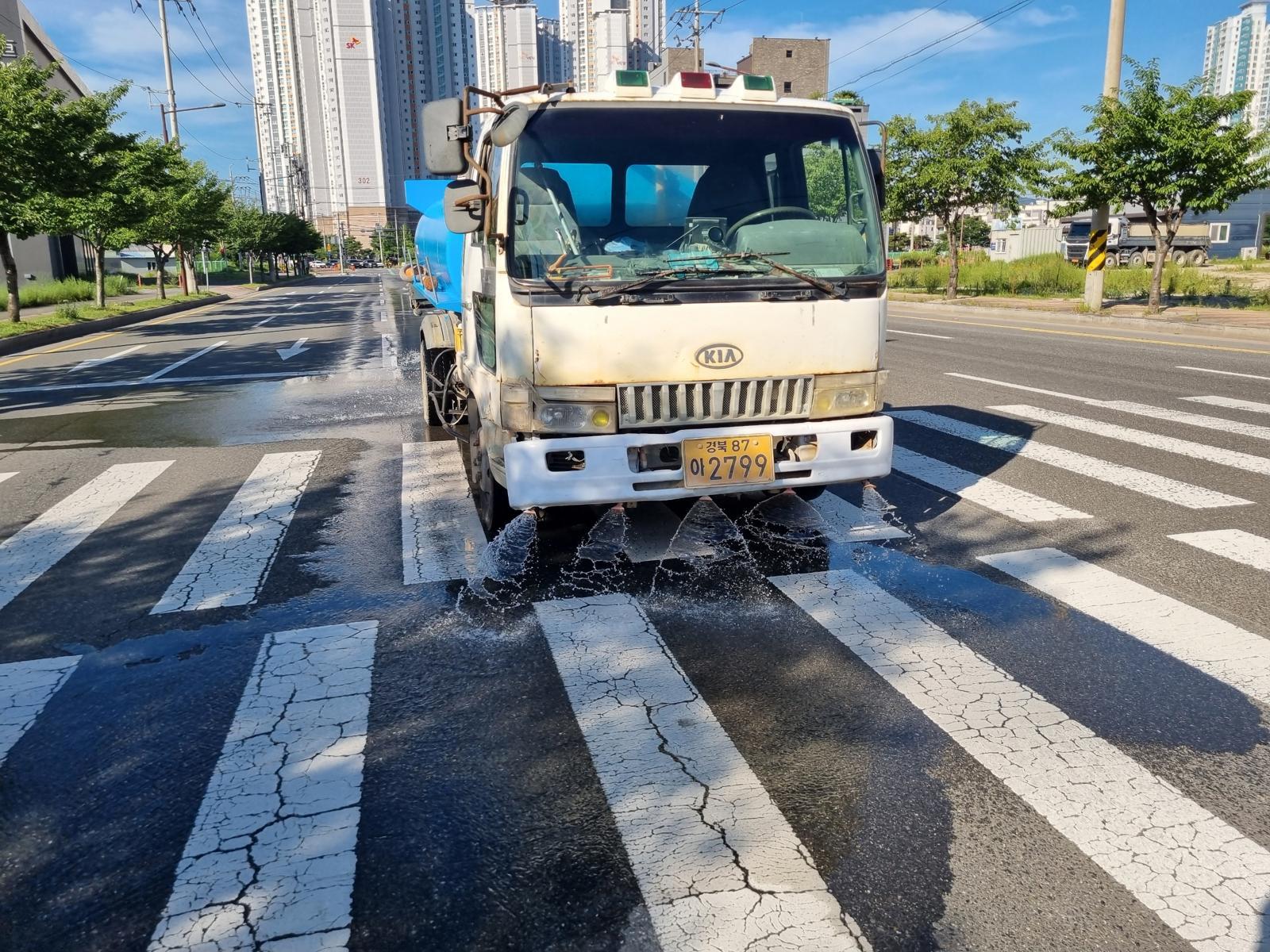
South Korea Issues First 'Extreme Heat Emergency Alert' for Gyeongsan, Pohang
Translated from Korean, summarized and contextualized by DistantNews.
At a glance
News
Named sources
Context piece
- South Korea issued its first-ever 'Extreme Heat Emergency Alert' for the cities of Gyeongsan and Pohang on July 12.
- The alert signifies a high risk of severe health issues or death from heatstroke, even for healthy individuals.
- Heatwaves are expected to peak on July 13, with temperatures reaching up to 38 degrees Celsius (100.4 degrees Fahrenheit) in affected areas.
South Korea issued its first 'Extreme Heat Emergency Alert' on July 12, targeting the cities of Gyeongsan and Pohang. This highest level of heat warning, newly established this year, indicates a severe risk to public health, with even healthy individuals facing a high chance of heatstroke or death.
The alert was issued at 10 a.m. as temperatures in these regions had already exceeded 35 degrees Celsius (95 degrees Fahrenheit) for two consecutive days. The forecast predicted temperatures would reach 39 degrees Celsius (102.2 degrees Fahrenheit) or a perceived temperature of 38 degrees Celsius (100.4 degrees Fahrenheit) for at least another day.
The Extreme Heat Emergency Alert means that the risk of serious damage such as heat-related illness or death is very high even for healthy people.
Authorities urged immediate cessation of all non-essential outdoor activities, including work and exercise. Residents were advised to seek refuge in air-conditioned spaces or designated cooling centers. A strong emphasis was placed on checking on vulnerable populations, such as the elderly, to prevent heat-related casualties.
Immediately stop unnecessary outdoor activities such as outdoor work and exercise, and move to a cool place such as a cooling facility or a heatwave shelter.
The heatwave is attributed to a combination of high-pressure systems, the Tibetan anticyclone and the North Pacific anticyclone, creating a descending air mass that raises temperatures. Southwest winds then carry hot and humid air, further increasing the perceived heat. In the Gyeongsan and Pohang region, a phenomenon known as Foehn wind, where air warms as it descends mountains, combined with basin topography, intensifies the heat.
While a peak is expected on July 13, with overnight lows failing to drop sufficiently for relief, some areas might see temporary cooling from scattered showers on the afternoon of July 13. However, meteorologists warn that high humidity and strong sunlight after the rain could quickly drive up temperatures again, prolonging the extreme heat.
Please pay special attention to preventing heat damage, such as frequently checking on the well-being of family and neighbors, especially the elderly.
DistantNews Editorial
Originally published by Dong-A Ilbo in Korean. Translated, summarized, and contextualized by our editorial team with added local perspective. Read our editorial standards.
More Stories

From Our Blog

What Gets Lost (and Found) When News Is Translated

The Critical Role of Diaspora Media in Global News

What Travellers Should Know About Countries with Restricted Press

A Digital Nomad's Guide to Following Local News

How the Same Story Looks Different in Different Countries
