


South Korea issues Japanese encephalitis alert after virus found in Daegu mosquitoes
Translated from Korean, summarized and contextualized by DistantNews.
At a glance
News
Sources not specified
New plan
- Health authorities have issued a Japanese encephalitis alert nationwide after detecting the virus in mosquitoes in Daegu.
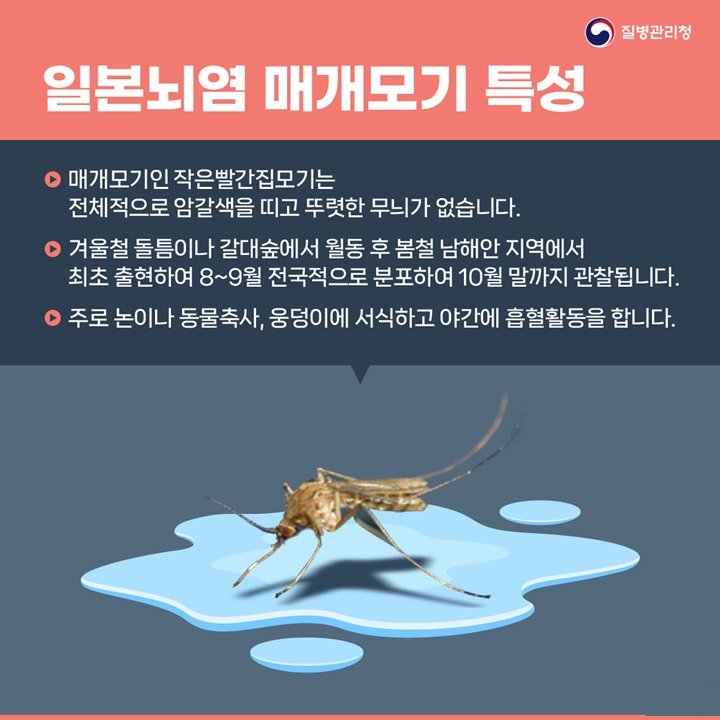
- The virus was found in the Culex pipiens mosquito, which breeds in urban stagnant water sources.
- Officials urge adherence to mosquito bite prevention and recommend vaccination for children and at-risk adults.
South Korea has raised a nationwide alert for Japanese encephalitis following the detection of the virus in mosquitoes collected in Daegu, health officials announced Wednesday.
The Korea Disease Control and Prevention Agency (KDCA) confirmed the virus's presence in the Culex pipiens mosquito, a species known to inhabit small, stagnant water bodies within urban areas like septic tanks and artificial containers. This marks an escalation in monitoring efforts, which now include this mosquito species alongside the previously tracked Aedes japonicus.
Japanese encephalitis typically has an incubation period of 5 to 15 days. While most infections are asymptomatic or cause mild symptoms like fever and headache, a small percentage can progress to severe encephalitis. This severe form can lead to high fever, seizures, confusion, paralysis, and disorientation, with a mortality rate of 20-30%. Even among survivors, 30-50% may experience long-term neurological complications.
Given the detection of the Japanese encephalitis virus and the issuance of an alert, please pay special attention to mosquito bite prevention rules and ensure children eligible for national essential vaccinations receive them.
In response, the KDCA is urging the public to strictly follow mosquito bite prevention guidelines. Vaccination is strongly recommended for children born after 2013 as part of the national immunization program. Adults over 18 who have not been vaccinated and reside in or plan to visit high-risk areas, such as near rice paddies or pig farms, are also advised to consider vaccination, which is available at a cost.
Local authorities have been instructed to intensify comprehensive mosquito control measures. This includes prioritizing larval control in urban stagnant water sources and adult mosquito control in areas where they rest, such as basements and dense vegetation, to minimize the risk of further infections.
We request that each local government prioritize larval control in stagnant water sources within urban areas where mosquitoes breed, and concurrently implement adult control measures in resting places like basements and dense vegetation, to thoroughly manage and minimize patient 발생.
DistantNews Editorial
Originally published by Dong-A Ilbo in Korean. Translated, summarized, and contextualized by our editorial team with added local perspective. Read our editorial standards.
More Stories


From Our Blog

What Gets Lost (and Found) When News Is Translated

The Critical Role of Diaspora Media in Global News

What Travellers Should Know About Countries with Restricted Press

A Digital Nomad's Guide to Following Local News

How the Same Story Looks Different in Different Countries
