


South Korea launches 'Safe Trust' to combat jeonse scams, offer stable returns
Translated from Korean, summarized and contextualized by DistantNews.
At a glance
News
Named sources
New plan
- South Korea's Housing & Urban Guarantee Corporation (HUG) will launch a 'Safe Trust' program in September to manage jeonse deposits.
- The program aims to prevent jeonse scams by guaranteeing landlords an annual return of around 4% while reducing tenants' monthly rent burdens.
- HUG will invest the deposits in housing projects, using profits to pay monthly returns to landlords, and will offer low-interest loans to tenants.
South Korea's Housing & Urban Guarantee Corporation (HUG) is set to launch its 'Safe Trust' program in September, designed to manage jeonse (lump-sum deposit) funds and mitigate risks associated with rental scams. The initiative aims to provide landlords with a stable annual return of approximately 4% while simultaneously easing the financial pressure on tenants paying monthly rent.
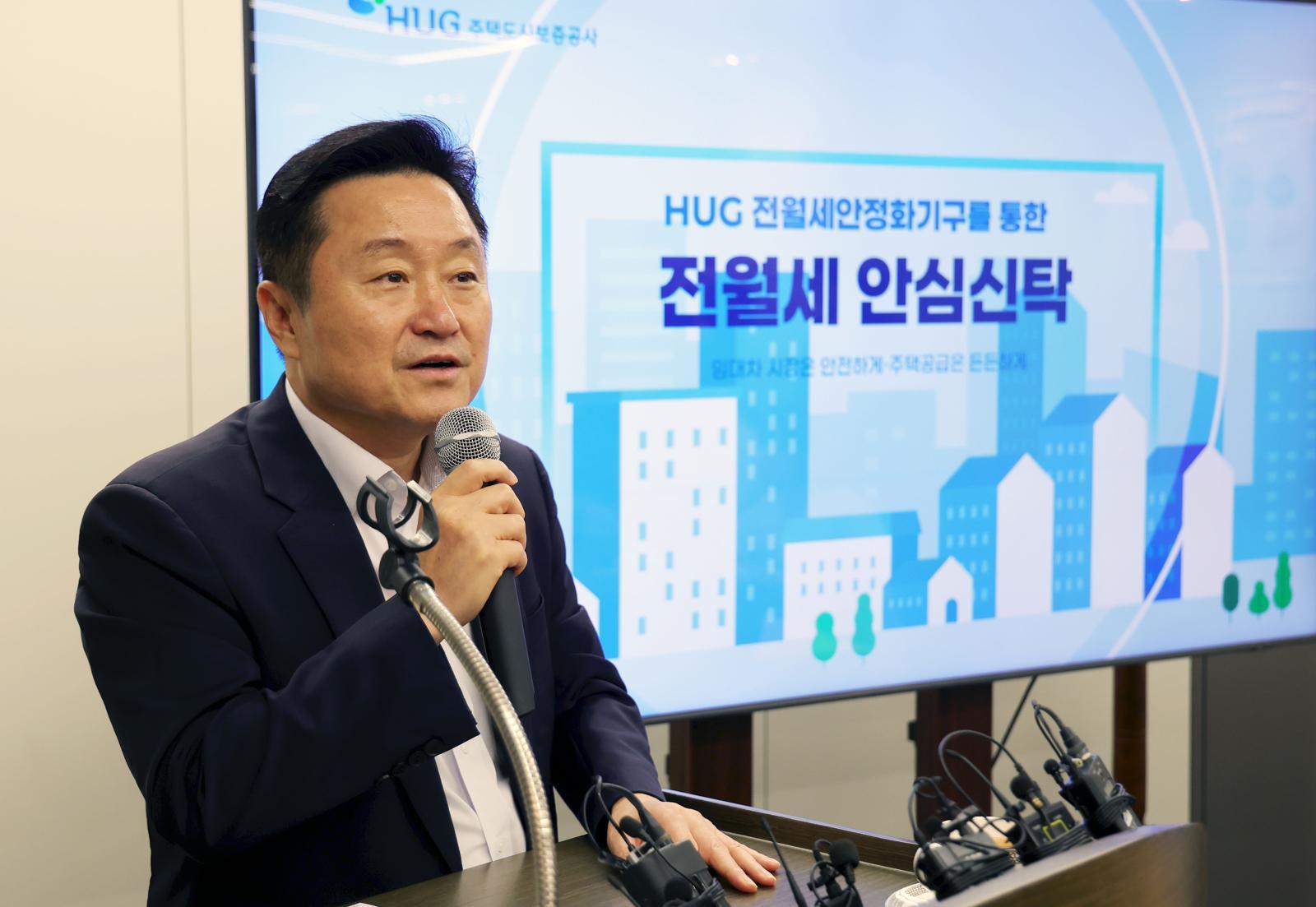
HUG President Choi In-ho announced at a press conference that the program will begin accepting applications in September, with pilot move-ins scheduled for December and full implementation expected by January 2027. The 'Safe Trust' operates on a three-party agreement involving HUG, the landlord, and the tenant. HUG will receive jeonse deposits from tenants and invest them in housing projects through mechanisms like project financing (PF) guarantees.
The profits generated from these investments will be distributed to landlords as monthly payments, akin to rent. HUG plans to guarantee landlords an annual return of around 4%, offering consistent payments even during vacancies for up to two months. Choi emphasized the safety of PF guarantee projects, citing a low accident rate of 0.3% over the past five years. Furthermore, HUG has collaborated with the Ministry of Economy and Finance to reduce rental income tax rates for landlords and increase deductions, while also exempting registered landlords from mandatory jeonse deposit return guarantee insurance, thereby lowering their costs.
Starting in September, recruitment announcements for the Safe Trust will be issued.
For tenants, the program offers enhanced security against jeonse scams, as HUG will directly return deposits upon contract expiration. It also promises to reduce their financial burden by requiring only a small portion of the deposit as monthly interest, which is lower than typical monthly rent payments. For instance, converting a ₩200 million jeonse deposit on a villa in Seoul to a monthly rent scenario would incur a monthly rent of ₩740,000, whereas the interest on a ₩160 million loan (80% of the deposit) at an annual rate of 3.97% would be approximately ₩530,000, saving tenants about ₩200,000 monthly. HUG is also in discussions with banks to offer specialized low-interest loan products.
The program aims to secure ₩15 trillion in annual deposits, targeting approximately 50,000 homes valued under ₩2 billion. While applications are open to various contract types, including semi-monthly rent arrangements, HUG reserves the right to reject contracts where the jeonse price is excessively inflated compared to market value or if the property is an illegal structure. The initiative will also pilot with 500 units of Korea Land & Housing Corporation's (LH) purchased rental housing. However, some observers note that landlords might be hesitant due to their funds being tied up in the trust, preventing them from using the capital for other investments like purchasing property.
The PF guarantee business has had an accident rate of 0.3% over the past five years, making it a safe business.
DistantNews Editorial
Originally published by Dong-A Ilbo in Korean. Translated, summarized, and contextualized by our editorial team with added local perspective. Read our editorial standards.
More Stories


From Our Blog

What Gets Lost (and Found) When News Is Translated

The Critical Role of Diaspora Media in Global News

What Travellers Should Know About Countries with Restricted Press

A Digital Nomad's Guide to Following Local News

How the Same Story Looks Different in Different Countries
