


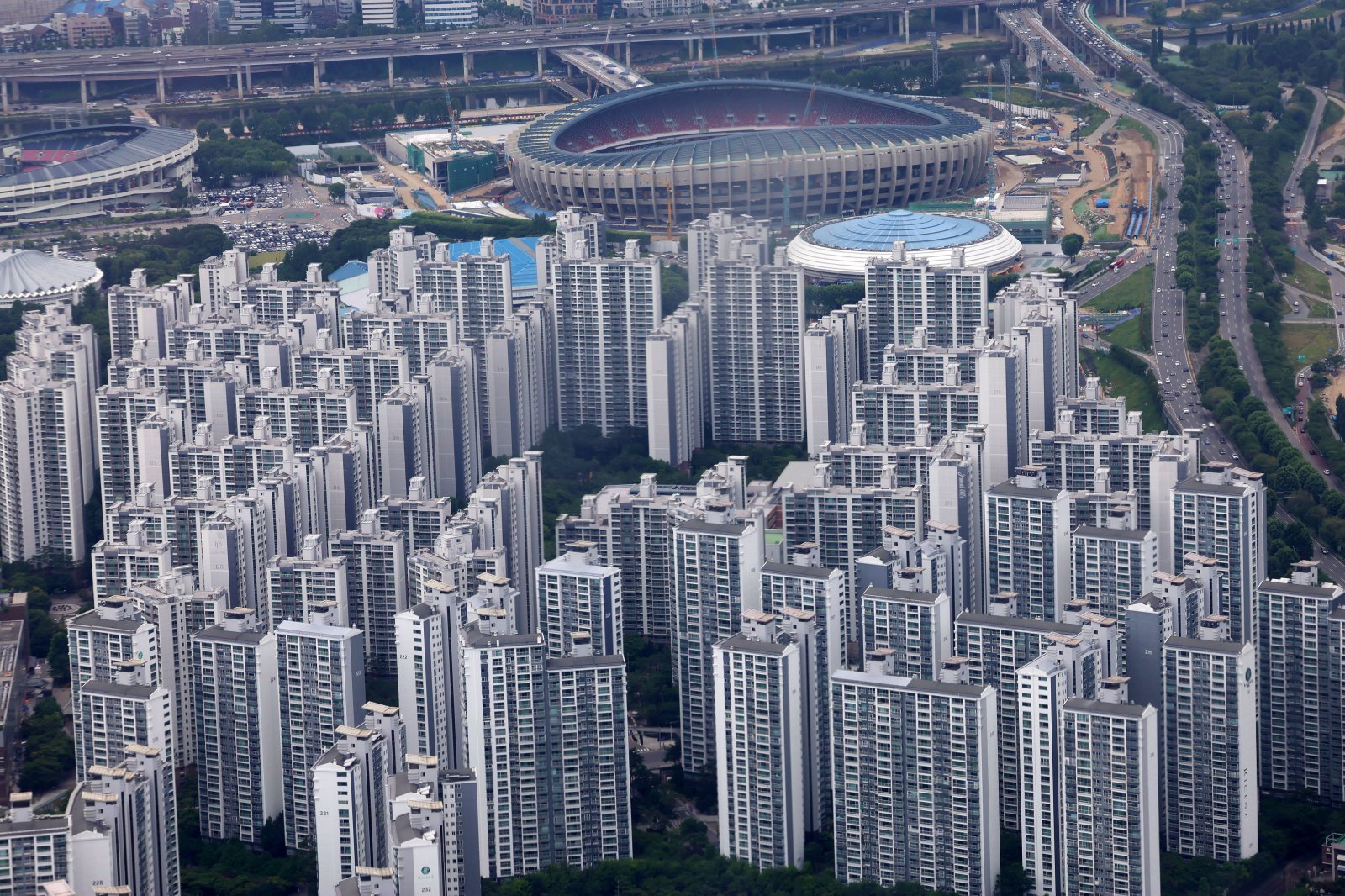
South Korea leads OECD in capital region concentration amid global dispersion trend
Translated from Korean, summarized and contextualized by DistantNews.
At a glance
News
Sources not specified
Context piece
- South Korea and Japan show increasing concentration in their capital regions, unlike most OECD countries where it is easing.
- Seoul's metropolitan area's population share rose to 43.3% in 2023, the highest among OECD nations.
- High housing costs and changing work patterns are cited as reasons for urban dispersion in other developed countries, while job and income expectations drive concentration in Korea and Japan.
While many developed nations are seeing a decentralization from major cities, South Korea and Japan are moving in the opposite direction, with a growing concentration of their populations in capital regions. Analysis of OECD member countries reveals that 60% of nations have experienced a decline in urban concentration, with averages peaking in 2021 and showing a downward trend.
South Korea's situation is particularly stark. The proportion of its population residing in the Seoul metropolitan area has actually increased, rising from 42.1% in 2010 to 43.3% in 2023. This makes it the most concentrated capital region among OECD countries. In contrast, countries like Germany and Norway show a clear trend of population dispersion.
Globally, factors such as high housing costs and the rise of remote work have contributed to people moving away from expensive urban centers. In Seoul, however, the primary draw for remaining in the capital region is the expectation of better job opportunities and higher incomes. Despite this, the actual income gap between the Seoul metropolitan area and the rest of the country has been narrowing, suggesting that the perceived economic advantage may not fully justify the intense concentration.
Efforts to mitigate this one-sided concentration are underway in various countries, including Indonesia's relocation of its capital and South Korea's move of some administrative functions to Sejong City. Experts emphasize the need to ease over-concentration to prepare for potential crises, such as economic downturns or natural disasters.
DistantNews Editorial
Originally published by Dong-A Ilbo in Korean. Translated, summarized, and contextualized by our editorial team with added local perspective. Read our editorial standards.
More Stories



From Our Blog

What Gets Lost (and Found) When News Is Translated

The Critical Role of Diaspora Media in Global News

What Travellers Should Know About Countries with Restricted Press

A Digital Nomad's Guide to Following Local News

How the Same Story Looks Different in Different Countries
