


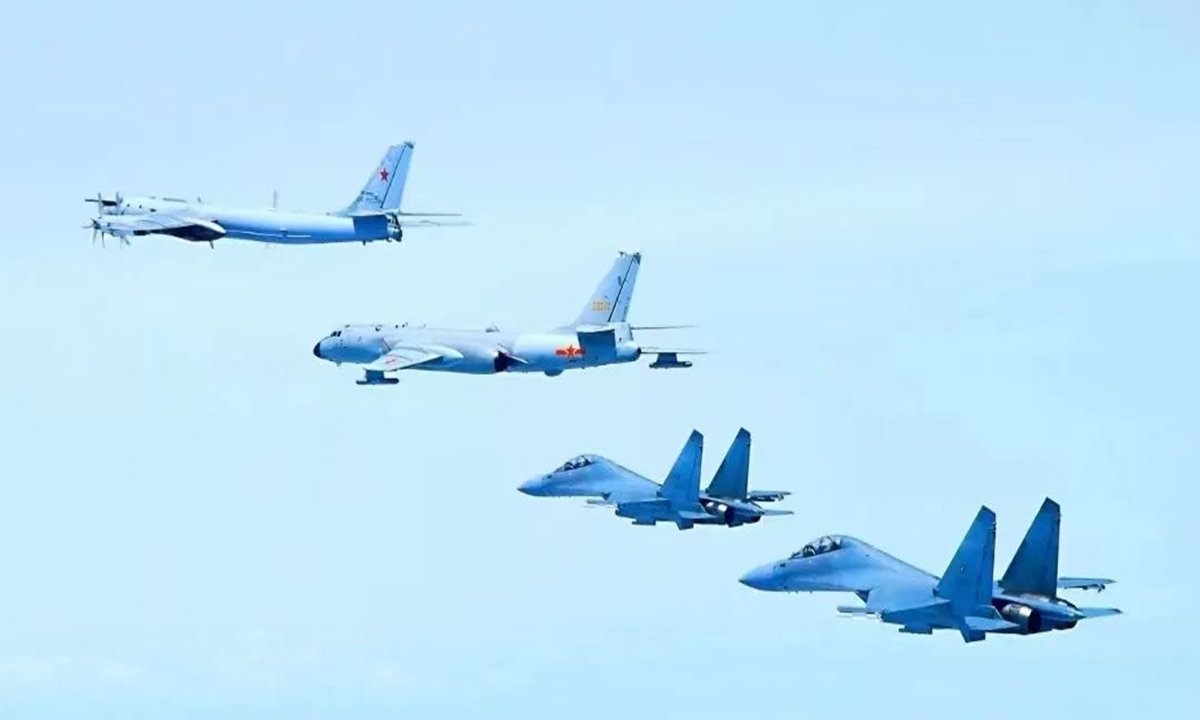
South Korea Protests Chinese and Russian Military Aircraft's Unannounced Entry into KADIZ
Translated from Korean, summarized and contextualized by DistantNews.
At a glance
News
Named sources
New plan
- South Korea's Ministry of National Defense lodged a strong protest with China and Russia over their military aircraft entering the Korean Air Defense Identification Zone (KADIZ) without prior notice.
- Approximately 10 Chinese and Russian military aircraft entered the KADIZ for about four hours on the morning of the 27th, flying in sequence before departing.
- This joint patrol by China and Russia is seen as a veiled warning to South Korea and Japan, occurring as Japan's Defense Minister visited Seoul.
South Korea's Ministry of National Defense announced on the 28th that it had lodged a strong protest with China and Russia regarding their military aircraft's unauthorized entry into the Korean Air Defense Identification Zone (KADIZ). Lee Gwang-seok, Director of International Policy at the Ministry of National Defense, formally protested to the Chinese and Russian defense attachés in Seoul, urging them to prevent recurrence.
According to military sources, around 10 Chinese and Russian bombers and fighter jets sequentially entered the KADIZ on the morning of the 27th, remaining for approximately four hours without prior notification before exiting. This marks the second such joint incursion into the KADIZ since the current South Korean administration took office, and the first in six months since a similar incident in December.
In response, the South Korean military deployed fighter jets to implement tactical measures and prepare for potential contingencies. Meanwhile, China's Ministry of National Defense, via its website, claimed that the two countries' air forces had organized and conducted their 11th joint aerial strategic patrol over the waters of the East Sea (Korean East Sea) and the western Pacific. They asserted that this demonstrated their resolve and capability to jointly safeguard regional peace and stability.
This joint military activity is interpreted by observers as a strategic display aimed at both South Korea and Japan. The patrol occurred on the same day that Japanese Defense Minister Shigeru Koizumi arrived in Seoul for a meeting with his South Korean counterpart. The incursion into the KADIZ, while not violating sovereign airspace, is considered a breach of international practice, which typically requires military aircraft to submit flight plans and notify authorities of their entry and location.
The two countries' air forces organized and conducted their 11th joint aerial strategic patrol... demonstrating their resolve and capability to jointly safeguard regional peace and stability.
DistantNews Editorial
Originally published by Dong-A Ilbo in Korean. Translated, summarized, and contextualized by our editorial team with added local perspective. Read our editorial standards.
More Stories



From Our Blog

What Gets Lost (and Found) When News Is Translated

The Critical Role of Diaspora Media in Global News

What Travellers Should Know About Countries with Restricted Press

A Digital Nomad's Guide to Following Local News

How the Same Story Looks Different in Different Countries
