


South Korea races to legislate stablecoins by September amid U.S. push for dollar dominance
Translated from Korean, summarized and contextualized by DistantNews.
At a glance
News
Sources not specified
Context piece
- South Korean lawmakers are pushing to pass legislation on stablecoins by September, aiming to align with global digital asset trends and protect national financial sovereignty.
- A seminar discussed the U.S. strategy to leverage stablecoins for dollar hegemony, highlighting the need for South Korea to develop its own won-based stablecoin.
- Experts warned that without swift action, South Korea risks falling behind in the rapidly evolving digital asset landscape, potentially losing market share and economic influence.
South Korean lawmakers are accelerating efforts to legislate stablecoin regulations, with a target to introduce a bill by September. This move comes amid global shifts in digital asset governance, particularly the United States' strategic push to solidify its financial dominance through stablecoin legislation.
We will propose the final bill as early as September.
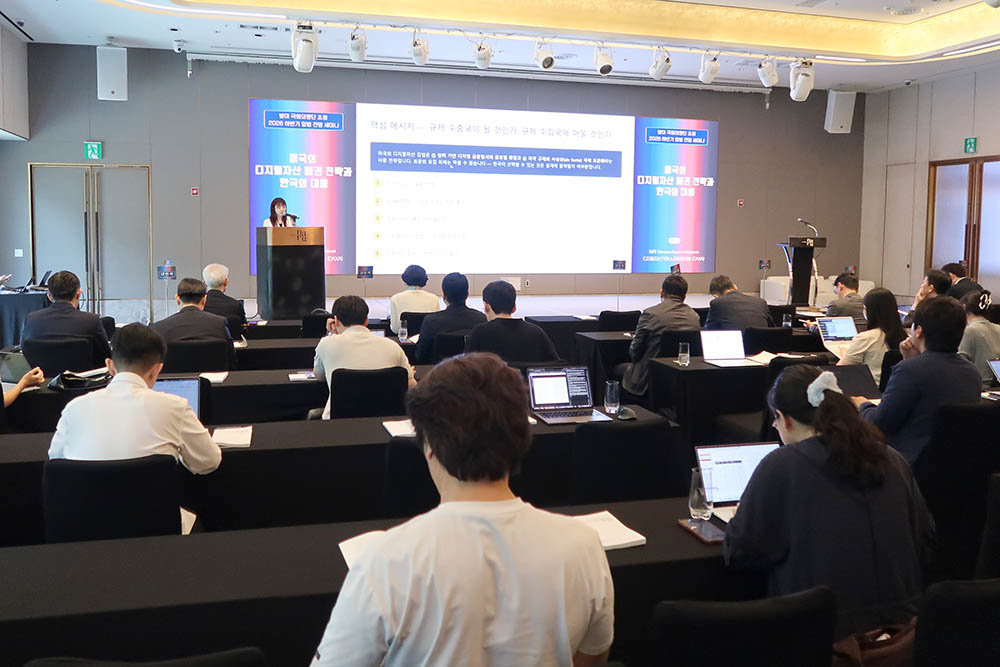
A recent seminar, "U.S. Digital Asset Hegemony Strategy and Korea's Response," brought together lawmakers and experts to discuss the implications of U.S. initiatives like the GENIUS Act and CLARITY Act. Han Seo-hee, a lawyer at Bae, Kim & Lee, presented insights from a U.S. visit, explaining how American regulations aim to expand dollar hegemony by requiring stablecoin issuers to hold U.S. Treasury bonds. This strategy, she noted, could bolster U.S. debt demand and extend dollar influence into emerging markets.
The U.S. has the intention to spread the regulatory framework it preemptively created throughout the world based on abundant dollar liquidity.
Lawmakers like Park Min-kyu of the Democratic Party of Korea expressed urgency, stating a bill could be introduced as early as September. Min Byung-deok, also from the Democratic Party, emphasized that the U.S. is strategically integrating digital assets into its financial system, creating a vast digital dollar market. He warned that South Korea's slow progress in developing a won-based stablecoin could lead to the dollar dominating the local market, eroding national industrial competitiveness and financial sovereignty.
This is not simply about tidying up digital asset regulations, but about expanding the financial order into the digital realm.
The urgency stems from the potential for U.S.-compliant stablecoins to become standard for international trade and settlement by 2027. Without a similar framework, South Korea risks being sidelined. Experts stressed the need for a "Korean-style onshoring" strategy within a foundational digital asset law, encouraging domestic investment and attracting overseas capital. Banks are also urged to prepare for handling stablecoins as foreign exchange transactions.
If the rules are late and demand is late, opportunities will inevitably flow overseas.
DistantNews Editorial
Originally published by Dong-A Ilbo in Korean. Translated, summarized, and contextualized by our editorial team with added local perspective. Read our editorial standards.
More Stories


From Our Blog

What Gets Lost (and Found) When News Is Translated

The Critical Role of Diaspora Media in Global News

What Travellers Should Know About Countries with Restricted Press

A Digital Nomad's Guide to Following Local News

How the Same Story Looks Different in Different Countries
