


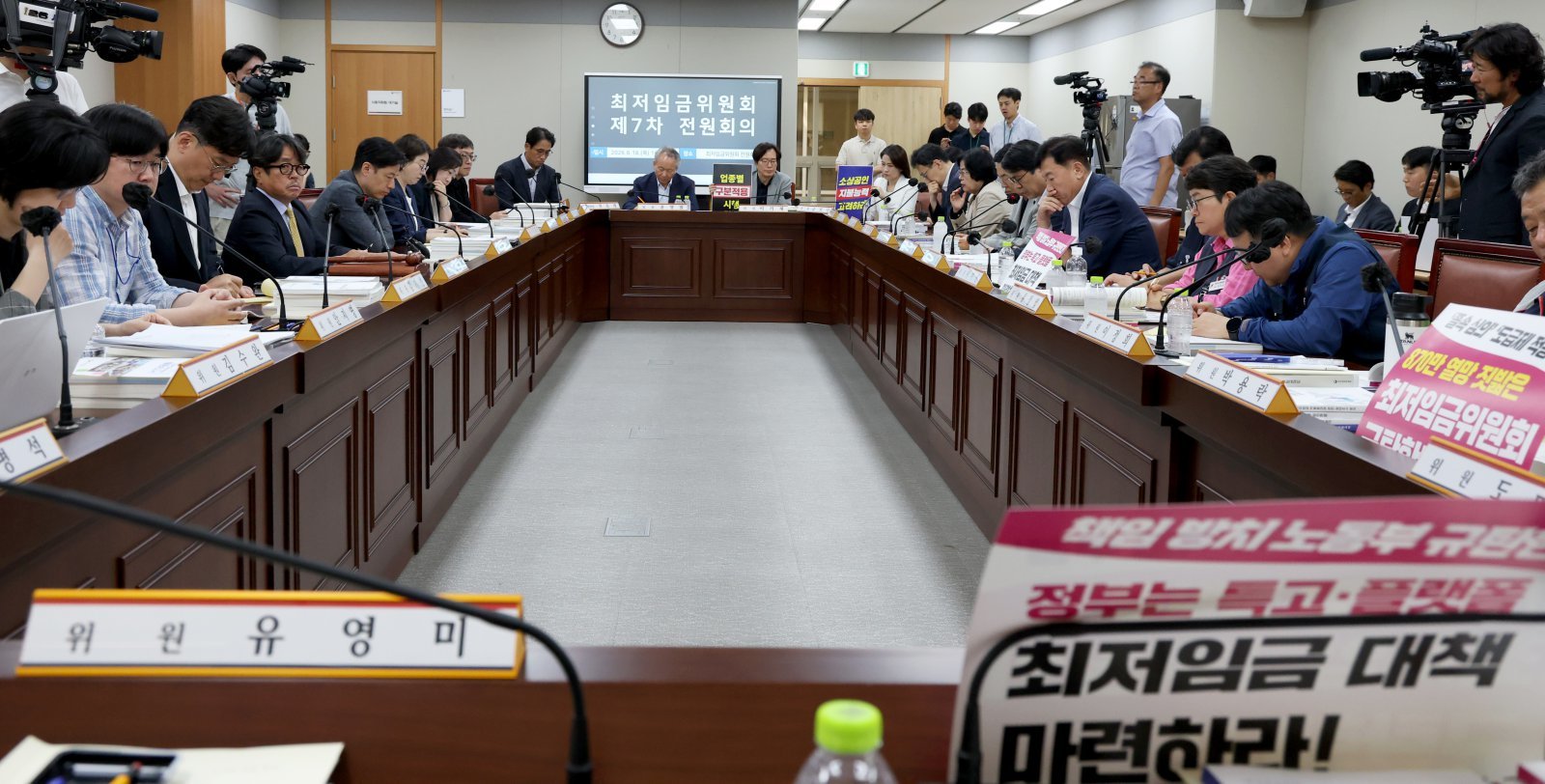
South Korea rejects industry-specific minimum wage, business groups warn of burden
Translated from Korean, summarized and contextualized by DistantNews.
At a glance
Analysis
Sources not specified
Outcome reported
- South Korea's Minimum Wage Committee rejected a proposal to apply different minimum wage rates by industry for 2027.
- Business groups argued for differentiated rates, citing the inability of some sectors like food service and convenience stores to absorb rising labor costs.
- Labor groups opposed the differentiation, and the committee will continue discussions next year, with a focus on a reasonable overall wage increase.
A proposal to differentiate minimum wage rates by industry in South Korea was rejected by the Minimum Wage Committee, delaying the discussion until next year. The committee voted 11 to 15 against the proposal during its seventh plenary session for 2027.
Business representatives had strongly advocated for differentiated rates, arguing that certain vulnerable industries, particularly small businesses in the food service, accommodation, and convenience store sectors, are struggling to cope with the current pace of minimum wage increases amid a sluggish economy. They pointed to a significantly higher violation rate of minimum wage laws in these sectors compared to manufacturing.
However, labor unions vehemently opposed the idea, labeling it as institutionalizing discrimination between industries. Despite a compromise proposal from employers to pilot differentiated rates in select food industries, the committee, including public interest members, did not shift their stance. The committee is now tasked with determining a reasonable increase for the overall minimum wage for next year, a move that follows a 60% rise since 2018.
DistantNews Editorial
Originally published by Dong-A Ilbo in Korean. Translated, summarized, and contextualized by our editorial team with added local perspective. Read our editorial standards.
More Stories



From Our Blog

What Gets Lost (and Found) When News Is Translated

The Critical Role of Diaspora Media in Global News

What Travellers Should Know About Countries with Restricted Press

A Digital Nomad's Guide to Following Local News

How the Same Story Looks Different in Different Countries
