


South Korea’s AI Strategy Official Calls for Rethinking the Flagship Foundation-Model Project
Translated from Korean and summarized by DistantNews. Read the original for the full story.
At a glance
News
Named sources
New plan
- Ha Jung-woo, the new full-time vice chairman of South Korea’s National AI Strategy Committee, said the government should reassess its independent AI foundation-model project.
- He argued that policy should build domestic capabilities strong enough to reduce dependence on high-performance AI controlled by the United States and China.
- Ha proposed substantial government support for highly capable groups, regardless of whether they are startups or large companies, including GPUs and data.
South Korea’s new artificial intelligence strategy official says the country should reconsider whether its flagship independent foundation-model project can keep up in the global frontier AI race.
Ha Jung-woo, full-time vice chairman of the National AI Strategy Committee, made the comments after Motif Technologies, which had performed strongly in a recent global AI evaluation, failed to make the elite team selected for the government’s “independent AI foundation model” program.
Considering the fundamental purpose that led us to start the independent AI foundation-model project, we need to reconsider whether this direction remains valid or whether we should take another approach to narrow the gap with global frontier AI.
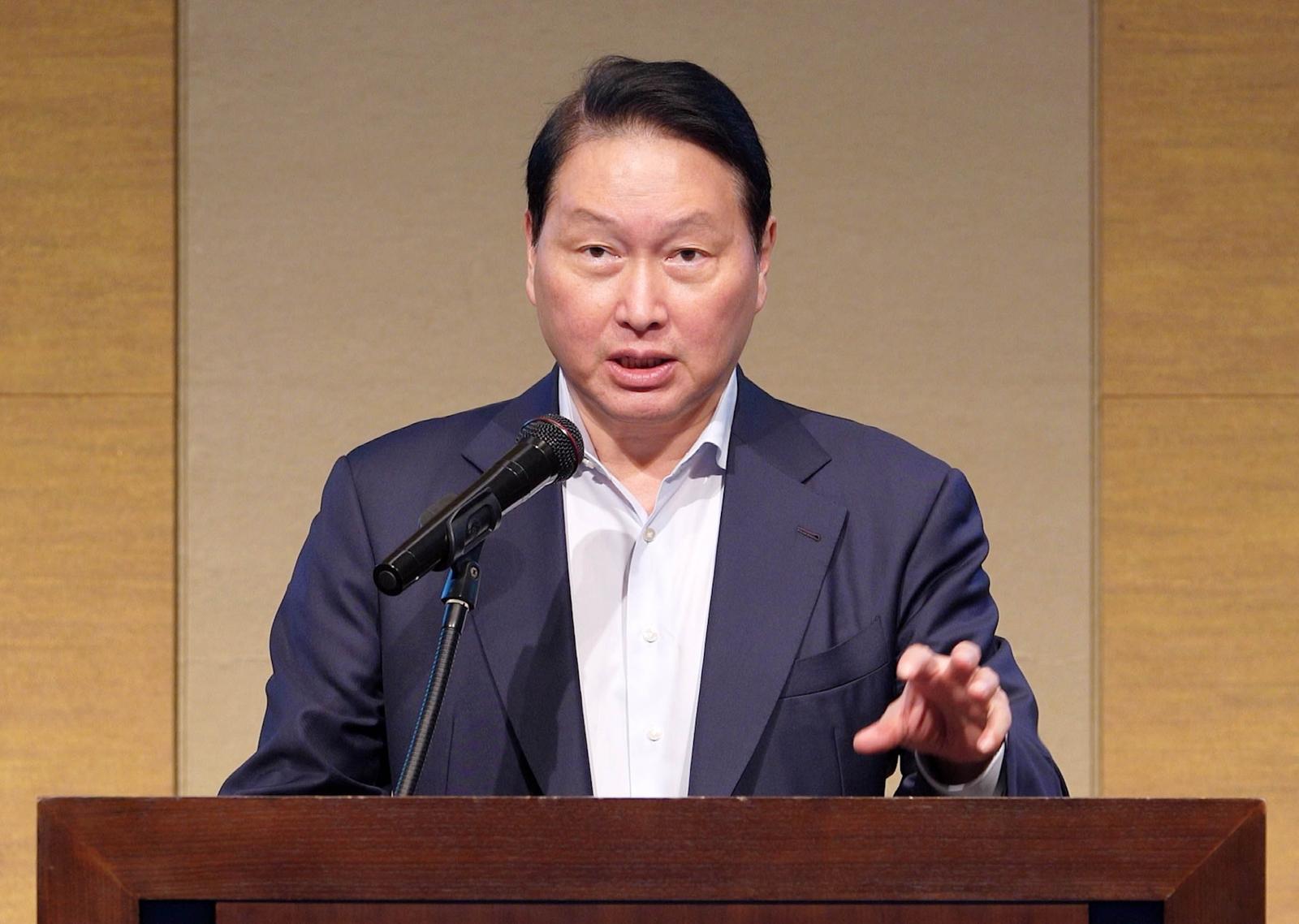
At a press briefing in Seoul on Aug. 31, Ha said officials should revisit the project’s original purpose and decide whether its current direction remains valid. He said South Korea may need a different approach to narrow the gap with frontier AI. Whatever the format, he said, the country needed to develop competitive systems and continue pursuing a moving target.
Ha also called for AI policy to focus on avoiding technological dependence as the United States and China tighten export controls on high-performance systems. Referring to the Trump administration’s decision in June to stop Anthropic’s high-performance AI system Mythos from operating overseas, he said export controls were likely to continue. South Korea, he argued, needed at least an intermediate level of frontier AI capability to play a role as a key supply-chain country.
AI export controls are very likely to continue. We need to be able to create at least an intermediate level of frontier AI ourselves to play a role as a key supply-chain country.
He said South Korean talent was not necessarily far behind at the individual level, but pointed to differences in the number of researchers, market size and China’s government system. Although AI competition is inevitably capital-intensive, he said South Korea would need to maintain its competitiveness steadily, much as it maintains defense spending.
If the current program cannot produce top-level frontier AI, Ha said the government should support groups with outstanding capabilities, whether startups or large companies. That support could include GPUs and data, while ensuring successful research spreads more widely. He said the goal should not simply be to release another model, but to build the ability to develop and operate leading systems as AI evolves. Asked about a possible return to politics after losing a parliamentary by-election, Ha said he was focused on AI and declined to give a direct answer.
Rather than simply making and releasing one more model, we should build the capability to develop and operate top-tier models ourselves in any direction AI evolves.
About this summary
Originally published by Hankyoreh in Korean. Translated, summarized, and contextualized automatically by DistantNews, with a note on how the source frames the story. Not individually reviewed before publishing. How this works.
More Stories


From Our Blog

What Gets Lost (and Found) When News Is Translated

The Critical Role of Diaspora Media in Global News

What Travellers Should Know About Countries with Restricted Press

A Digital Nomad's Guide to Following Local News

How the Same Story Looks Different in Different Countries
