


South Korea's central bank raises key interest rate for second consecutive month amid record household debt
Translated from Korean and summarized by DistantNews. Read the original for the full story.
At a glance
Analysis
Named sources
Context piece
- The Bank of Korea raised its key interest rate by 0.25 percentage points to 3.00%, marking the second consecutive monthly increase and signaling further tightening.
- This move aims to curb soaring household debt, which has surpassed 2,000 trillion won, and to manage inflation exceeding the central bank's target.
- Concerns are rising over the impact of higher interest rates on borrowers, particularly with a high proportion of variable-rate loans and potential spillover effects on the financial system.
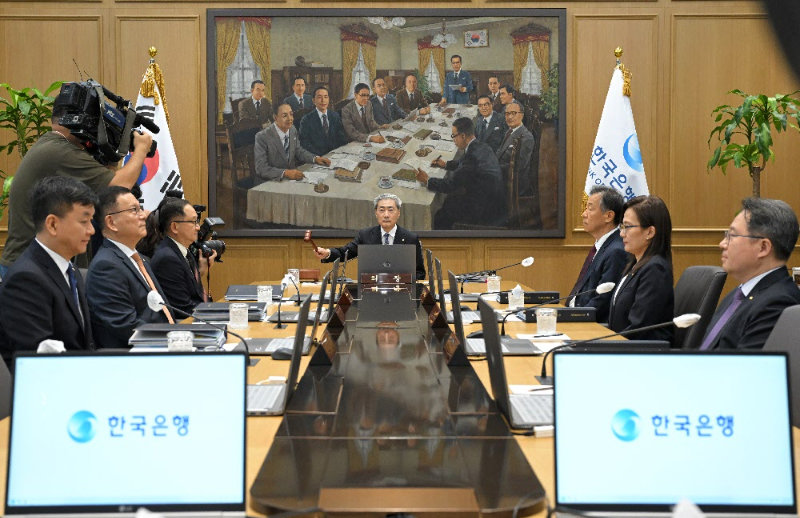
South Korea's central bank has raised its benchmark interest rate for the second month in a row, signaling a determined effort to rein in inflation and manage the nation's record-high household debt. The Bank of Korea (BOK) announced on August 27th that it would increase the key interest rate by 0.25 percentage points, bringing it to 3.00%.
This decision marks a departure from the BOK's previous stance of holding rates steady and sends a clear message of monetary tightening to the market. The move comes as the BOK revised its economic growth forecast upward to 3.3% for the year and anticipates consumer price inflation to reach 2.7%, significantly exceeding its 2% target. The central bank also aims to cool down speculative borrowing, known as 'bitu' or "debt-to-invest," which has flowed into real estate and stock markets.
BOK Governor Shin Hyun-song stated that proactive policy responses could reduce the intensity and duration of tightening, thereby mitigating the burden on economic growth. However, the specter of persistent inflation, partly due to global factors like the conflict in the Middle East and rising U.S. long-term Treasury yields, looms large. Analysts suggest the BOK might raise rates one or two more times by the first half of next year, potentially reaching 3.5%.
The immediate concern is the impact on South Korea's household debt, which surpassed 2,000 trillion won as of the end of June. The upper limit for mortgage rates has already exceeded 7% and could soon reach 8%. An increase of just 0.25 percentage points in mortgage rates would add an estimated 1.8 trillion won annually to borrowers' interest burdens. The situation is particularly worrying as household debt among those in their 20s is reportedly increasing, unlike other age groups, indicating vulnerability among younger borrowers.
Further complicating matters is the structure of household debt, with variable-rate loans accounting for nearly 80% of new lending. Despite previous commitments from financial authorities to reduce the proportion of variable-rate loans, concerns about policy failures persist. The government's plan to implement an 800 trillion won "super budget" and relax loan regulations simultaneously with interest rate hikes creates a policy mismatch that could exacerbate the crisis. The domestic banks' won loan delinquency rate stood at 0.56% at the end of June, the highest for the month of June since 2016. Vigilant crisis management is crucial to prevent household debt defaults from spreading to the financial system and the real economy. Fiscal policy should focus on fostering growth engines and reducing inequality rather than populist cash handouts that could further stimulate inflation, ensuring alignment with monetary policy.
About this summary
Originally published by Dong-A Ilbo in Korean. Translated, summarized, and contextualized automatically by DistantNews, with a note on how the source frames the story. Not individually reviewed before publishing. How this works.
More Stories


From Our Blog

What Gets Lost (and Found) When News Is Translated

The Critical Role of Diaspora Media in Global News

What Travellers Should Know About Countries with Restricted Press

A Digital Nomad's Guide to Following Local News

How the Same Story Looks Different in Different Countries
