


South Korea's government search team finds no survivors in Nepal flood
Translated from Korean and summarized by DistantNews. Read the original for the full story.
At a glance
News
Named sources
Ongoing story
- A South Korean government search team conducted helicopter operations in Nepal for nine missing nationals following severe floods but reported no survivor discoveries.
- The team faced limitations in search opportunities due to Nepalese authorities' control over access and operations.
- Nepal's government has approved expert and technical team deployments from South Korea, India, China, and Australia, but access for foreign rescue teams remains restricted.
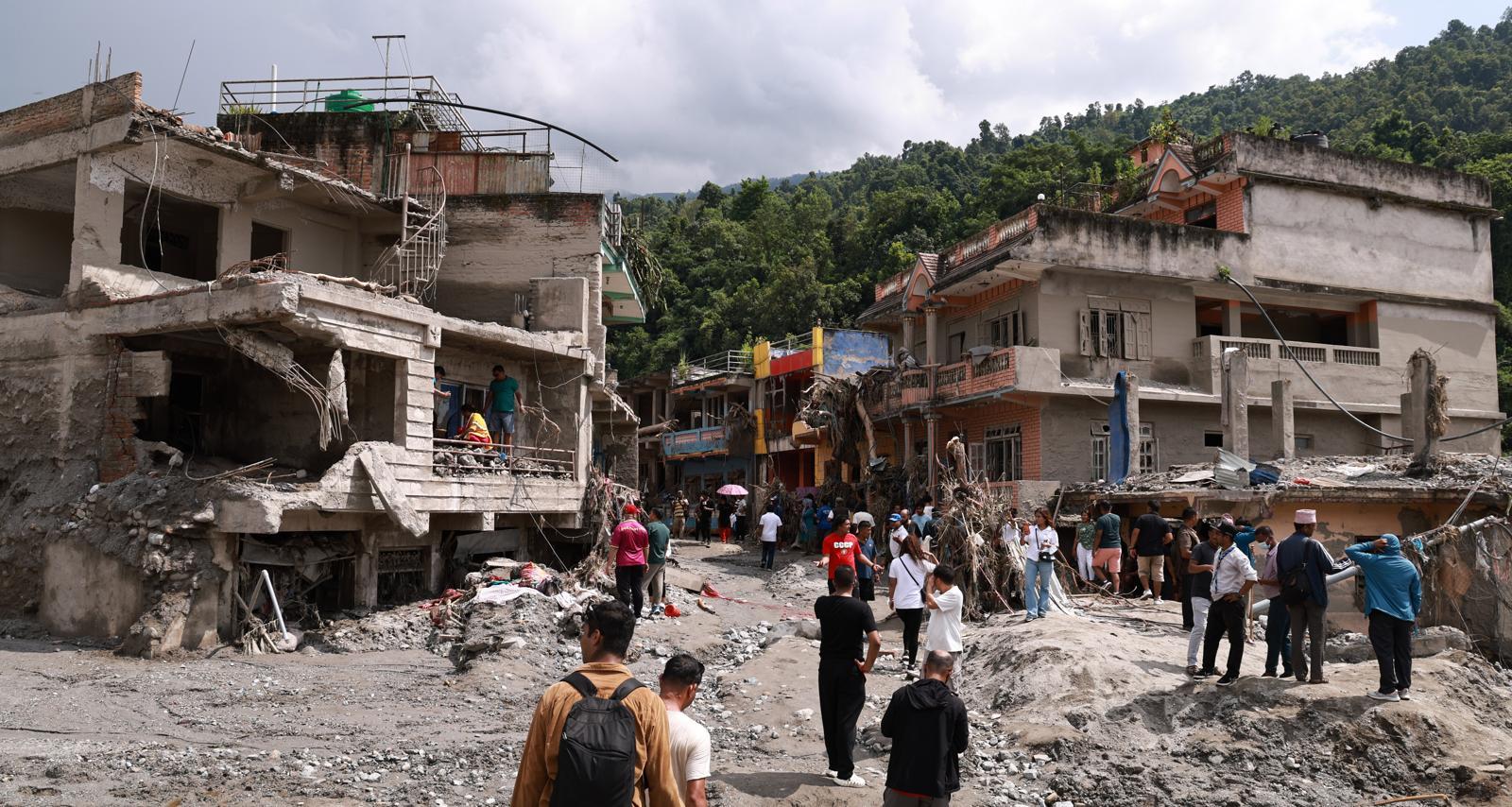
A government-led search and rescue operation for nine South Korean nationals missing after devastating floods in Nepal has concluded its initial helicopter sweeps without finding any survivors. The joint rapid response team deployed by Seoul reported on Sunday that two helicopter missions, each lasting approximately 80 to 90 minutes, were conducted over the affected areas in northern Bagmati Province.
Officials stated that while they visually searched areas from the air where survivors were presumed to be, and recorded footage for further analysis, the results aligned with the initial visual assessment: no survivors were found. The terrain in the affected region makes helicopter landings difficult, further complicating ground searches.
Unfortunately, there were no results, such as finding survivors.
The South Korean team continues to face significant challenges in securing adequate search opportunities due to restrictions imposed by Nepalese authorities. While Nepal has allowed expert and technical teams from South Korea, India, China, and Australia to deploy, access for foreign rescue teams remains largely controlled by the Nepalese government. The Nepalese army is currently conducting the primary search operations.
The policy of not accepting rescue teams from other countries was maintained today as well, and currently, the Nepalese army is conducting the search.
Seoul is urging Nepal to prioritize search efforts in areas where its citizens are believed to be located, while also exploring options for its own independent searches using private helicopters. Despite the difficulties, South Korean officials noted that Nepal has shown a comparatively friendly attitude towards South Korea, granting permission for helicopter searches and focusing on requested areas. This is seen as a reflection of the accumulated bilateral relations between the two countries.
The floods, which occurred on August 26 in the Rasuwa district of Bagmati Province, have impacted a hydroelectric power plant construction site where the nine South Korean workers were employed. Foreign media reports have suggested that over 100 people might be trapped in tunnels at the power plant, raising concerns that South Korean nationals could be among them.
Given that helicopter searches are permitted and our requested areas are being searched, it seems that the accumulated bilateral relations between the two countries are having an effect.
About this summary
Originally published by Hankyoreh in Korean. Translated, summarized, and contextualized automatically by DistantNews, with a note on how the source frames the story. Not individually reviewed before publishing. How this works.
More Stories


From Our Blog

What Gets Lost (and Found) When News Is Translated

The Critical Role of Diaspora Media in Global News

What Travellers Should Know About Countries with Restricted Press

A Digital Nomad's Guide to Following Local News

How the Same Story Looks Different in Different Countries
