

South Korea's Housing Supply Plans Stalled by Opposition, Fueling Price Hikes
Translated from Korean, summarized and contextualized by DistantNews.
At a glance
News
Named sources
Ongoing story
- South Korean housing supply plans face significant delays and local opposition, hindering efforts to stabilize the market.
- Projects in Seoul's Seocho district and Gwacheon are stalled due to resident protests and environmental concerns.
- Despite government pledges, housing starts in the Seoul metropolitan area are far below target, fueling 'panic buying' as prices continue to rise.
South Korea's ambitious housing supply targets are faltering, bogged down by regulatory hurdles and strong local opposition, leading to a surge in 'panic buying' in the Seoul metropolitan area and southern Gyeonggi Province. Despite urgent calls for increased construction, the actual pace of development is lagging significantly behind government goals.
Now, it's a time when we desperately need to expand supply, to the point of saying 'just build it'.
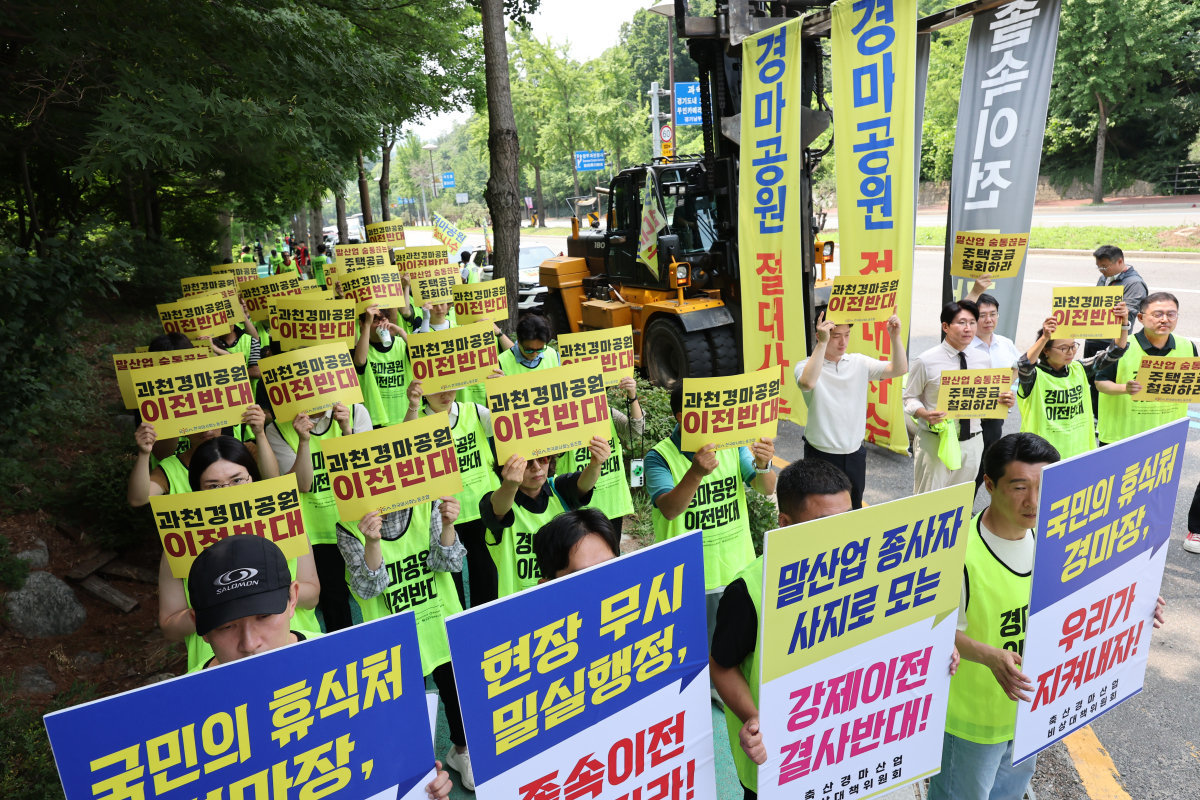
Key projects intended to boost supply, such as those in Seoul's Seocho district (Seoripl 2 district) and the Gwacheon horse racing park area, are facing intense resistance. Residents in Seocho district are protesting plans to build new housing on land historically occupied by their communities for centuries, vowing to use all available means, including lawsuits, to block development. Similarly, the Gwacheon horse racing park redevelopment plan, which aims to build nearly 10,000 homes, has been met with strong opposition from park employees and local residents concerned about the disruption to livelihoods and existing infrastructure.
Fifty years ago, development was restricted for nature protection, and now they say it has no protection value and they want us to move.
Official figures reveal a stark reality: only 13.8% of the targeted housing starts for the Seoul metropolitan area have been achieved by April this year. The government's '9.7 measure' and '1.29 measure' aimed to construct 1.35 million and 60,000 homes respectively, but progress has been slow. This supply shortage, coupled with demand-suppressing policies that have proven ineffective, has driven up housing prices. The median apartment price in Seoul has surpassed 1.2 billion won, with the 30s and 40s age groups increasingly engaging in 'panic buying' to secure homes before further price increases.
Announcing the construction of apartments in the horse racing park in the name of real estate measures is like bulldozing the lives of thousands of workers.
The rising prices are now extending beyond central Seoul to its outskirts, including the 'No-Do-Gang' (Nowon, Dobong, Gangbuk) districts. A severe shortage of rental properties, exacerbated by government regulations like the mandatory two-year residency for buyers and restrictions on loans for homeowners, has pushed more people into the purchasing market. Real estate agents report a significant increase in young couples, often pooling savings and taking out maximum loans, to buy even smaller apartments in these areas, prioritizing ownership over location or commute.
We will mobilize all means, including submitting requests for the preservation of settlements, rooftop protests, and lawsuits to cancel district designation, to block the development.
DistantNews Editorial
Originally published by Dong-A Ilbo in Korean. Translated, summarized, and contextualized by our editorial team with added local perspective. Read our editorial standards.
More Stories

From Our Blog

What Gets Lost (and Found) When News Is Translated

The Critical Role of Diaspora Media in Global News

What Travellers Should Know About Countries with Restricted Press

A Digital Nomad's Guide to Following Local News

How the Same Story Looks Different in Different Countries
