


South Korea's KOSPI Surges Past 9,000 Amid War Hopes and Property Boom
Translated from Korean, summarized and contextualized by DistantNews.
At a glance
News
Named sources
Context piece
- South Korea's KOSPI index surpassed 9,000 points for the first time amid expectations of an end to the US-Iran war and a surge in real estate prices.
- The stock market experienced extreme volatility, with rapid gains and significant drops, raising concerns about overheating and increased risks for short-term investors.
- Authorities are monitoring the influx of stock profits into the real estate market and plan to implement integrated risk management, while preparing for potential interest rate hikes.
South Korea's KOSPI index surged past 9,000 points for the first time on June 18, fueled by optimism surrounding the potential end of the US-Iran conflict and rising expectations for the real estate market. This surge has seen a rush of buyers for some apartments in Seoul and Gyeonggi Province.
The benchmark index closed at 9063.84, up 2.25% for the day. Global markets have seen a return of risk appetite as the conflict that has weighed on the world economy for over three months appears to be nearing its end. While some forecasts predict the KOSPI could reach 10,000 by year-end, driven by semiconductor performance, concerns are growing about excessive volatility and market overheating. The index has seen dramatic swings, gaining over 1,500 points in just six trading days after a dip below 7,500, with trading halts triggered multiple times. The article notes that on the day of the surge, fewer stocks advanced (109) than declined (791), highlighting the concentrated nature of the gains and the increased risks for short-term and leveraged investors.
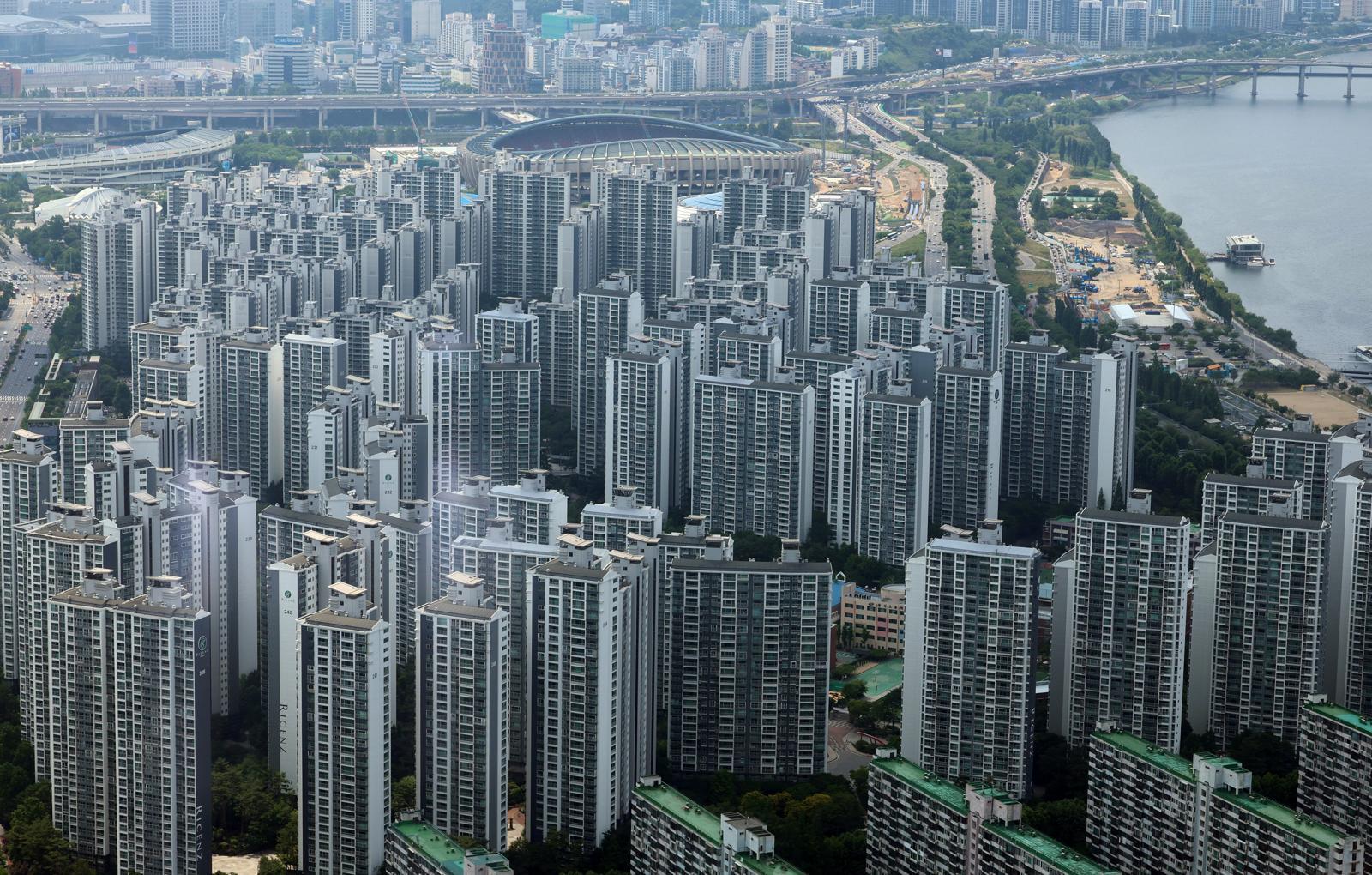
Real estate prices are also showing an alarming trend. In the third week of June, Hwaseong's Dongtan area in Gyeonggi Province saw apartment prices jump 2.22% in a single week. Southern Gyeonggi regions like Suji and Byeongjeom, often referred to as the 'semiconductor belt' due to their proximity to major chip companies, experienced significant price increases. Seoul also saw a high growth rate of 0.27%. The trend suggests that profits from stock investments are flowing into the property market, with over 3.7 trillion won ($3.7 billion) of funds from stock and bond sales used for home purchases in the first four months of the year, over 1 trillion won of which was concentrated in Seoul's Gangnam, Seocho, and Songpa districts.
Economic authorities, including the Minister of Economy and Finance, have pledged to activate a comprehensive risk monitoring system covering stock, bond, foreign exchange, and real estate markets. The goal is to prevent excessive liquidity from concentrating in asset markets and exacerbating economic imbalances. The US Federal Reserve's decision to freeze policy rates while signaling at least one rate hike this year, following increased inflation pressure from the US-Iran conflict, has led to expectations that the Bank of Korea will also raise its base rate in July. The government is urged to address the growing difficulties faced by sectors excluded from the asset market boom and vulnerable to high interest rates.
We will activate a comprehensive risk monitoring system that encompasses not only the stock, bond, and foreign exchange markets but also the real estate market.
DistantNews Editorial
Originally published by Hankyoreh in Korean. Translated, summarized, and contextualized by our editorial team with added local perspective. Read our editorial standards.
More Stories

From Our Blog

What Gets Lost (and Found) When News Is Translated

The Critical Role of Diaspora Media in Global News

What Travellers Should Know About Countries with Restricted Press

A Digital Nomad's Guide to Following Local News

How the Same Story Looks Different in Different Countries
