


South Korea's Reforestation Project Bears Fruit in Guatemala
Translated from Korean, summarized and contextualized by DistantNews.
At a glance
News
Named sources
Outcome reported
- South Korea's Korea Rural Community Corporation (KRC) concluded a three-year project to enhance Guatemala's capacity to combat climate change.
- The initiative involved training 48 Guatemalan forestry officials in South Korea, focusing on Korean greening techniques and sustainable agroforestry models.
- This program aims to help Guatemala restore its deforested tropical rainforests, which have lost an area equivalent to 29 times the size of Seoul due to deforestation and wildfires.
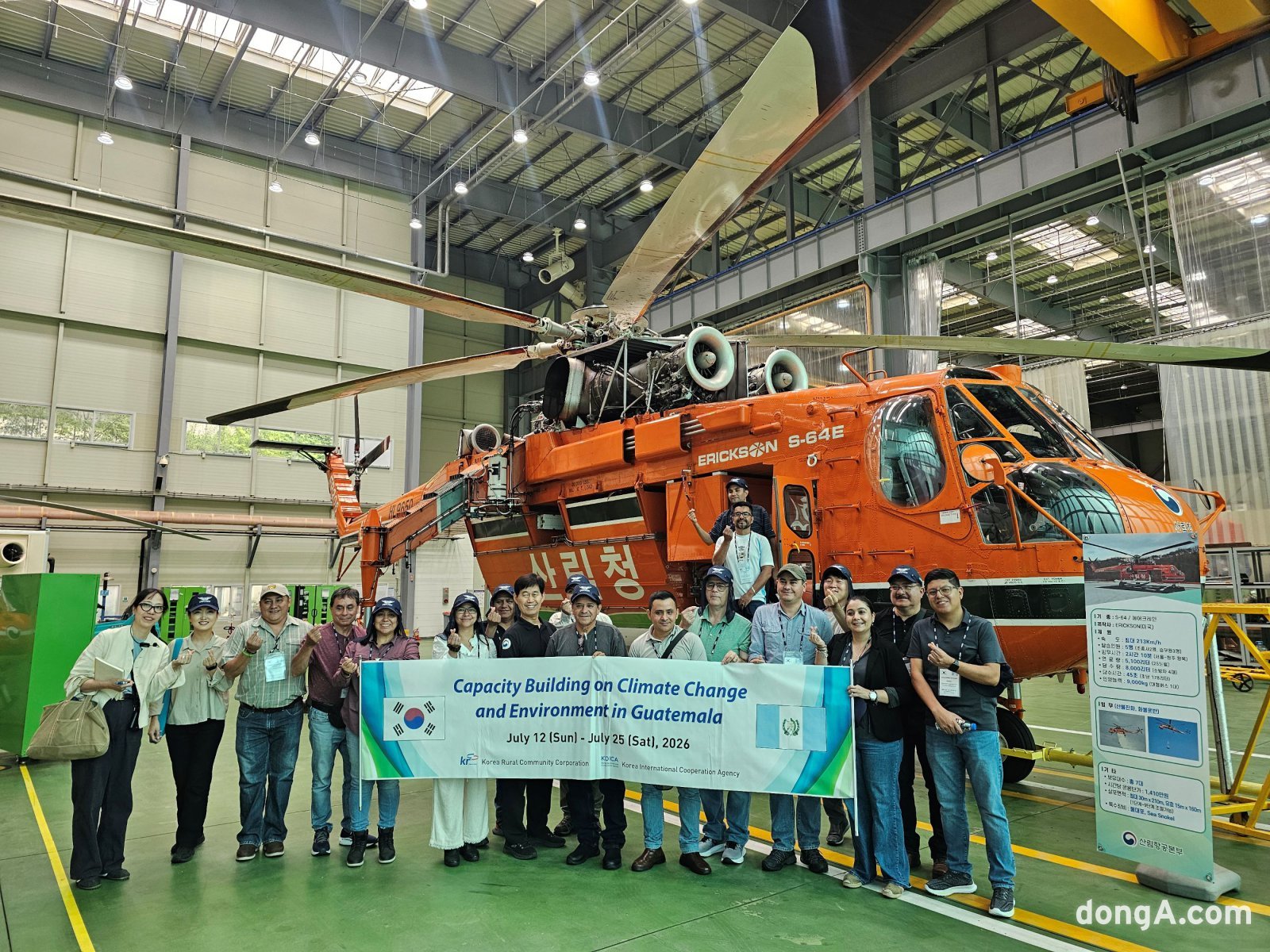
South Korea's Korea Rural Community Corporation (KRC) has successfully concluded a three-year initiative aimed at bolstering Guatemala's capacity to combat climate change. The program, which ran from 2024, involved inviting 48 mid-to-senior level officials from Guatemala's central and regional governments to South Korea for administrative and practical training.
Guatemala, a nation in Central America, boasts significant forest cover, with 33% of its territory being forest, including valuable tropical rainforests and mangrove ecosystems. However, the country has faced a continuous decline in its green areas due to land clearing for agriculture and widespread wildfires. Statistics indicate that between 2001 and 2025, approximately 1.6 million hectares were lost to illegal clearing for farmland, and another 140,000 hectares to forest fires. This combined loss is equivalent to nearly 29 times the area of Seoul.
The KRC's training focused on equipping Guatemalan officials with practical planning skills to ensure the sustainability of reforestation efforts and new public projects. Participants visited various South Korean institutions, including the Highland Agriculture Research Institute and the National Forest Science Institute, to learn about domestic greening policies and civil engineering techniques. They also explored integrated agroforestry models at sites like Daegwallyeong Sheep Ranch, observing how to simultaneously boost farm income and conserve the environment.
Korea is a developed country in afforestation, having revived its war-torn land into a world-class forest. We will reflect the process technology and operating methods learned during the course to discover new systems and refine forest administration.
In its third and final phase this year, the program emphasized the development of project proposals tailored to Guatemala's specific conditions. Trainees received expert lectures on climate change countermeasures, food security through integrated agroforestry, biodiversity maintenance, and nursery management systems. Field trips to areas affected by wildfires in Goseong and to the Yangmun Nursery and Daegwallyeong Afforestation sites provided hands-on experience with ecological restoration techniques. Participants also visited the Anbandegi high-altitude agricultural zone and Samyang Ranch to witness models that link agricultural production with forest management.
Guatemalan officials expressed their gratitude, with a regional director from the Guatemalan National Forest Institute noting South Korea's advanced capabilities in afforestation, having transformed its own war-torn land into a world-class forest. He stated that the acquired techniques would be used to develop new policies and refine forest administration in Guatemala. Lee Young-hoon, head of the KRC's Human Resources Development Center, highlighted the significance of sharing South Korea's accumulated resources and technology through mutual understanding and cooperation, pledging continued support for talent education tailored to partner countries' needs.
It is meaningful to be able to spread Korea's accumulated resources and technology based on mutual understanding and cooperation between the two countries. We will continue to provide talent education tailored to the needs of cooperating countries so that local administrative personnel can plan policies and achieve results on their own.
DistantNews Editorial
Originally published by Dong-A Ilbo in Korean. Translated, summarized, and contextualized by our editorial team with added local perspective. Read our editorial standards.
More Stories


From Our Blog

What Gets Lost (and Found) When News Is Translated

The Critical Role of Diaspora Media in Global News

What Travellers Should Know About Countries with Restricted Press

A Digital Nomad's Guide to Following Local News

How the Same Story Looks Different in Different Countries
