


South Korea's Semiconductor Cluster Plan Sparks Regional Divide and Political Feud
Translated from Korean, summarized and contextualized by DistantNews.
At a glance
News
Named sources
New plan
- Samsung and SK's announcement of a new semiconductor cluster in Gwangju has created a stark division between regions, with Daegu-Gyeongbuk expressing concerns and Gwangju-Jeonnam anticipating economic benefits.
- Daegu and Gyeongbuk officials argue that the cluster's location should be based on industrial competitiveness, not political influence, fearing the relocation of existing semiconductor companies.
- Gwangju and Jeonnam leaders have pledged full support, including free land and financial aid, expecting job creation and economic revitalization.
A significant regional divide has emerged in South Korea following the official announcement on June 29, 2026, that Samsung and SK plan to establish a new semiconductor cluster in Gwangju. While the Gwangju-Jeonnam region anticipates a wave of investment and job creation, officials in Daegu-Gyeongbuk are raising alarms about the potential collapse of their local industrial ecosystem.
Daegu and Gyeongbuk are not demanding special treatment, but an opportunity for fair competition. The location of semiconductor fabs should be decided solely by the market and competitiveness.
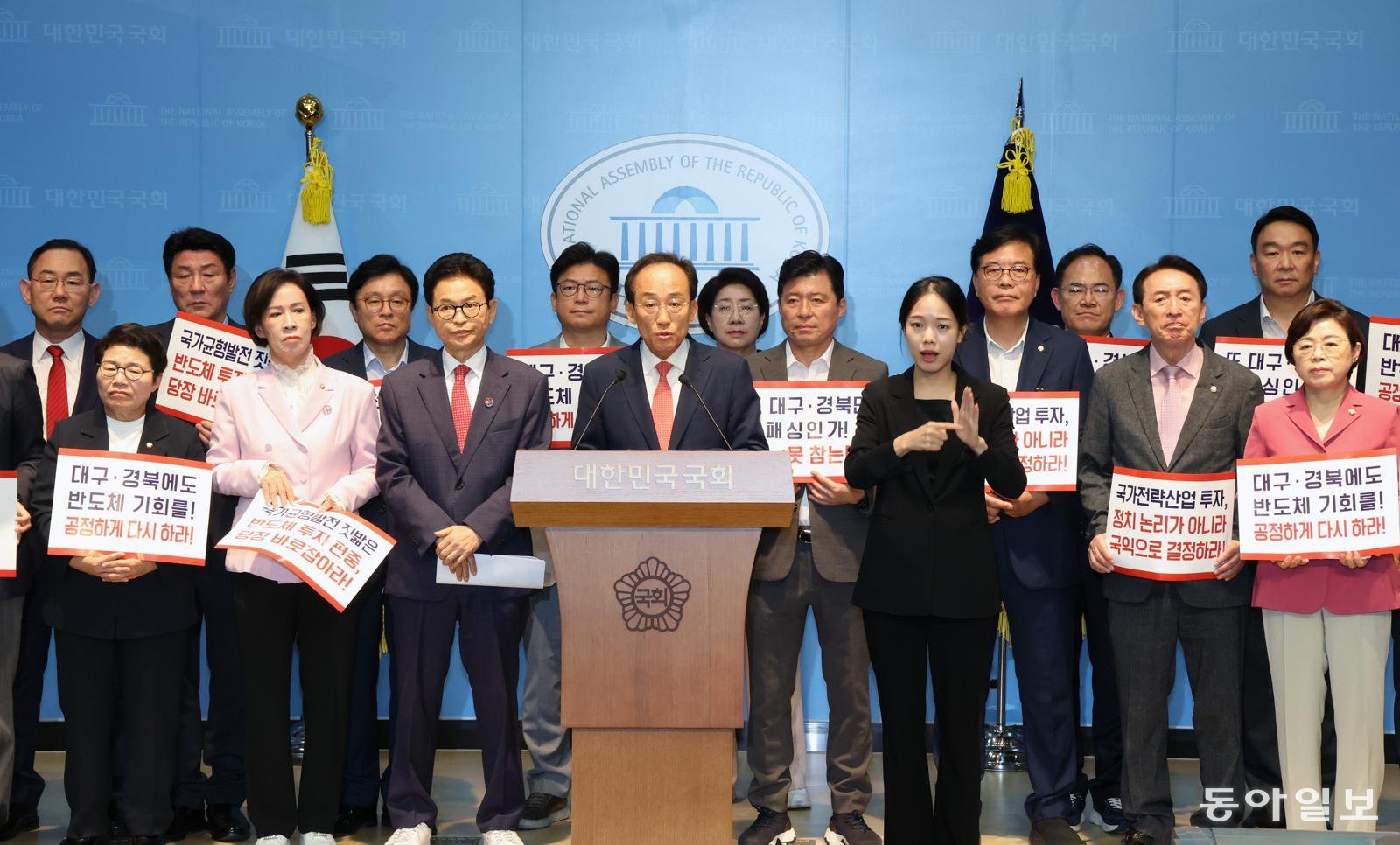
Daegu and Gyeongbuk representatives, including Gyeongbuk Governor Lee Cheol-woo and Daegu Mayor-elect Chu Kyung-ho, held an emergency press conference, arguing that national strategic industries should be decided based on industrial competitiveness and market principles, not political maneuvering. "Daegu and Gyeongbuk are not demanding special treatment, but an opportunity for fair competition," stated Chu Kyung-ho. Lee Cheol-woo expressed concern that if Gwangju-Jeonnam develops not only semiconductor packaging but also front-end fabrication, local semiconductor partner companies in Daegu-Gyeongbuk could be forced to relocate. He drew a parallel to Samsung Electronics' mobile production base moving to Vietnam, which led to the departure of its suppliers and a broader collapse of the regional economy and industrial ecosystem.
When Samsung Electronics' mobile production base moved to Vietnam, partner companies also left the region. The relocation of a large corporation is not just about losing one factory, but has chain effects that can collapse the entire regional economy and industrial ecosystem.
Conversely, the Gwangju-Jeonnam region is buzzing with optimism. Local business owners, like Kim Young-kwang, who has run a restaurant in Gwangju for 20 years, expressed surprise and hope. "I never thought a day would come when semiconductor plants like Samsung or SK would be built in Gwangju-Jeonnam," he said, believing it would create jobs and encourage young people to stay in the region. The area surrounding the proposed cluster site in Gwangju is already seeing increased interest in apartment pre-sales. Provincial leaders have pledged robust support, with Jeonnam-Gwangju Integrated Special Mayor-elect Min Hyung-bae promising measures like free land provision and significant allocation of the government's 20 trillion won support fund for the integrated region.
I never thought a day would come when semiconductor plants like Samsung or SK would be built in Gwangju-Jeonnam. If a plant is built, jobs will increase, and young people won't have to leave the region.
The announcement has also ignited a political firestorm. The People Power Party criticized the government's "3 Major Mega Projects for Korea's Great Leap Forward" as "a declaration of war on state-controlled economy," with floor leader Jeong Jin-seok accusing the administration of manipulating industrial site selection. The Democratic Party, however, denounced these criticisms as "vicious obstructionism" hindering national growth. Floor leader Han Byung-do accused the People Power Party of resorting to outdated regionalism and threatened legal action against "malicious smear campaigns," urging cooperation on national projects.
We will prepare support measures that companies can actually feel, including the free provision of land. A significant portion of the 20 trillion won in financial resources promised by the government for the integrated region will be concentrated on the semiconductor investment plan to provide solid backing.
DistantNews Editorial
Originally published by Dong-A Ilbo in Korean. Translated, summarized, and contextualized by our editorial team with added local perspective. Read our editorial standards.
More Stories


From Our Blog

What Gets Lost (and Found) When News Is Translated

The Critical Role of Diaspora Media in Global News

What Travellers Should Know About Countries with Restricted Press

A Digital Nomad's Guide to Following Local News

How the Same Story Looks Different in Different Countries
