


South Korea Secures May Crude Oil Imports, Reduces Middle East Dependency
Translated from Korean, summarized and contextualized by DistantNews.
TLDR
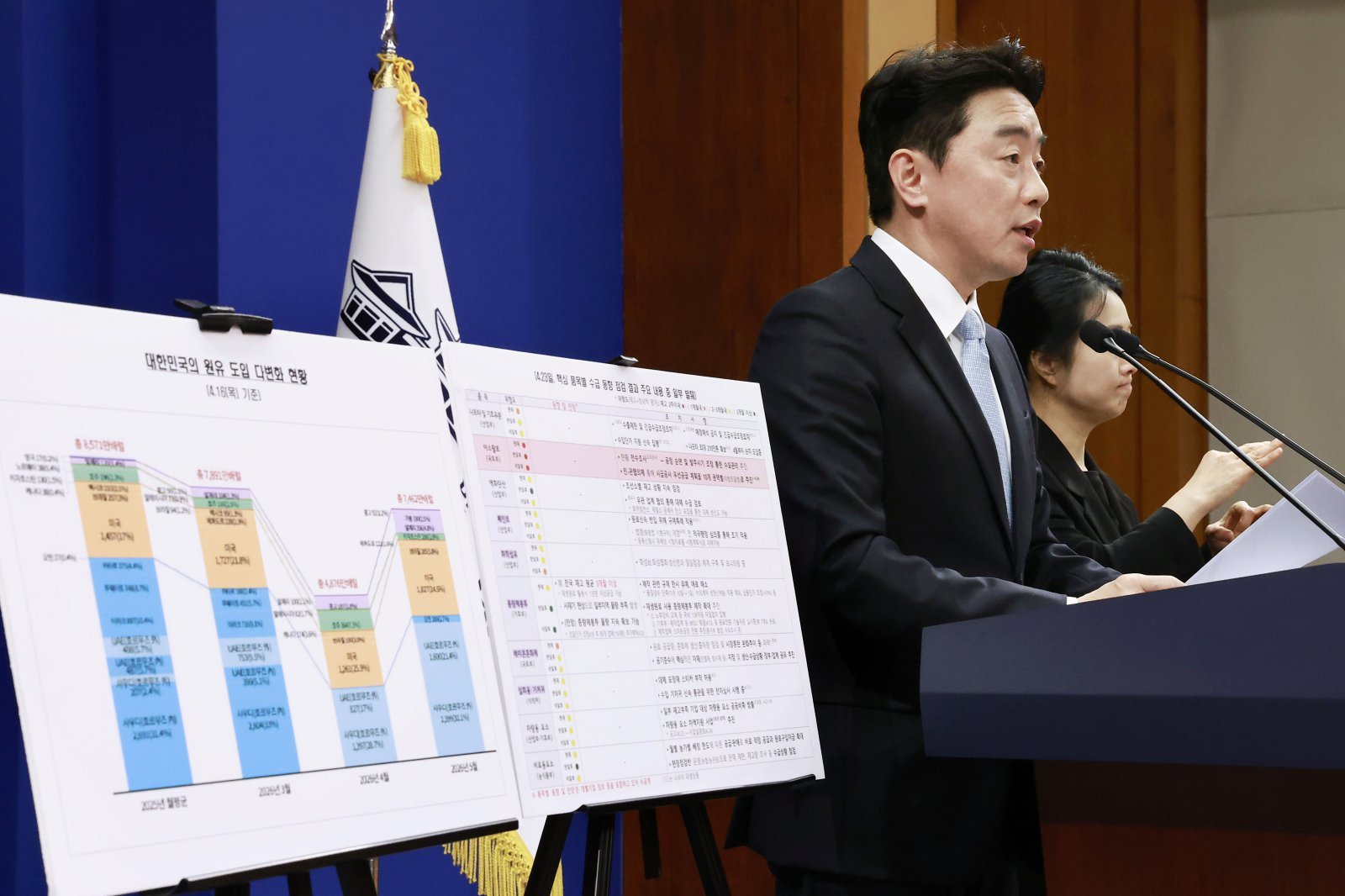
- South Korea has secured 87% of its average monthly crude oil imports for May, totaling 74.62 million barrels, easing concerns over supply disruptions.
- The country has reduced its reliance on Middle Eastern crude oil to 56% by diversifying supply sources and routes.
- While overall supply is stable, naphtha and asphalt imports remain a concern, managed under a 'traffic light' system, with government interventions planned to stabilize naphtha prices.
South Korea is demonstrating robust resilience in managing its energy security amidst prolonged Middle Eastern tensions. Presidential Secretary Kang Han-sik announced on April 24th that the nation has secured 74.62 million barrels of crude oil for May, representing 87% of the average monthly import volume from the previous year. This proactive measure significantly alleviates immediate concerns about supply chain disruptions, showcasing the government's effective response.
In May, we have secured 74.62 million barrels, which is 87% of last year's monthly average import volume, so you don't need to worry too much about supply disruptions.
A key success highlighted is the diversification of oil sources and shipping routes. South Korea has successfully reduced its dependence on Middle Eastern crude from 69% to 56%. Specifically, imports from Saudi Arabia and the UAE are being rerouted to avoid the Strait of Hormuz, a critical chokepoint. This strategic shift, achieved through government and private sector collaboration, underscores South Korea's commitment to securing stable energy supplies even under challenging geopolitical circumstances.
We have reduced our dependence on Middle Eastern crude oil from 69% to 56% by securing additional volumes from the Americas and Africa.
While the overall crude oil situation appears stable, the report acknowledges lingering concerns regarding specific petroleum products like naphtha and asphalt. These are being managed under a 'traffic light' system, with naphtha currently in the 'orange' phase due to inventory levels. The government plans to mitigate this through price support and securing additional import volumes, aiming to shift it to 'yellow' within a month. Asphalt remains in the 'red' phase, indicating a higher risk. The government's decision to freeze the price of gasoline and diesel, despite underlying cost increases, further emphasizes its focus on public welfare and price stability, a common theme in Korean economic policy during times of uncertainty.
We are diversifying not only the countries from which we import (crude oil) but also the routes through which the tankers pass.
DistantNews Editorial
Originally published by Dong-A Ilbo in Korean. Translated, summarized, and contextualized by our editorial team with added local perspective. Read our editorial standards.
More Stories


From Our Blog

What Gets Lost (and Found) When News Is Translated

The Critical Role of Diaspora Media in Global News

What Travellers Should Know About Countries with Restricted Press

A Digital Nomad's Guide to Following Local News

How the Same Story Looks Different in Different Countries
