


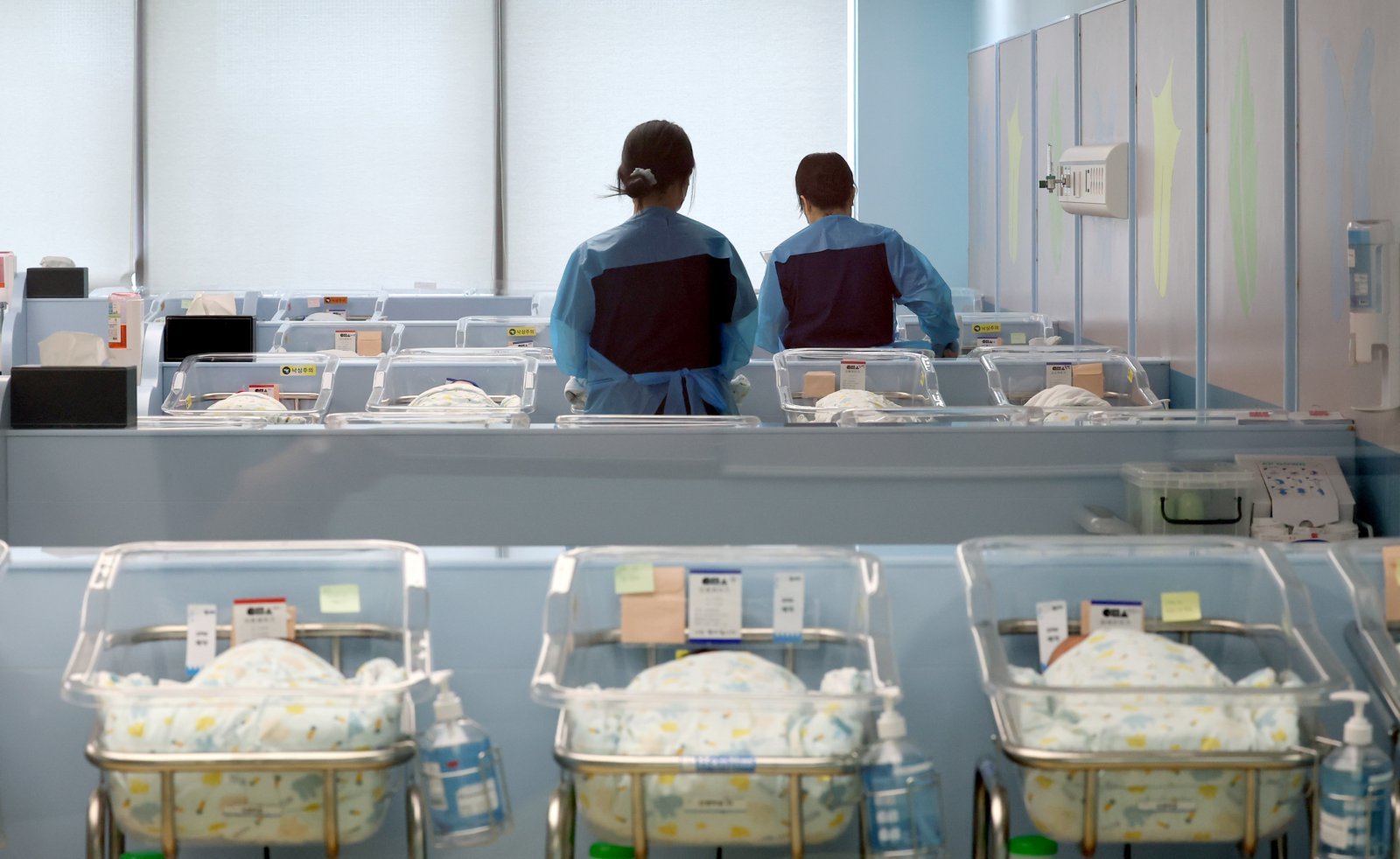
South Korea sees rise in births and fertility rate, but marriage numbers fall
Translated from Korean, summarized and contextualized by DistantNews.
At a glance
News
Official statement
Context piece
- South Korea recorded an increase in births and the total fertility rate in May, with births rising 13.6% year-on-year.
- The total fertility rate climbed to 0.85 births per woman, driven by a significant rise in births among women in their 30s.
- However, the number of marriages decreased by 6.4% in May, although the cumulative number of marriages for the year increased.
South Korea saw a notable increase in births and its total fertility rate in May, continuing a trend of rising births for 23 consecutive months. The number of newborns reached 23,160, a 13.6% increase compared to the same month last year. This marks the longest period of year-on-year birth increases since statistics began being compiled for the month of April.
The total fertility rate, which measures the average number of children a woman is expected to have in her lifetime, rose to 0.85 in May, up from 0.75 in the previous year. This increase was largely attributed to a significant rise in births among women in their 30s. Specifically, the fertility rate for women aged 30-34 increased by 8.3 births per 1,000 women to 78.0, and for those aged 35-39, it rose by 9.9 births per 1,000 women to 58.0. Fertility rates also saw slight increases for women aged 25-29 and those over 40, while decreasing slightly for those under 24.
Despite the positive trend in births, the number of marriages in May saw a decline of 6.4% compared to the previous year, with 20,368 marriages registered. Only Incheon reported an increase in marriages, while other regions, including Seoul and Gyeonggi, saw decreases. However, the cumulative number of marriages from January to May increased by 3.9% compared to the same period last year, indicating a complex picture in marital trends.
In terms of population dynamics, the number of deaths in May increased by 3.8% year-on-year to 29,573. This resulted in a natural decrease in population (births minus deaths) of 6,413 people for the month. While the natural decrease narrowed compared to the previous year, only three regions, Ulsan, Sejong, and Gyeonggi, recorded a natural increase in population, highlighting the ongoing demographic challenges facing the country.
DistantNews Editorial
Originally published by Dong-A Ilbo in Korean. Translated, summarized, and contextualized by our editorial team with added local perspective. Read our editorial standards.
More Stories


From Our Blog

What Gets Lost (and Found) When News Is Translated

The Critical Role of Diaspora Media in Global News

What Travellers Should Know About Countries with Restricted Press

A Digital Nomad's Guide to Following Local News

How the Same Story Looks Different in Different Countries
