


South Korea to Hire Fewer Public School Teachers for 2027 Amid Falling Enrollment
Translated from Korean, summarized and contextualized by DistantNews.
At a glance
News
Sources not specified
Context piece
- South Korea plans to select 9,889 public school teachers for 2027, a decrease from the previous year.
- The number of new middle and high school teachers will drop by 40% due to declining student populations.
- Recruitment for special education and non-subject teachers will increase to meet field needs and legal requirements.
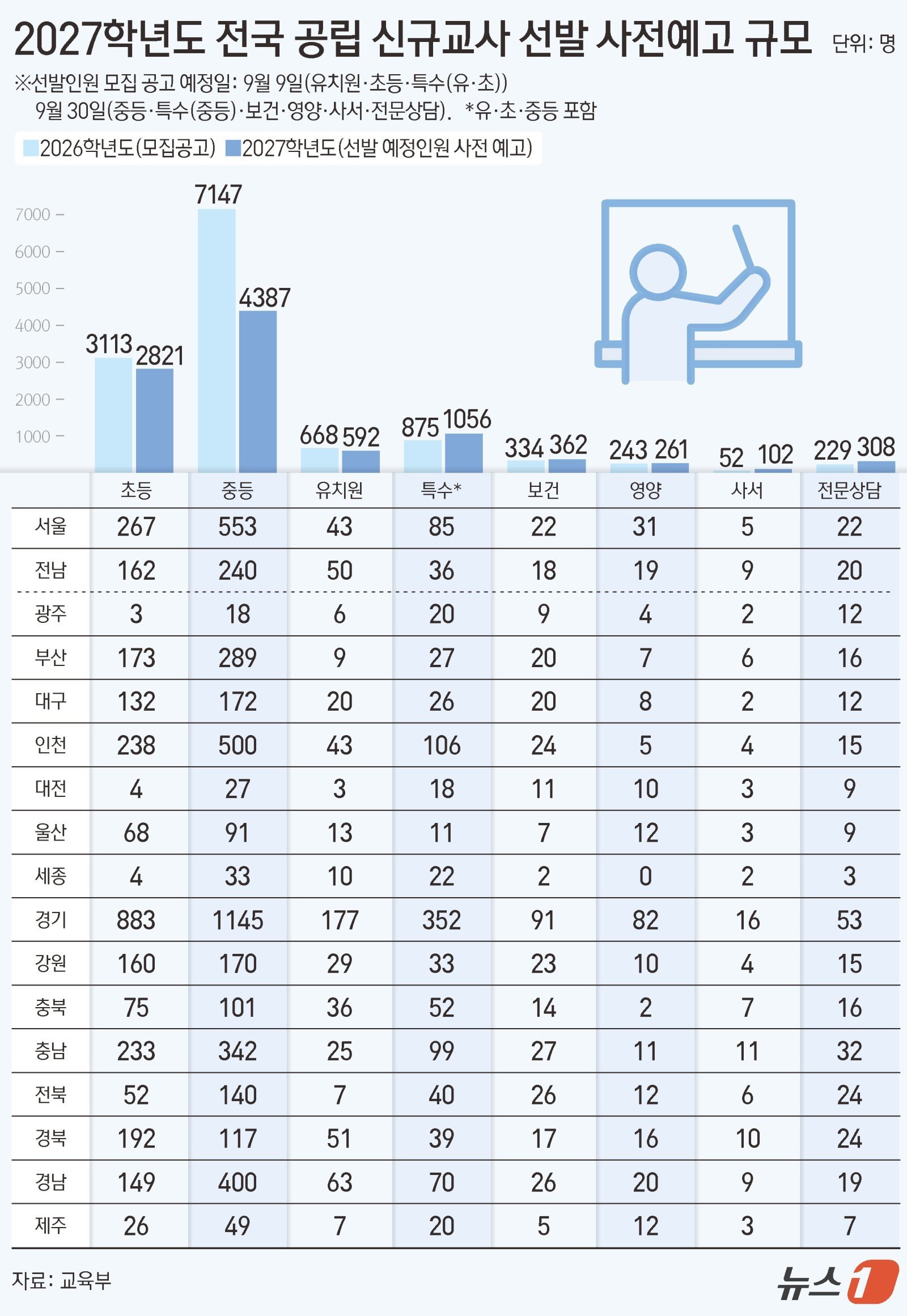
South Korea's Ministry of Education has announced plans to recruit 9,889 public school teachers for the 2027 academic year, a reduction of 343 positions compared to the previous year's preliminary announcement. This decrease is largely attributed to the ongoing decline in the school-aged population.
The most significant drop will be in the recruitment of new middle and high school teachers, which is set to decrease by 40%. This reflects a strategic adjustment to the shrinking student numbers in these age groups. Conversely, the ministry intends to increase the hiring of special education teachers and non-subject teachers, such as school nurses, nutritionists, librarians, and counselors. This move aims to address specific needs in schools and ensure compliance with legal staffing ratios.
The number of new middle and high school teachers is expected to decrease by 40%. However, special education and non-subject teachers will increase to meet field needs and secure legal staffing ratios.
While the preliminary announcement indicates a decrease, education officials noted that the final recruitment numbers could be higher. This is because some factors, like the exact number of retirements in specific subjects and the finalization of regional education office plans, are still pending. The final figures for elementary and special education teachers are expected in July, with middle and high school teacher numbers to be announced in August.
Regional variations in recruitment are notable. Gyeonggi province plans to hire the most elementary school teachers (883), while Gwangju will hire only three. Similarly, Daejeon and Sejong education offices plan to hire the fewest teachers overall, at four each. These figures highlight the diverse demographic challenges and recruitment strategies across different regions of South Korea.
The number of new middle and high school teachers is expected to decrease by 40%. However, special education and non-subject teachers will increase to meet field needs and secure legal staffing ratios.
DistantNews Editorial
Originally published by Dong-A Ilbo in Korean. Translated, summarized, and contextualized by our editorial team with added local perspective. Read our editorial standards.
More Stories


From Our Blog

What Gets Lost (and Found) When News Is Translated

The Critical Role of Diaspora Media in Global News

What Travellers Should Know About Countries with Restricted Press

A Digital Nomad's Guide to Following Local News

How the Same Story Looks Different in Different Countries
