


South Korea to Make Housing Subscription Tax Deduction Permanent, Aiming to Halt Subscriber Exodus
Translated from Korean, summarized and contextualized by DistantNews.
At a glance
News
Sources not specified
New plan
- The South Korean government will make the income tax deduction for housing subscription savings accounts permanent, removing a sunset clause.
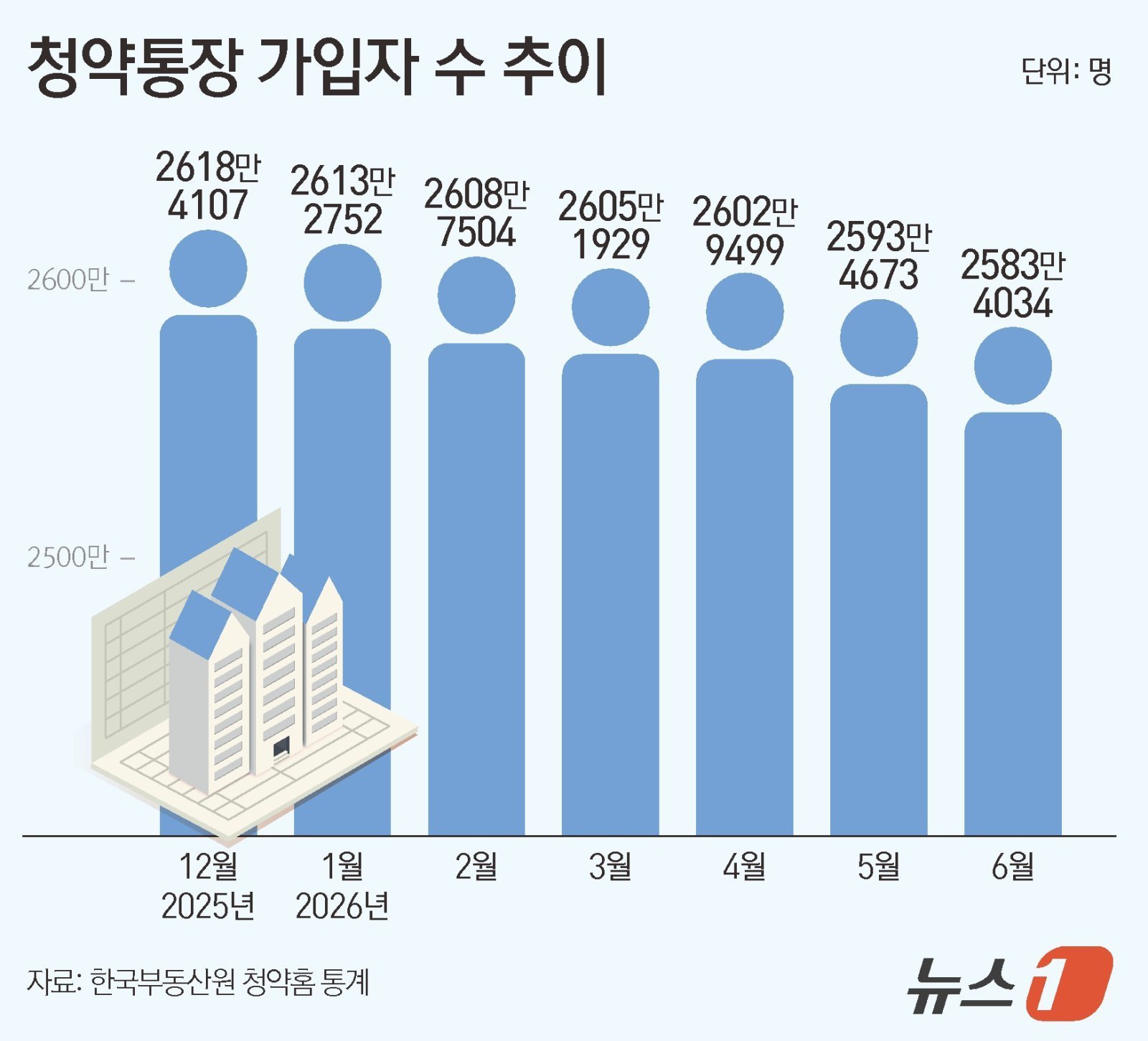
- This change aims to curb the recent outflow of subscribers, which has seen a decrease of approximately 350,000 people nationwide in the first half of the year.
- However, experts suggest that the permanent deduction alone may not be enough to reverse the trend due to high competition and rising required points for apartment subscriptions in Seoul.
The South Korean government has decided to permanently extend the income tax deduction for housing subscription savings accounts, eliminating a sunset clause that previously required periodic extensions. This move is intended to address the recent decline in subscribers, with around 350,000 people having withdrawn from these accounts nationwide by the end of June. The removal of uncertainty surrounding the future of the deduction is expected to encourage more people to maintain their subscriptions.
Despite this measure, experts believe it may not be sufficient to reverse the declining trend. The fierce competition for apartment subscriptions, particularly in Seoul, has driven up the required points for successful bids to unprecedented levels. For instance, a recent apartment in Seoul recorded a perfect score of 84 points for a specific unit size. Additionally, the high prices of newly built apartments present a significant financial burden for potential buyers, even if they secure a subscription.
The income tax deduction for housing subscriptions is effectively a secondary benefit, and not all subscribers receive the deduction.
The income tax deduction itself has specific eligibility requirements. It is available only to salaried workers with a total annual income of 70 million won or less who do not own a home. Self-employed individuals and freelancers are excluded. Furthermore, all family members listed on the household registry must also be without a home to qualify. Consequently, the benefits of this policy change will be limited for those who do not meet these criteria.
Park Ji-min, CEO of Wolyong Subscription Research Institute, noted that the income tax deduction is largely a secondary benefit and not accessible to all subscribers. He emphasized that more substantial measures, such as easing regulations on 잔금대출 (balance payment loans), are urgently needed to support aspiring homeowners.
Easing regulations on balance payment loans is more urgently needed.
DistantNews Editorial
Originally published by Dong-A Ilbo in Korean. Translated, summarized, and contextualized by our editorial team with added local perspective. Read our editorial standards.
More Stories



From Our Blog

What Gets Lost (and Found) When News Is Translated

The Critical Role of Diaspora Media in Global News

What Travellers Should Know About Countries with Restricted Press

A Digital Nomad's Guide to Following Local News

How the Same Story Looks Different in Different Countries
