


South Korea to Send First Container Ship Through Arctic Route
Summarized and contextualized by DistantNews.
At a glance
News
Official statement
New plan
- South Korea is set to test a new Arctic shipping route as a potential alternative to Middle Eastern lanes disrupted by conflict.
- The trial voyage aims to assess the commercial viability of the route, which is becoming accessible due to melting sea ice.
- Environmental groups have raised concerns that the route could accelerate polar ice melt, while some experts warn of potential sanctions issues with Russia.
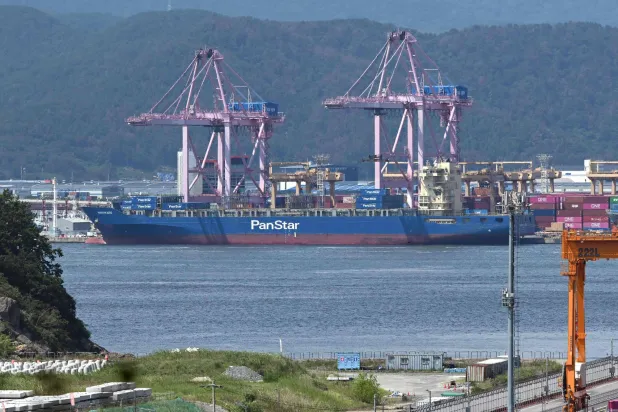
South Korea is launching a trial container ship voyage through the Arctic, seeking a viable alternative shipping route amid disruptions in the Middle East. The container ship "PanStar Acro" will depart from Busan New Port and sail to Europe, testing the commercial feasibility of a route opened by melting Arctic sea ice.
The ship will depart at 8 pm (1100 GMT) today unless there are unforeseen circumstances, such as bad weather.
The voyage is particularly timely as the Middle East conflict, sparked by US-Israeli strikes on Iran, has roiled global shipping. The Arctic route offers a potential way to bypass these troubled waters. If successful, the journey to Felixstowe in Britain, Rotterdam in the Netherlands, and Gdansk in Poland is expected to take approximately 45 days, significantly cutting down travel time and distance compared to the traditional Suez Canal route.
The Arctic route was bound to become an alternative.
This initiative follows China's recent trial voyage through the Northern Sea Route (NSR). Experts like Marc Lanteigne, a political science professor at the Arctic University of Norway, view these voyages as a sign that the NSR is normalizing as a "secondary maritime transit corridor." South Korea's participation signals its interest in developing alternative sea lanes, potentially preventing it from falling behind China's expanding Arctic services.
The Northern Sea Route (NSR) was becoming normalized as a secondary maritime transit corridor.
However, the route is not without its concerns. Environmental groups warn that increased Arctic shipping could accelerate polar ice melt. Additionally, some experts suggest that South Korean ships using the route might risk breaching Western sanctions on Russia, as they would likely require Russian navigation and weather services, potentially involving payments. South Korea's foreign ministry has declined to comment on these specific concerns.
Strictly speaking, US and EU sanctions are not international law, unlike UN sanctions.
DistantNews Editorial
Originally published by Asharq Al-Awsat. Summarized and contextualized by our editorial team with added local perspective. Read our editorial standards.
More Stories



From Our Blog

What Gets Lost (and Found) When News Is Translated

The Critical Role of Diaspora Media in Global News

What Travellers Should Know About Countries with Restricted Press

A Digital Nomad's Guide to Following Local News

How the Same Story Looks Different in Different Countries
