


South Korea, US, Japan Sign Accord for Small Modular Reactor Cooperation
Translated from Korean, summarized and contextualized by DistantNews.
At a glance
News
Sources not specified
New plan
- South Korea, the United States, and Japan signed a Memorandum of Cooperation (MOC) to introduce Small Modular Reactors (SMRs) in the Indo-Pacific region.
- The agreement aims to encourage mutually beneficial cooperation between the three nations' nuclear industries, reduce project risks, and promote private investment.
- The foreign ministers also discussed Korean Peninsula issues, security cooperation, and economic security, reaffirming close coordination on North Korea policy.
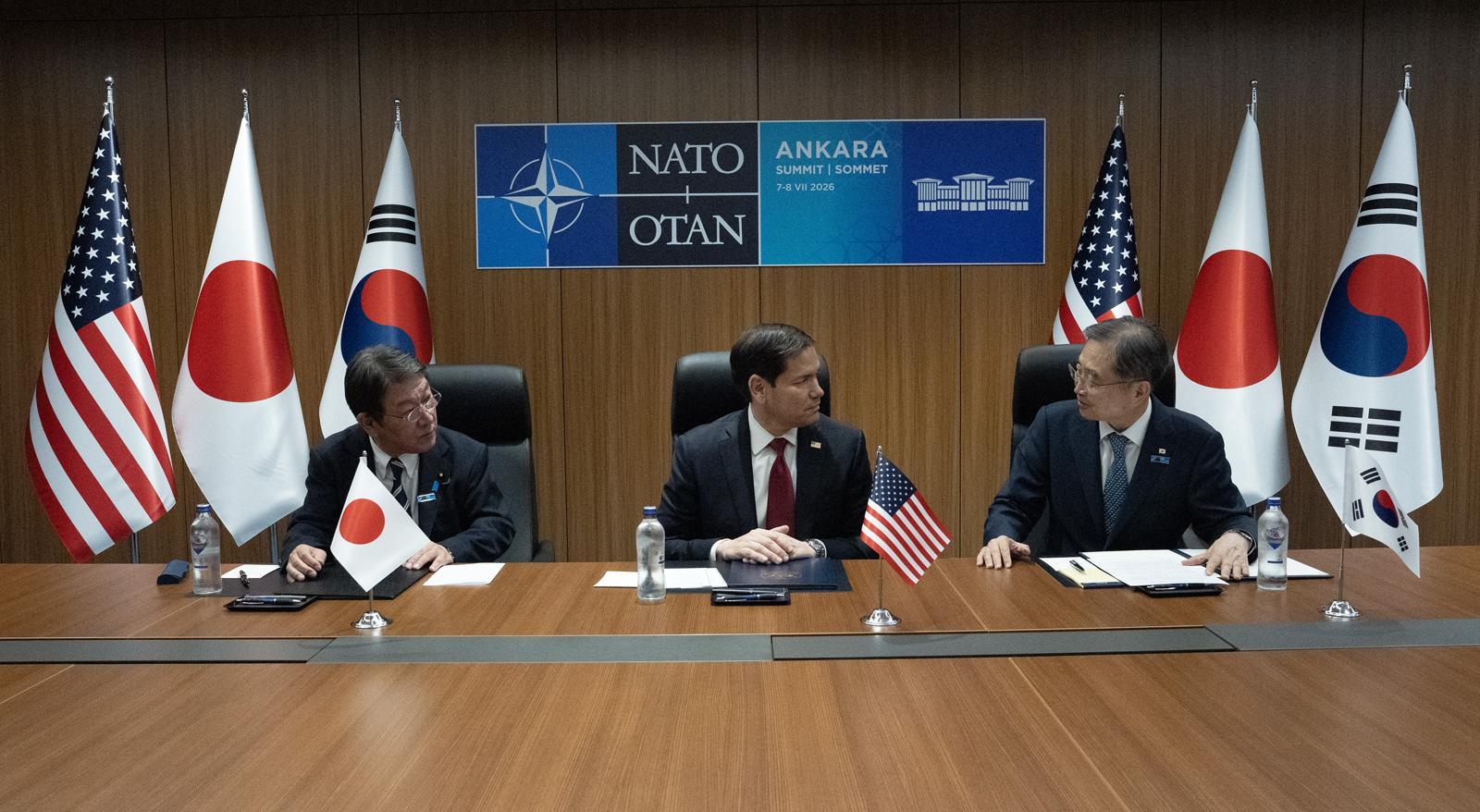
South Korea, the United States, and Japan have signed a Memorandum of Cooperation (MOC) to facilitate the introduction of Small Modular Reactors (SMRs) in the Indo-Pacific region. The agreement was announced on July 7 (local time) following a meeting of the three nations' foreign ministers in Ankara, Turkey, on the sidelines of a NATO summit.
South Korean Foreign Minister Cho Hyun met with U.S. Secretary of State Marco Rubio and Japanese Foreign Minister Toshimitsu Motegi. Discussions covered the Korean Peninsula, security cooperation, and regional and global affairs, with a particular focus on economic security cooperation. The U.S. State Department described the MOC as an opportunity for the three countries, each possessing strengths in the civilian nuclear sector, to foster mutually beneficial cooperation among their respective nuclear industries.
The cooperative framework aims to reduce project development risks, achieve economies of scale, promote private investment, and streamline licensing procedures. The foreign ministers also shared assessments of the situation on the Korean Peninsula. According to the South Korean Ministry of Foreign Affairs, the three ministers agreed to maintain close coordination on policies toward North Korea, including responses to Pyongyang's illicit cyber activities.
They reaffirmed their commitment to the principle of denuclearization of the Korean Peninsula and pledged to continue efforts to maintain peace and stability through dialogue and diplomacy. The ministry also stated that the ministers reaffirmed economic security cooperation as a significant pillar of trilateral collaboration. Building on achievements in areas such as nuclear power, artificial intelligence (AI), and quantum technology, the three ministers agreed to further deepen practical cooperation.
DistantNews Editorial
Originally published by Dong-A Ilbo in Korean. Translated, summarized, and contextualized by our editorial team with added local perspective. Read our editorial standards.
More Stories


From Our Blog

What Gets Lost (and Found) When News Is Translated

The Critical Role of Diaspora Media in Global News

What Travellers Should Know About Countries with Restricted Press

A Digital Nomad's Guide to Following Local News

How the Same Story Looks Different in Different Countries
