


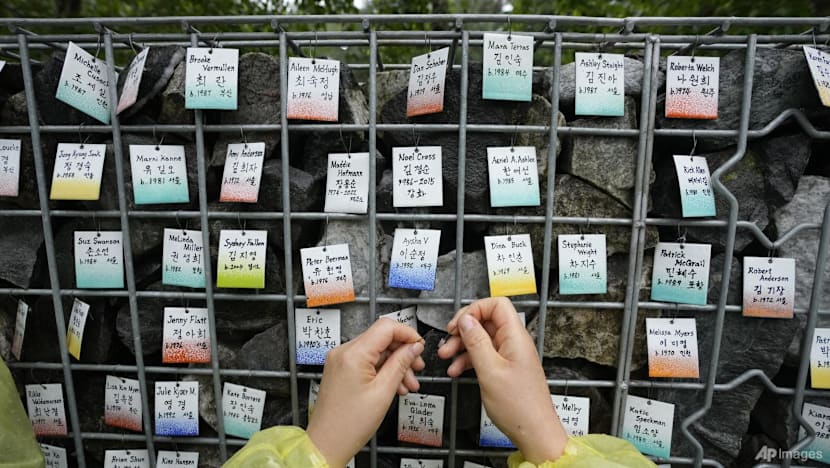
South Korean adoptees sue Denmark over right to know birth families
Summarized and contextualized by DistantNews.
At a glance
News
Sources not specified
In the courts
- Eight South Korean-born adoptees are suing Denmark, alleging illegal adoptions and demanding the state acknowledge its role in covering up their origins.
- One adoptee, Sofie Randel, discovered her adoption papers misrepresented her past, revealing she was not abandoned but entrusted to an orphanage by her mother.
- South Korea has apologized for past state-sanctioned adoption malpractices, while Danish adoption agencies allegedly knew children's identities were sometimes changed.
Eight South Korean-born adoptees are taking legal action against Denmark, demanding the state admit responsibility for its involvement in illegal adoptions that occurred decades ago and for allegedly covering up the children's true origins.
Sofie Randel, who arrived in Denmark with her younger brother in 1977, discovered that her official adoption papers told a false story. She had believed they were abandoned children, but research revealed their mother had entrusted them to an orphanage during a period of financial hardship. Randel, now 52, was reunited with her siblings in South Korea in 2023 after they had searched for them for 45 years.
They were looking for us for 45 years.
South Korea sent over 140,000 children overseas for adoption between 1955 and 1999. In October 2025, the South Korean government issued its first apology for state-sanctioned practices, acknowledging "unjust human rights violations." Between 1970 and 1989 alone, 7,220 South Korean children were adopted in Denmark, most of whom were told they were street orphans.
As a Dane, I believed that Denmark was on the side of the good and that Korea, as a former dictatorship, was on the side of the bad guys.
Investigations have indicated that children in South Korean orphanages were given up for adoption without their families' consent. A 2024 report highlighted that Denmark's state-run adoption agencies were aware that their South Korean partners sometimes altered children's identities. Danish media reported that these agencies paid approximately 54 million kroner (US$8.4 million) to facilitate these adoptions.
Peter Moller, head of an association defending the rights of South Korean adoptees, contrasted Denmark's approach with South Korea's. He noted that while South Korea had the "courage to look what it had done straight in the eye," Denmark "prefers to sweep everything under the rug." The lawsuit seeks accountability from the Danish state for its role in these adoptions.
But Korea had the courage to look what it had done straight in the eye while Denmark prefers to sweep everything under the rug.
DistantNews Editorial
Originally published by CNA. Summarized and contextualized by our editorial team with added local perspective. Read our editorial standards.
More Stories



From Our Blog

What Gets Lost (and Found) When News Is Translated

The Critical Role of Diaspora Media in Global News

What Travellers Should Know About Countries with Restricted Press

A Digital Nomad's Guide to Following Local News

How the Same Story Looks Different in Different Countries
