


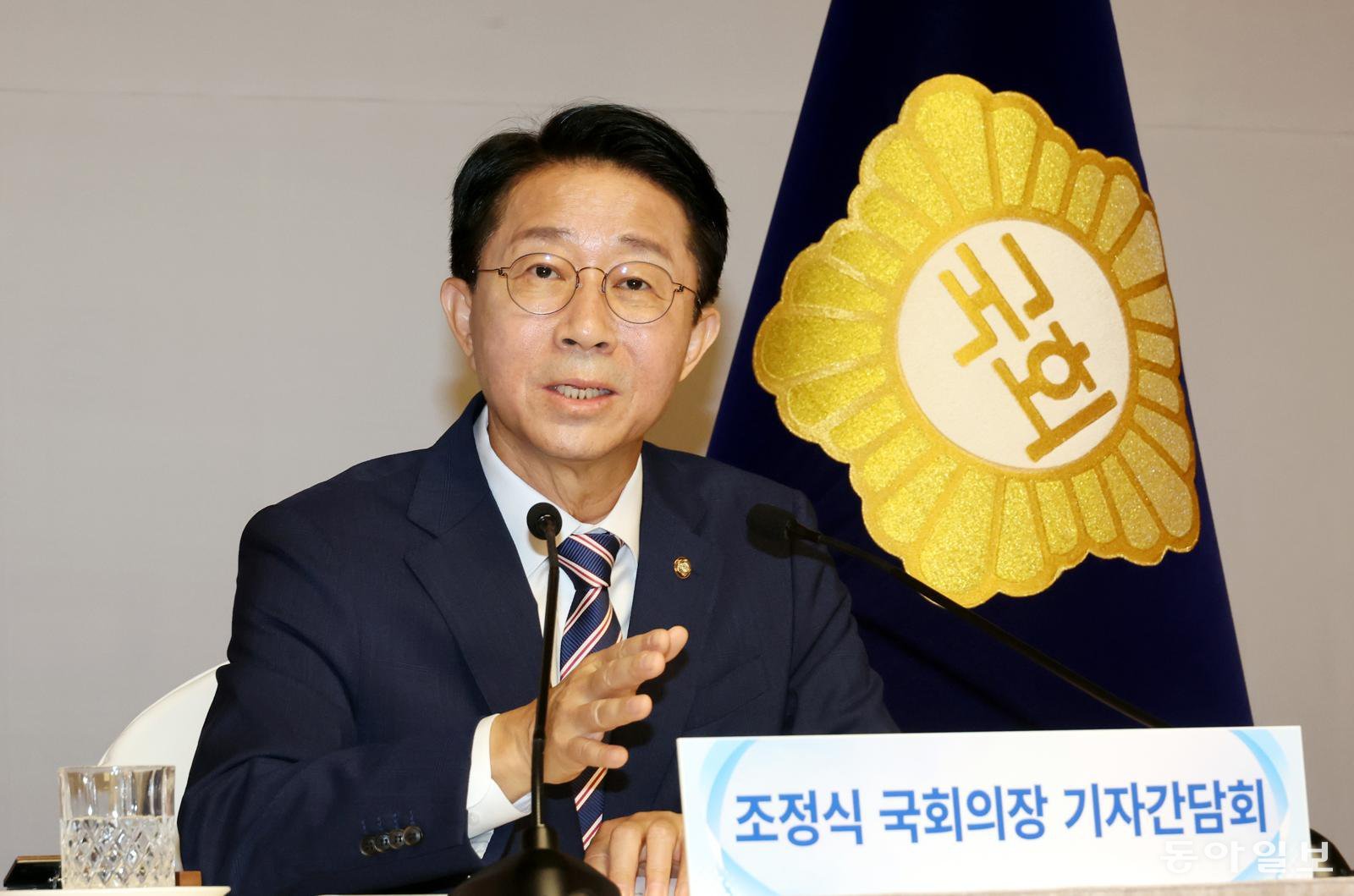
South Korean Assembly Speaker's remarks stall constitutional amendment talks
Translated from Korean, summarized and contextualized by DistantNews.
At a glance
News
Sources not specified
Context piece
- South Korean National Assembly Speaker Cho Jeong-sik stated that amending the constitution to extend the current president's term is not a subject for discussion.
- Cho clarified his remarks after facing criticism for suggesting presidential term extension could be a matter for public choice, aiming to quell controversy.
- The speaker's comments have stalled constitutional amendment discussions, which have been ongoing for over 30 years, raising doubts about achieving national consensus.
National Assembly Speaker Cho Jeong-sik has stirred controversy with his remarks on constitutional amendments regarding presidential term limits. Initially stating that extending the current president's term was not a subject for constitutional revision, Cho later clarified his position on Facebook, asserting that Article 128, Clause 2 of the constitution, which prohibits the retroactive application of term extensions, must be respected. He expressed regret for any misunderstanding or controversy his comments may have caused.
The extension or change of the current president's term is not a subject for constitutional amendment discussion.
The controversy arose after Cho's earlier statement during a press conference, where he suggested that presidential term extension could be a matter of public choice. This was interpreted by some as opening the door for President Lee Jae-myung's potential re-election. Cho's subsequent clarification, however, has done little to quell the fallout. Critics argue that he should have made his stance on term limits clear immediately after the press conference, rather than issuing a vague explanation through his office that it was a "principled statement."
The speaker's "regret" has also been met with ambiguity, leaving it unclear whether it was an apology for his controversial remarks or dissatisfaction with the political and media reactions. Constitutional amendment discussions in South Korea have been stalled for over 30 years, with the current debate facing further obstacles due to Cho's statements. The opposition People Power Party has consistently demanded that any amendment discussions must include a clear declaration from President Lee that he will not seek a second term.
I regret that my words, contrary to my intentions, have caused misunderstanding and controversy.
Cho's comments have cast a shadow over the possibility of achieving national consensus for constitutional reform, which requires bipartisan support and broad public agreement. As the head of the legislature, he is expected to act as an impartial mediator. However, his recent statements have undermined this role, and he is urged to move beyond the perception of being elected with President Lee's support and offer a more sincere apology to restore trust and facilitate meaningful dialogue on constitutional reform.
The provision in Article 128, Clause 2 of the Constitution, which states that constitutional amendments for extending or changing the presidential term shall not apply to the incumbent president, must be respected.
DistantNews Editorial
Originally published by Dong-A Ilbo in Korean. Translated, summarized, and contextualized by our editorial team with added local perspective. Read our editorial standards.
More Stories


From Our Blog

What Gets Lost (and Found) When News Is Translated

The Critical Role of Diaspora Media in Global News

What Travellers Should Know About Countries with Restricted Press

A Digital Nomad's Guide to Following Local News

How the Same Story Looks Different in Different Countries
