


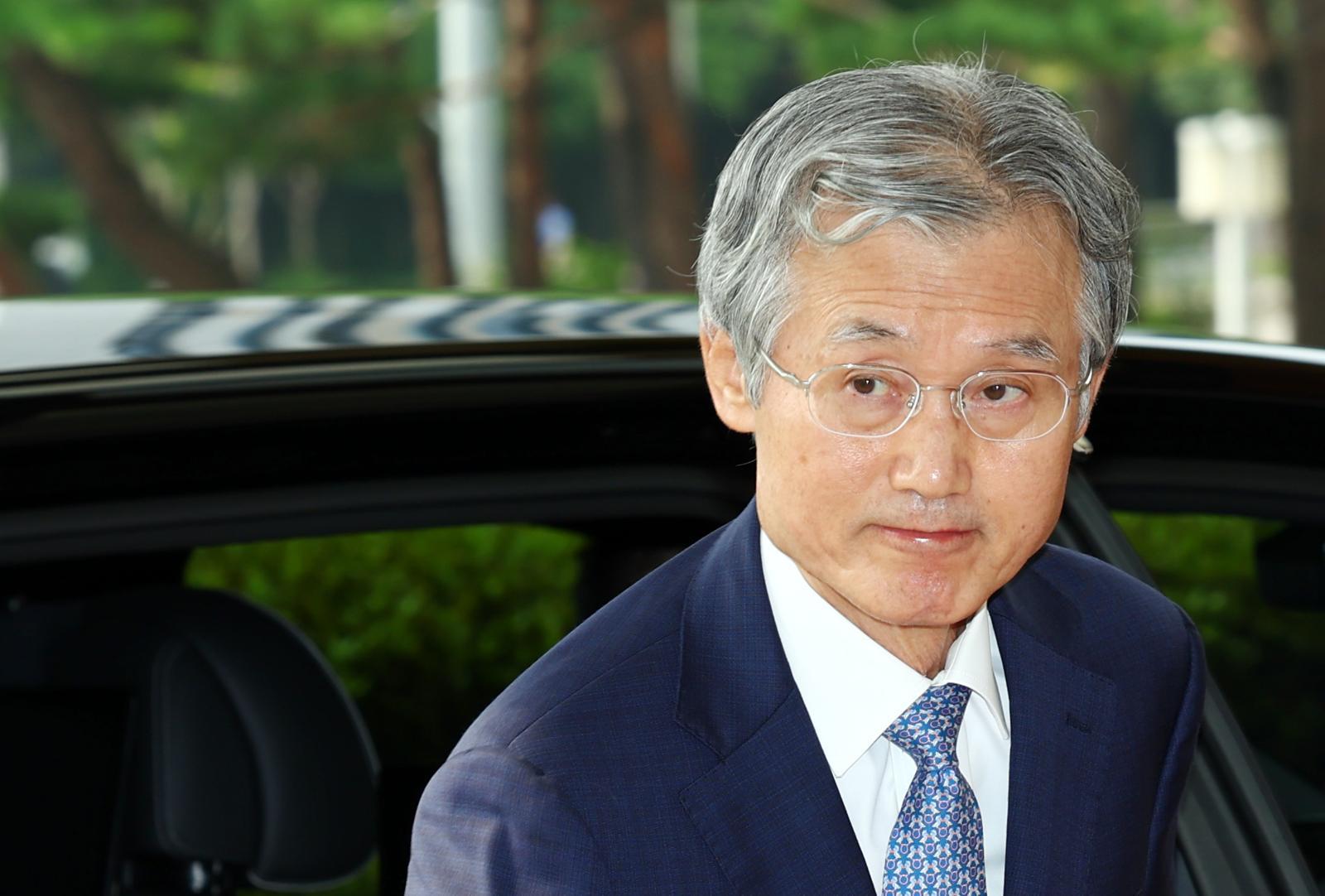
South Korean Chief Justice Summons Criticized as Undermining Judicial Independence
Translated from Korean, summarized and contextualized by DistantNews.
At a glance
Opinion
Sources not specified
Under investigation
- South Korea's main opposition party, the Democratic Party, summoned the Chief Justice of the Supreme Court to testify before a parliamentary committee.
- The summons relates to the Chief Justice's method of recommending candidates for Supreme Court justice, bypassing traditional presidential interviews.
- Critics argue this move breaks precedent and undermines judicial independence, with the opposition party's stance contradicting its past positions on the matter.
The Democratic Party, South Korea's main opposition, has summoned Chief Justice Cho Hee-dae to appear before the National Assembly's Legislation and Judiciary Committee. The hearing, scheduled for August 21, 2026, aims to question Cho regarding his recent method of recommending candidates for Supreme Court justice positions.
Specifically, Cho bypassed the customary practice of meeting with the President to discuss and recommend candidates, opting instead for a written submission. The Democratic Party views this deviation from established protocol as problematic and intends to hold the Chief Justice accountable. The ruling People Power Party opposed the summons, walking out of the committee meeting before the vote.
The Chief Justice's written submission of candidates for Supreme Court justice, breaking the precedent of prior consultation with the Blue House, is difficult to understand.
Critics find Cho's decision difficult to understand, especially given the prolonged vacancies on the Supreme Court. Breaking with the tradition of prior consultation with the Blue House (the presidential office) to effectively notify the President of his choices has raised eyebrows. However, the summons itself sets a significant precedent. Since democratization in 1987, no Chief Justice has ever been summoned as a witness by the National Assembly.
Since democratization in 1987, the National Assembly has never summoned a Chief Justice as a witness. This was based on respecting the independence of the judiciary according to the separation of powers.
Traditionally, the Chief Justice would only offer brief remarks during parliamentary inspections and defer substantive answers to the Director of the Court Administration, who is not involved in judicial proceedings. The Democratic Party itself has previously argued against summoning the Chief Justice, citing concerns about undermining judicial independence. In 2018, they opposed the then-ruling Liberty Korea Party's demand for Chief Justice Kim Myung-su to answer questions during a parliamentary audit, arguing it could lead to the Chief Justice having to answer questions related to trials. Similarly, in 2021, they criticized the People Power Party's request for Kim to appear before the Legislation and Judiciary Committee, stating it could harm judicial independence.
This shift in the Democratic Party's stance appears contradictory, given their past arguments. The article notes that summoning chief justices as witnesses is rare even in advanced countries. In the U.S., Chief Justice John Roberts refused a Senate Judiciary Committee request in 2023, citing the principle of separation of powers. Germany and France do not summon their top judges. In Japan, where the Chief Justice also oversees judicial administration, it is customary for officials from the General Secretariat of the Court to appear before the Diet. The editorial concludes that the Democratic Party should withdraw the summons, arguing that setting a new, potentially controversial precedent by breaking established practices is unwise.
The Democratic Party's current stance of summoning the Chief Justice to the National Assembly is inconsistent with their past arguments.
DistantNews Editorial
Originally published by Dong-A Ilbo in Korean. Translated, summarized, and contextualized by our editorial team with added local perspective. Read our editorial standards.
More Stories


From Our Blog

What Gets Lost (and Found) When News Is Translated

The Critical Role of Diaspora Media in Global News

What Travellers Should Know About Countries with Restricted Press

A Digital Nomad's Guide to Following Local News

How the Same Story Looks Different in Different Countries
