


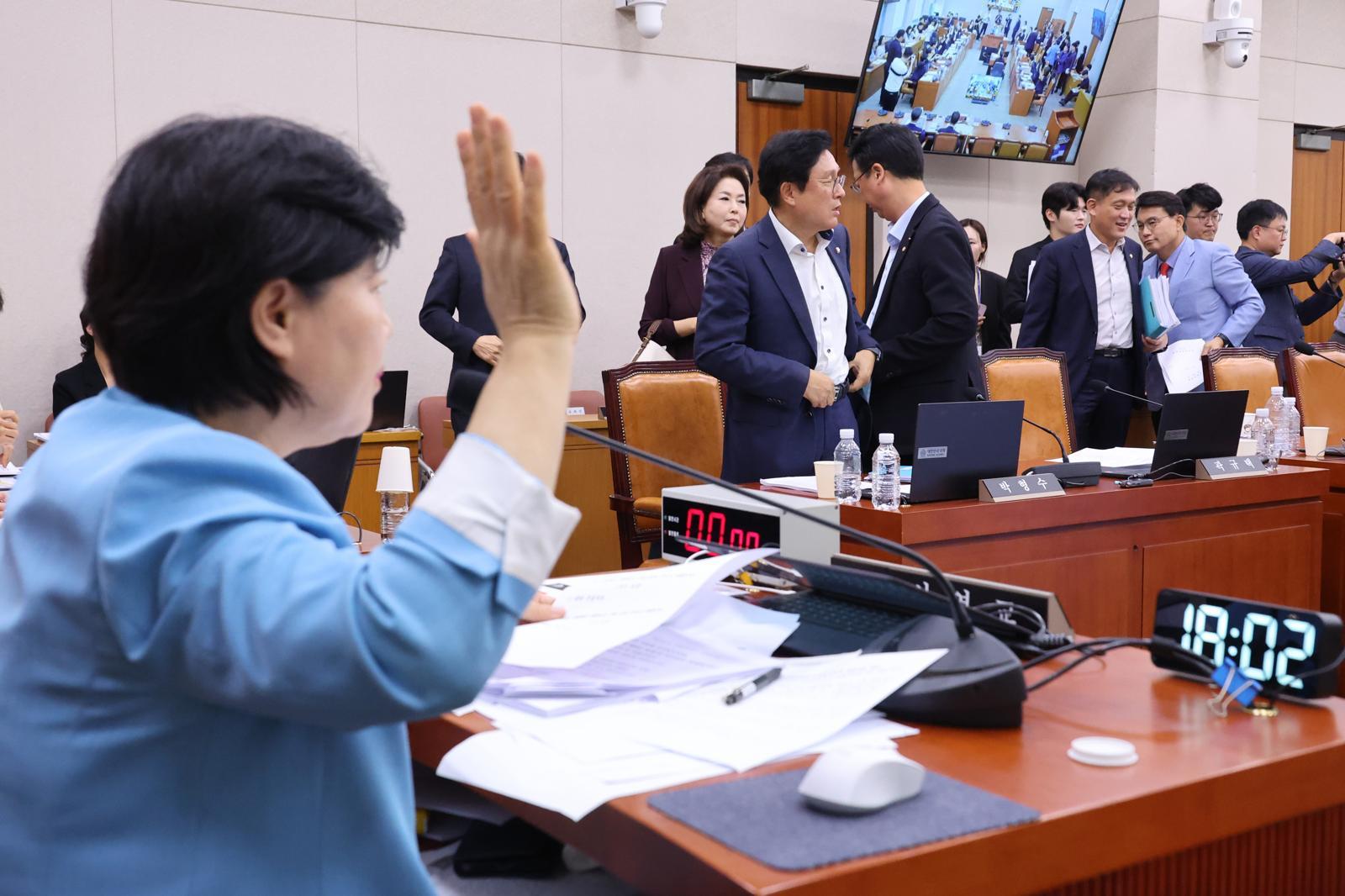
South Korean committee passes bill to curb prosecutor powers
Translated from Korean, summarized and contextualized by DistantNews.
At a glance
News
Named sources
New plan
- South Korea's National Assembly's Legislation and Judiciary Committee passed a bill to abolish prosecutors' supplementary investigation rights.
- The main opposition Democratic Party plans to push for the bill's final passage in a plenary session on July 30.
- The revision aims to separate investigation and prosecution, with prosecutors able to request supplementary investigations from police within a set timeframe.
A contentious bill to abolish prosecutors' supplementary investigation rights has cleared a key hurdle in South Korea's National Assembly, passing the Legislation and Judiciary Committee. The main opposition Democratic Party, which spearheaded the legislation, aims to secure final passage in a plenary session on July 30.
The bill to revise the Criminal Procedure Act has passed the National Assembly's Legislation and Judiciary Committee after 70 years. I want to call this bill the Criminal Justice Normalization Act.
The proposed revision fundamentally alters the balance of power between prosecutors and the police. It seeks to completely abolish prosecutors' authority for supplementary investigations while allowing them to request such investigations from the police. Police officers receiving these requests would generally be required to complete the supplementary investigations within one month.
The bill also introduces provisions for prosecutors to set deadlines when requesting reinvestigations into cases that the police have decided not to forward. Furthermore, while prosecutors can solicit opinions from parties involved in a case or request relevant materials for prosecutorial decisions, they are explicitly barred from directly collecting evidence or using coercive measures, a move intended to clearly distinguish these actions from direct investigation.
For the past 70 years, the abuse of power by prosecutors, who concentrated all authority including investigation, prosecution, non-prosecution, and warrant requests, has been solely borne by the people.
To enhance victim protection, the revision includes new rights for victims to request access to and copies of investigative records, as well as for complainants to file objections. Procedures for notifying about cases not forwarded by judicial police are to be strengthened. The scope of cases eligible for review by prosecutors will expand to include crimes against vulnerable groups, such as domestic violence and elder abuse, with the venue for such reviews shifting to collegiate panels at district courts.
Only judicial police officers, prosecutors, and National Investigation Agency staff who work solely for the people and for the relief of victims, and who work fairly, remain.
DistantNews Editorial
Originally published by Dong-A Ilbo in Korean. Translated, summarized, and contextualized by our editorial team with added local perspective. Read our editorial standards.
More Stories



From Our Blog

What Gets Lost (and Found) When News Is Translated

The Critical Role of Diaspora Media in Global News

What Travellers Should Know About Countries with Restricted Press

A Digital Nomad's Guide to Following Local News

How the Same Story Looks Different in Different Countries
