


South Korean investors exit volatile market, favoring US stocks; semiconductor outlook remains strong
Translated from Korean, summarized and contextualized by DistantNews.
At a glance
News
Sources not specified
Context piece
- South Korean individual investors sold off 2.4 trillion won ($1.7 billion) in stocks, primarily semiconductors, as the market experienced volatility.
- Foreign investors increased their holdings in semiconductor stocks, anticipating prolonged supply shortages.
- Analysts predict a structurally improved semiconductor market due to increased AI investment and HBM production, with potential supply shortages extending to 2028.
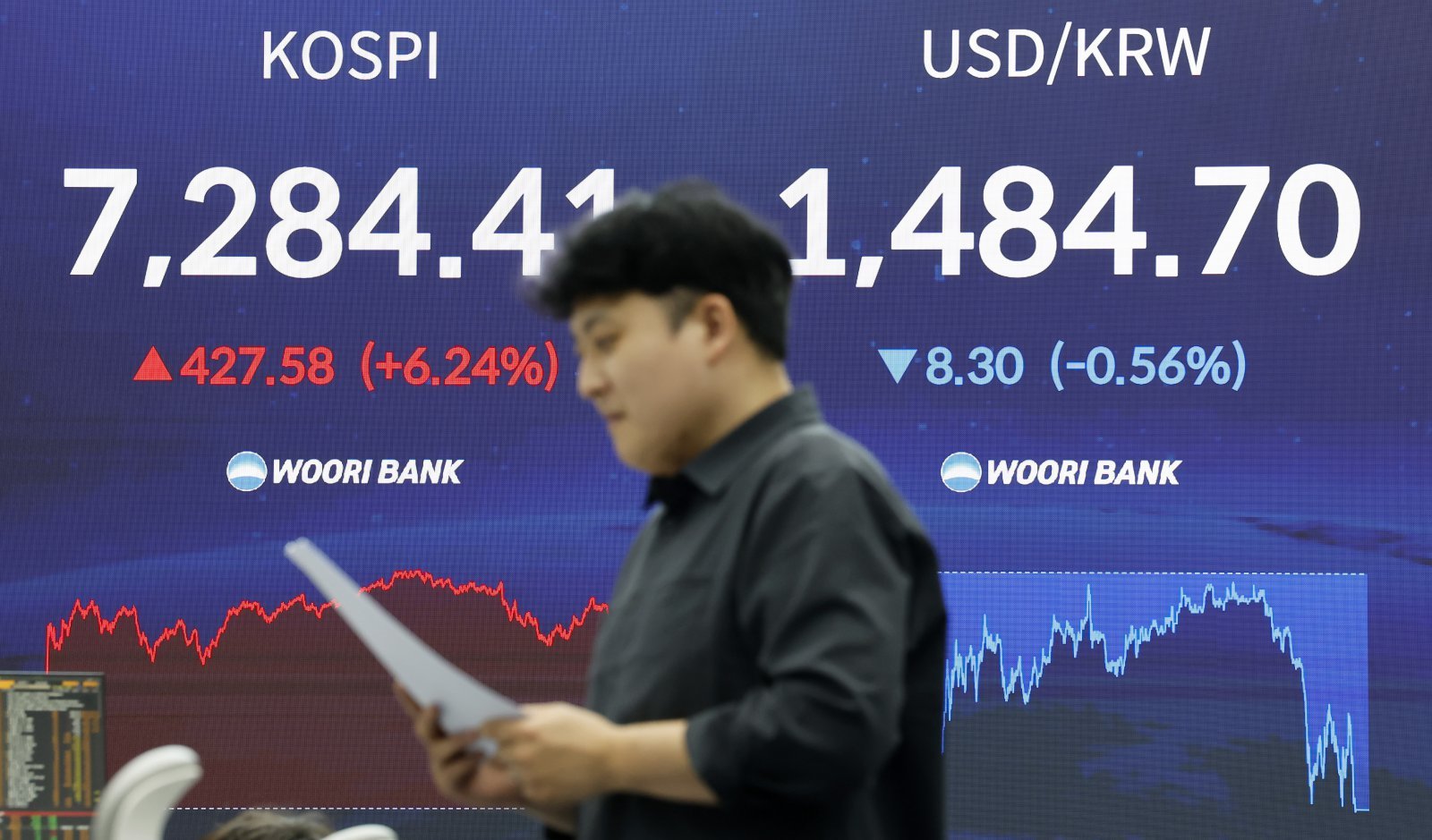
South Korean individual investors have offloaded approximately 2.4 trillion won (about $1.7 billion) in stocks, with a significant portion targeting semiconductor companies, amid a volatile market. This move comes as the KOSPI index experienced a rollercoaster ride, recovering to the 7200-point level after a dip to 6400.
While retail investors cashed out, foreign investors continued to buy into the semiconductor sector, betting on a prolonged period of supply constraints. This divergence in investment behavior highlights differing market sentiments. The KOSPI closed up 6.24% on July 15, driven by easing inflation concerns following US CPI data and a surge in semiconductor stocks.
Analysts at securities firms are optimistic about the long-term prospects of the semiconductor industry. They anticipate a structural improvement in the market, fueled by increased investment in artificial intelligence (AI) and the expansion of High Bandwidth Memory (HBM) production. This focus on HBM is expected to constrain the production capacity for general-purpose DRAM, leading to tighter supply.
KB Securities forecasts that next year could be the tightest period for memory semiconductor supply in the industry's 70-year history. They project that the proportion of HBM in global DRAM wafer production will more than double from 15% this year to 34% next year. This concentration of new capacity on HBM means that the expansion of general-purpose memory supply will be significantly limited, potentially leading to a "supply cliff" rather than just a tight market.
Some market observers see the recent shift in trading patterns, foreigners buying and individuals selling, as a potential "hand-over" similar to previous market bottoms. Historical data from IT bubbles and market lows in 2004 and 2009 show a pattern of foreigners increasing net buying before and after market bottoms, with the gap between foreign buying and individual selling widening over time. This suggests that continued foreign buying and individual selling could increase confidence in the current market bottom.
DistantNews Editorial
Originally published by Dong-A Ilbo in Korean. Translated, summarized, and contextualized by our editorial team with added local perspective. Read our editorial standards.
More Stories


From Our Blog

What Gets Lost (and Found) When News Is Translated

The Critical Role of Diaspora Media in Global News

What Travellers Should Know About Countries with Restricted Press

A Digital Nomad's Guide to Following Local News

How the Same Story Looks Different in Different Countries
