


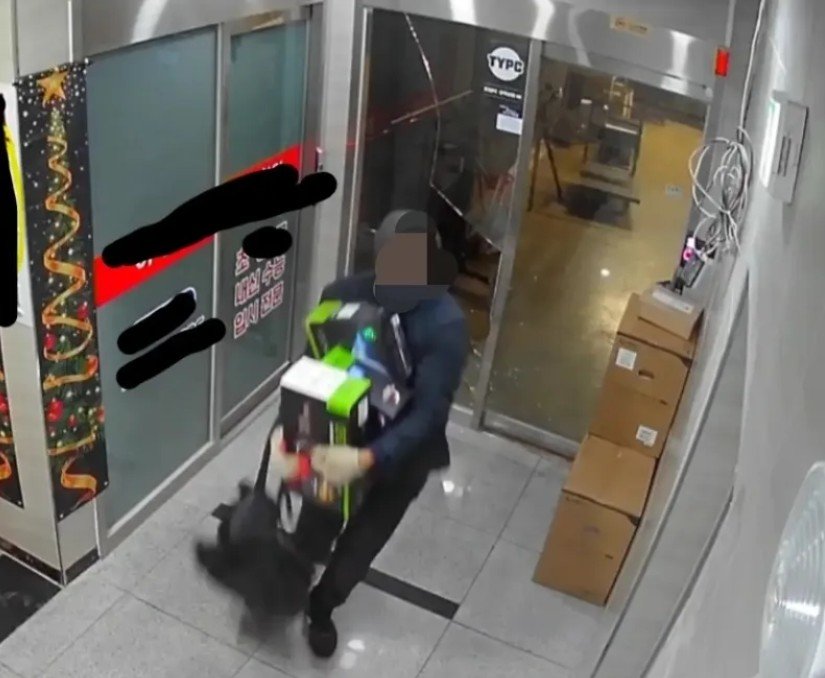
South Korean Man Sentenced to 1 Year for Theft, Claims ChatGPT Advised Him
Translated from Korean, summarized and contextualized by DistantNews.
At a glance
News
Official statement
Outcome reported
- A man in his 40s was sentenced to one year in prison for stealing computer parts worth 17 million won.
- The suspect claimed to have received advice from ChatGPT for the crime.
- The court found no evidence of AI advice and cited the suspect's confession and lack of victim agreement as sentencing factors.
A man in his 40s has been sentenced to one year in prison for stealing high-value computer graphics cards worth approximately 17 million South Korean won. The theft occurred in February when the suspect, identified as A, broke into a computer parts store in Pyeongtaek, Gyeonggi Province, using a drill after covering his face with a mask.
During the investigation, A claimed he committed the theft on the advice of ChatGPT, an artificial intelligence chatbot. He stated he believed that by sending the proceeds to accounts related to illegal "reading rooms" (likely referring to fraudulent investment schemes), the investigation would be halted due to an unspecified suspect.
The defendant stated that he received advice from AI, but the forensic results of his mobile phone did not confirm any corresponding conversations.
However, the court dismissed this defense. Presiding Judge Kim Dae-hyun of the Pyeongtaek Branch of the Suwon District Court stated that forensic analysis of the suspect's mobile phone did not reveal any conversations supporting his claim of receiving advice from AI. The court emphasized that even if such advice were given, it would not justify the crime.
In determining the sentence, the court considered the suspect's confession, his submission of a letter of remorse, the fact that no agreement has yet been reached with the victim, and that this is his first offense. The court noted these factors in its sentencing decision.
Just these circumstances alone cannot justify the commission of this crime.
DistantNews Editorial
Originally published by Dong-A Ilbo in Korean. Translated, summarized, and contextualized by our editorial team with added local perspective. Read our editorial standards.
More Stories


From Our Blog

What Gets Lost (and Found) When News Is Translated

The Critical Role of Diaspora Media in Global News

What Travellers Should Know About Countries with Restricted Press

A Digital Nomad's Guide to Following Local News

How the Same Story Looks Different in Different Countries
