


South Korean Markets Plunge Amidst U.S. Semiconductor Shock and Rate Hike Fears
Translated from Korean, summarized and contextualized by DistantNews.
At a glance
Analysis
Sources not specified
Context piece
- South Korea's stock markets experienced a sharp decline on "Black Monday," with the KOSPI falling over 8% and the KOSDAQ dropping below 1,000 points.
- The sell-off was triggered by a "semiconductor shock" originating from the U.S., exacerbated by rising U.S. interest rate expectations and geopolitical tensions.
- Trading halts, including circuit breakers and sidecars, were activated multiple times due to the extreme volatility.
South Korea's stock markets plunged into a "Black Monday" on June 8, with the benchmark KOSPI index collapsing by over 8% and the tech-heavy KOSDAQ falling below the 1,000-point threshold. The dramatic downturn was largely driven by a "semiconductor shock" that originated in the U.S. market.
Investor confidence was further eroded by a confluence of factors, including heightened expectations of U.S. interest rate hikes, prolonged geopolitical tensions, and significant initial public offerings. This amplified uncertainty led to extreme volatility in the Korean stock market, prompting the activation of trading suspension mechanisms like the circuit breaker and the sell-side car multiple times within the day.
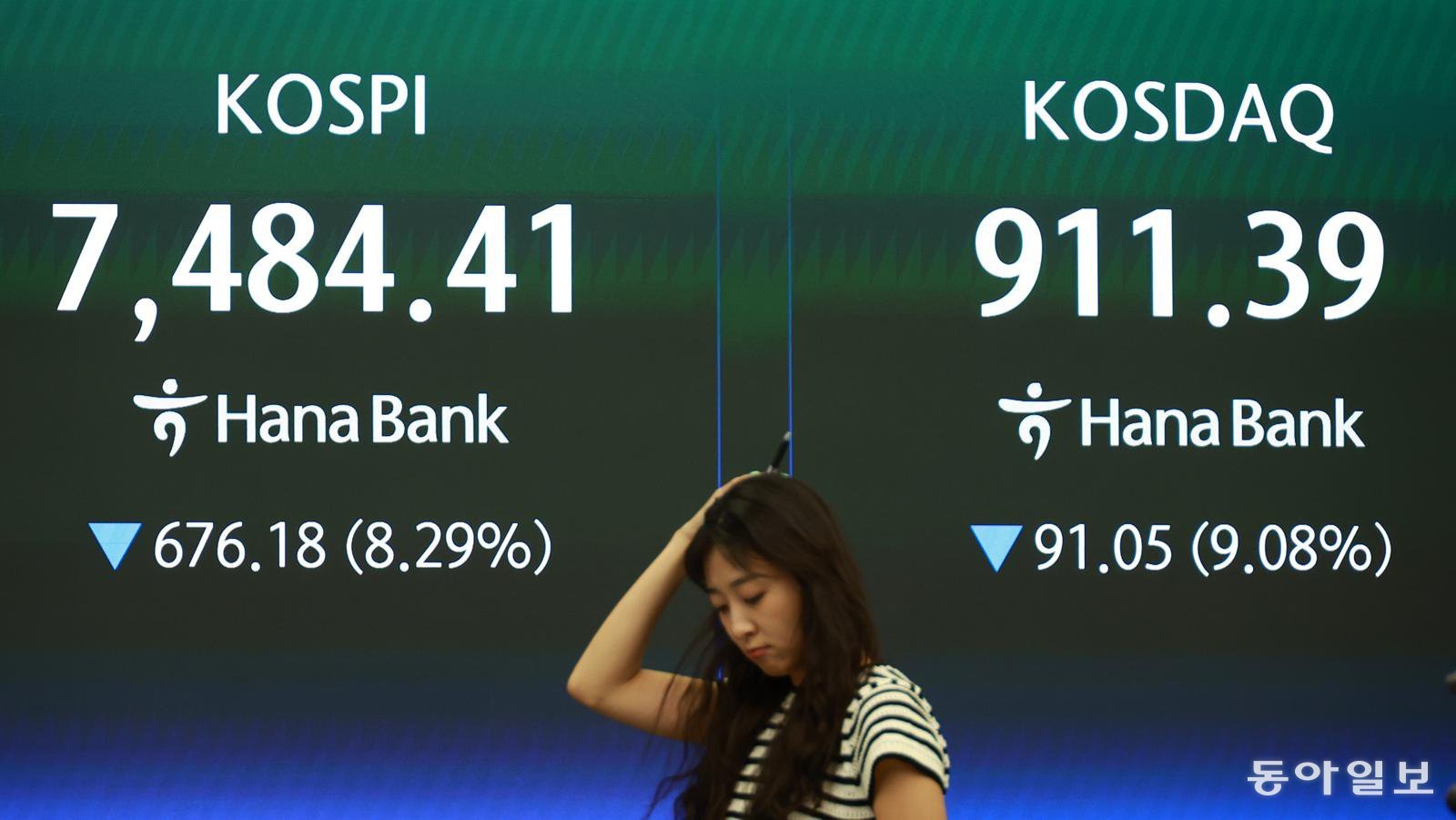
The KOSPI closed down 8.29% at 7,484.41 points after trading was halted for 20 minutes due to an over 8% intraday drop. Similarly, the KOSDAQ saw its sell-side car triggered for the fourth time this year, ending the day down 9.08% at 911.39 points.
Paradoxically, strong U.S. employment data released the previous Friday fueled fears of imminent U.S. Federal Reserve rate hikes, which, combined with disappointing earnings from U.S. chipmaker Broadcom, led to a sharp decline in semiconductor stocks. This U.S. trend directly impacted major Korean tech giants like Samsung Electronics and SK Hynix. The market's woes are compounded by an overreliance on these "semiconductor titans," structural issues within the KOSDAQ, and investor anxiety following recent rapid gains. The current market environment, characterized by sharp swings, presents significant risks for investors, particularly those utilizing leveraged products like margin trading and inverse ETFs, due to the potential for rapid capital erosion.
DistantNews Editorial
Originally published by Dong-A Ilbo in Korean. Translated, summarized, and contextualized by our editorial team with added local perspective. Read our editorial standards.
More Stories


From Our Blog

What Gets Lost (and Found) When News Is Translated

The Critical Role of Diaspora Media in Global News

What Travellers Should Know About Countries with Restricted Press

A Digital Nomad's Guide to Following Local News

How the Same Story Looks Different in Different Countries
