

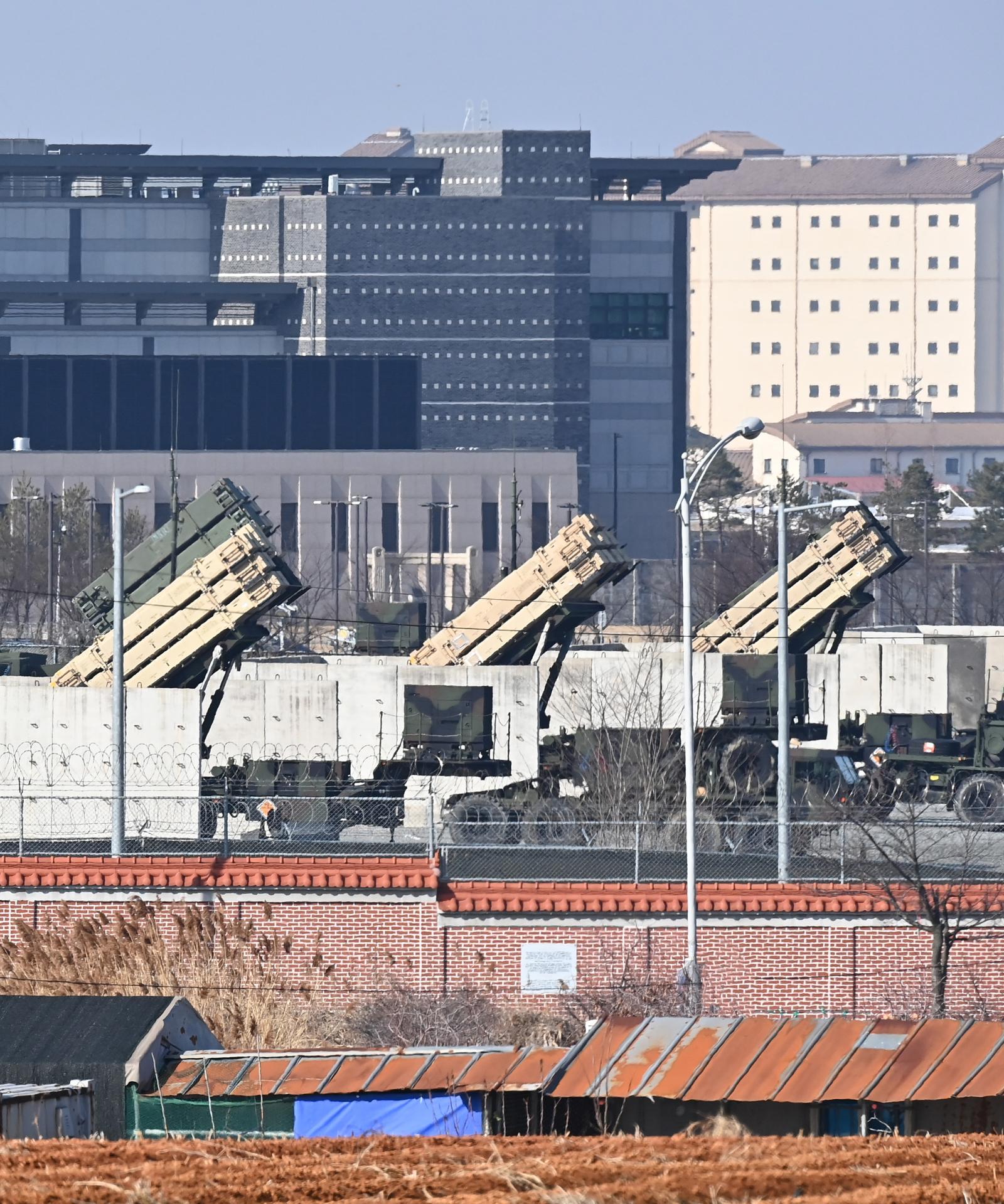

South Korean Opposition Party Links Wartime Command Transfer to Preventing Domestic Insurrection
Translated from Korean and summarized by DistantNews. Read the original for the full story.
At a glance
News
Named sources
Context piece
- South Korea's Democratic Party asserts that the rapid transfer of wartime operational control (OPCON) is vital for national security and preventing domestic unrest.
- The party believes OPCON transfer can serve as a systemic safeguard against internal sedition, drawing parallels between past and present situations.
- They argue that a perceived reliance on US intervention has historically emboldened potential internal threats.
South Korea's main opposition party, the Democratic Party, declared on August 28th that the swift transfer of wartime operational control (OPCON) from the United States to South Korea is a critical mechanism for safeguarding national security and preventing domestic insurrections. The party emphasized that this transfer is not merely a military matter but a crucial safeguard for political stability.
Wartime operational control must be transferred quickly, which not only protects our security but is also the most important device and mechanism to prevent further insurrections.
Park Sun-won, a supreme council member of the Democratic Party, stated at a meeting in Incheon that the transfer of OPCON should be expedited. He argued that this move would solidify the South Korean president's command authority, as already stipulated in the constitution, and ensure that military laws and soldier basic laws are more concretely reflected. Park suggested that the roots of domestic sedition are broader than commonly understood and are intrinsically linked to the issue of OPCON.
The roots of sedition we know are much wider. This is also linked to OPCON.
Park drew a parallel between the current situation and the 1980s, when the Chun Doo-hwan military junta was able to withdraw troops from the front lines. He attributed this action to the belief that the U.S. would ultimately protect South Korea in case of an emergency. "The same applies to the situation in 2024," Park asserted, suggesting that a misguided belief that the U.S. would intervene in a full-scale war with North Korea could embolden internal actors to instigate crises, including the escalation from a state of war to a crisis or localized conflicts.
The same applies to the situation in 2024. Ultimately, even if North Korea invades the South and it escalates into a full-scale war, the belief that the United States will protect us allows for the wrong conviction that we can do anything, that we can tolerate the transition from a state of war to a crisis, and that we can tolerate localized conflicts.
Furthermore, Park highlighted the importance of OPCON transfer in the context of evolving U.S.-South Korea relations and the geopolitical landscape of the Korean Peninsula. He noted the upcoming U.S.-China summit and the APEC meeting as potential turning points. Park expressed concern about the U.S.'s ability to maintain focus on the Korean Peninsula if it becomes involved in other global military conflicts. He concluded by stressing that the rapid transfer of OPCON is paramount for South Korea to take responsibility for its own security and stability.
Therefore, from a comprehensive perspective of protecting peace and security in times of emergency, and preventing sedition in peacetime, the swift transfer of OPCON is crucial not only for protecting our security but also for eliminating further insurrections.
About this summary
Originally published by Dong-A Ilbo in Korean. Translated, summarized, and contextualized automatically by DistantNews, with a note on how the source frames the story. Not individually reviewed before publishing. How this works.
More Stories


From Our Blog

What Gets Lost (and Found) When News Is Translated

The Critical Role of Diaspora Media in Global News

What Travellers Should Know About Countries with Restricted Press

A Digital Nomad's Guide to Following Local News

How the Same Story Looks Different in Different Countries
