


South Korean Party Leader Kim Min-seok Advocates for Expanding Voter Base, Clashing with Former Leader
Translated from Korean and summarized by DistantNews. Read the original for the full story.
At a glance
News
Named sources
Context piece
- Democratic Party leader Kim Min-seok stressed the need to expand the party's support base to include centrist and conservative voters, diverging from former leader Chung Chin-sang's focus on core supporters.
- Chung Chin-sang criticized Kim's approach as "mic dictatorship" via Facebook, sparking a public disagreement between the current and former party leaders.
- The party workshop also addressed legislative priorities for the upcoming regular session, including economic stability, real estate, and support for small business owners.
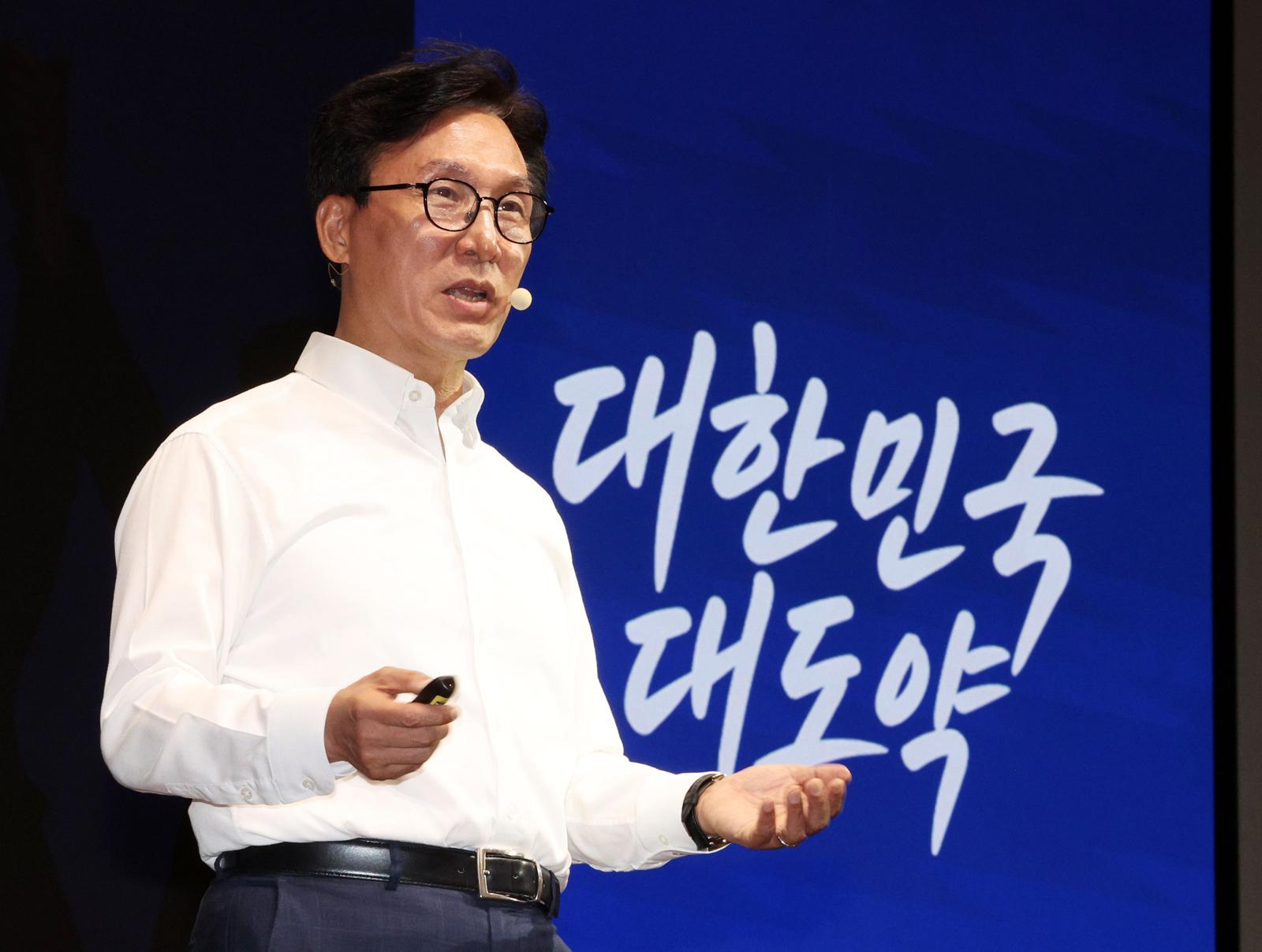
The Democratic Party of Korea has convened its first national assembly workshop since the inauguration of its new leader, Kim Min-seok, signaling a push to consolidate the party's direction. At the event, Kim articulated a vision for "expansion strategy," advocating for the party to reach beyond its traditional base and appeal to centrist and even conservative voters.
The reason for this convention was the difference in methodology. Former leader Chung Chin-sang is a proponent of the 'no centrists' theory. He holds the view that 'we can win based on the unity of our camp.'
Kim directly contrasted his approach with that of former party leader Chung Chin-sang, whom he characterized as a proponent of the "no centrists" theory. "The reason for this convention was the difference in methodology," Kim explained, referring to the recent party leadership race. He presented his "livelihood, pragmatism, and expansion" line as the party's chosen path, suggesting that both he and President Lee Jae-myung share a similar outlook on broadening support.
However, Kim's remarks immediately ignited a public dispute. Chung Chin-sang responded on Facebook, expressing regret that Kim had used his name as a tool for his own arguments. "My claims are a subject for discussion, not something a party leader should unilaterally dismiss as wrong while holding the microphone. This is mic dictatorship," Chung stated, conveying his displeasure.
I express regret that my name was used as a tool for your logic. My claims are a subject for discussion, not something a party leader should unilaterally dismiss as wrong while holding the microphone. This is mic dictatorship.
Adding to the tension, Choi Min-hee, a supreme council member aligned with Chung, also posted on Facebook. She questioned the order of priorities, suggesting that consolidating support within the Democratic and reformist factions should precede efforts to win over swing voters. The conflict between the current and former leadership prompted Kim to later post on X, formerly Twitter, acknowledging that tensions from the leadership race, stemming from differing methodologies, should be overcome through healthy debate and seeking understanding for any discomfort caused.
The tensions from the convention, stemming from differences in methodology, should be overcome through healthy debate. I seek understanding if any discomfort was caused.
About this summary
Originally published by Hankyoreh in Korean. Translated, summarized, and contextualized automatically by DistantNews, with a note on how the source frames the story. Not individually reviewed before publishing. How this works.
More Stories

From Our Blog

What Gets Lost (and Found) When News Is Translated

The Critical Role of Diaspora Media in Global News

What Travellers Should Know About Countries with Restricted Press

A Digital Nomad's Guide to Following Local News

How the Same Story Looks Different in Different Countries
