


South Korean President Calls Ballot Shortage 'Very Serious Problem,' Demands Accountability
Translated from Korean, summarized and contextualized by DistantNews.
At a glance
News
Named sources
Under investigation
- South Korean President Lee Jae-myung described the ballot shortage during the June 6 local elections as a "very serious problem."
- He stated that failing to guarantee citizens' right to vote undermines national sovereignty and constitutional order.
- The president called for an official investigation into the incident, accountability for those responsible, and the development of solutions to prevent recurrence.
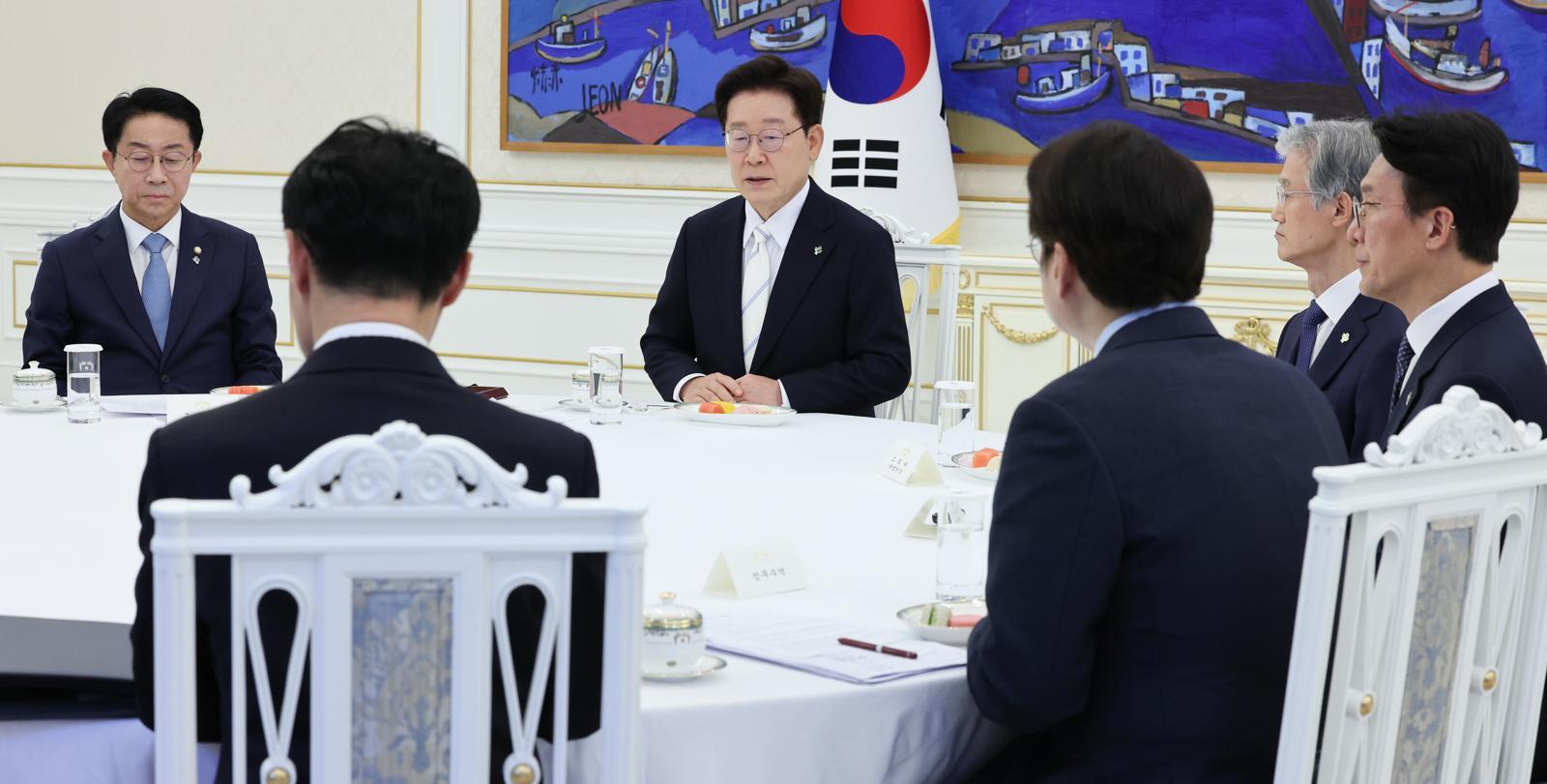
South Korean President Lee Jae-myung has strongly condemned the ballot shortage that marred the recent June 6 local elections, calling it a "very serious problem" that undermines national sovereignty. Speaking at a meeting with the heads of the four branches of government, Lee emphasized that the right to vote is a cornerstone of the nation's constitutional order.
Failing to guarantee the exercise of the right to vote is a very serious problem for which we have no excuse, no matter how many excuses we make.
"Failing to guarantee the exercise of the right to vote is a very serious problem for which we have no excuse, no matter how many excuses we make," Lee stated. He highlighted that the election management commission operates as an independent constitutional body, making official scrutiny difficult even in cases of misconduct. However, he stressed that the situation cannot be ignored.
The election is a process of practicing national sovereignty, which forms the core of South Korea's fundamental constitutional order. However, we failed to properly guarantee the exercise of the right to vote, regardless of the number of ballots or whether it affected the outcome.
President Lee urged for an immediate official discussion on how to address the issue. He called for a clear investigation into the facts, appropriate accountability for those responsible from the public's perspective, and the exploration of possible countermeasures. The meeting included the Prime Minister, the Speaker of the National Assembly, the Chief Justice of the Supreme Court, and the President of the Constitutional Court.
The Election Management Commission is an independent agency established by the Constitution, so no one can officially comment on its work. Even if it commits some wrongdoing, it is interpreted under current law that an audit cannot be conducted. Therefore, it is difficult to officially confirm what is happening, but we cannot allow this situation to continue.
National Assembly Speaker Cho Jeong-sik pledged to launch a parliamentary inquiry to uncover the truth behind the ballot shortage. Chief Justice Jo Hee-dae vowed that the judiciary would do its utmost to protect the fairness of elections and citizens' rights. Constitutional Court President Kim Sang-hwan urged a thorough review of the election system and operations to prevent future failures, expressing hope for a return to a democracy that garners widespread public trust. Prime Minister Kim Boo-kyum acknowledged the deep sense of responsibility and apology felt towards citizens whose right to vote was compromised.
The moment voters turn away because of a lack of ballots, the procedural and institutional legitimacy is undermined, regardless of the election results. We will promptly launch a parliamentary inquiry to investigate the truth.
DistantNews Editorial
Originally published by Dong-A Ilbo in Korean. Translated, summarized, and contextualized by our editorial team with added local perspective. Read our editorial standards.
More Stories


From Our Blog

What Gets Lost (and Found) When News Is Translated

The Critical Role of Diaspora Media in Global News

What Travellers Should Know About Countries with Restricted Press

A Digital Nomad's Guide to Following Local News

How the Same Story Looks Different in Different Countries
