


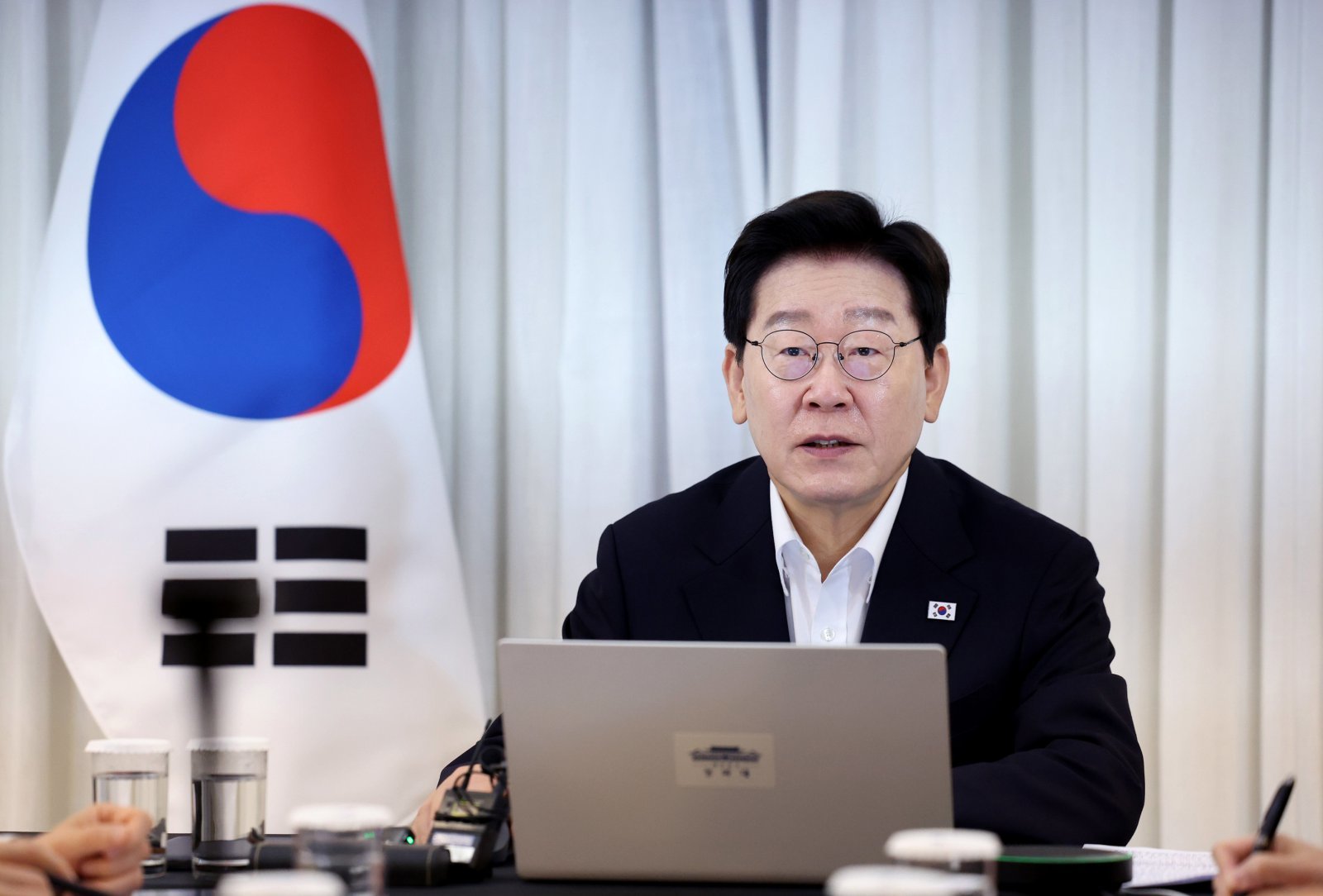
South Korean President Lee Advocates for Free Trade Order, WTO Reform
Translated from Korean, summarized and contextualized by DistantNews.
At a glance
News
Sources not specified
Context piece
- South Korean President Lee Jae-myung advocated for maintaining a free, fair, and predictable trade order during his state visit to Brazil.
- He called for WTO reform and enhanced functionality to address the rise of protectionism and global market uncertainties.
- Lee also expressed commitment to resolving remaining issues in the South Korea-Mercosur FTA and resuming North-South and North Korea-U.S. dialogues.
During his state visit to Brazil, South Korean President Lee Jae-myung emphasized the necessity of upholding a free, fair, and predictable international trade order. Responding to recent U.S. tariffs imposed on over 60 countries, including South Korea, Lee stated in an interview with local media outlet 'O Globo' that the principles of a predictable trade system are shared values for the international community. He acknowledged that differing economic structures and interests make uniform responses difficult for nations but stressed the importance of dialogue and cooperation.
The principle of maintaining a free, fair, and predictable trade order must be a value shared by the international community.
President Lee highlighted the growing trend of protectionism, which he believes weakens the World Trade Organization (WTO) and increases uncertainty for businesses globally. He argued that in such times, collaborative efforts to find solutions are paramount. Lee reiterated that countries must cooperate more closely to uphold multilateralism, free trade, and international norms, especially amid global uncertainties. He also pointed out that the WTO has struggled to adapt to the changing trade environment, underscoring the need for its reform and strengthened functions to meet contemporary challenges.
As each country has different economic structures and interests, it is difficult for all countries to respond in the same way.
Regarding the South Korea-Mercosur Free Trade Agreement (FTA), Lee expressed South Korea's commitment to working closely with Mercosur members to resolve outstanding issues and finalize a high-level agreement that offers substantial mutual benefits. He noted that trade negotiations involve sensitive matters like market access, making it crucial to achieve balanced and mutually beneficial outcomes rather than pre-empting specific timelines. On regional and international affairs, Lee addressed the Middle East situation, stressing the need for close international cooperation and solidarity. He pledged South Korea's role as a reliable partner committed to shared prosperity.
As protectionism has spread recently, the WTO's functions have weakened, and uncertainty faced by companies in the global market has increased. More than ever, it is crucial for each country to seek solutions through dialogue and cooperation.
Addressing inter-Korean relations, President Lee expressed regret over the current lack of breakthroughs in dialogue but affirmed his belief in persistent efforts toward peace. He pledged to continue seeking paths for dialogue and cooperation, maintaining consistent communication with North Korea in close coordination with the international community. The goal, he stated, is to create diplomatic conditions conducive to resuming inter-Korean and North Korea-U.S. talks, aiming for comprehensive progress in inter-Korean exchanges, normalization of relations, and phased denuclearization to achieve lasting peace and stability on the Korean Peninsula.
It is also true that there are criticisms that the WTO has not been able to adequately respond to the changing trade environment. It is crucial for the WTO to reform and strengthen its functions in line with the changes of the times.
DistantNews Editorial
Originally published by Dong-A Ilbo in Korean. Translated, summarized, and contextualized by our editorial team with added local perspective. Read our editorial standards.
More Stories


From Our Blog

What Gets Lost (and Found) When News Is Translated

The Critical Role of Diaspora Media in Global News

What Travellers Should Know About Countries with Restricted Press

A Digital Nomad's Guide to Following Local News

How the Same Story Looks Different in Different Countries
