


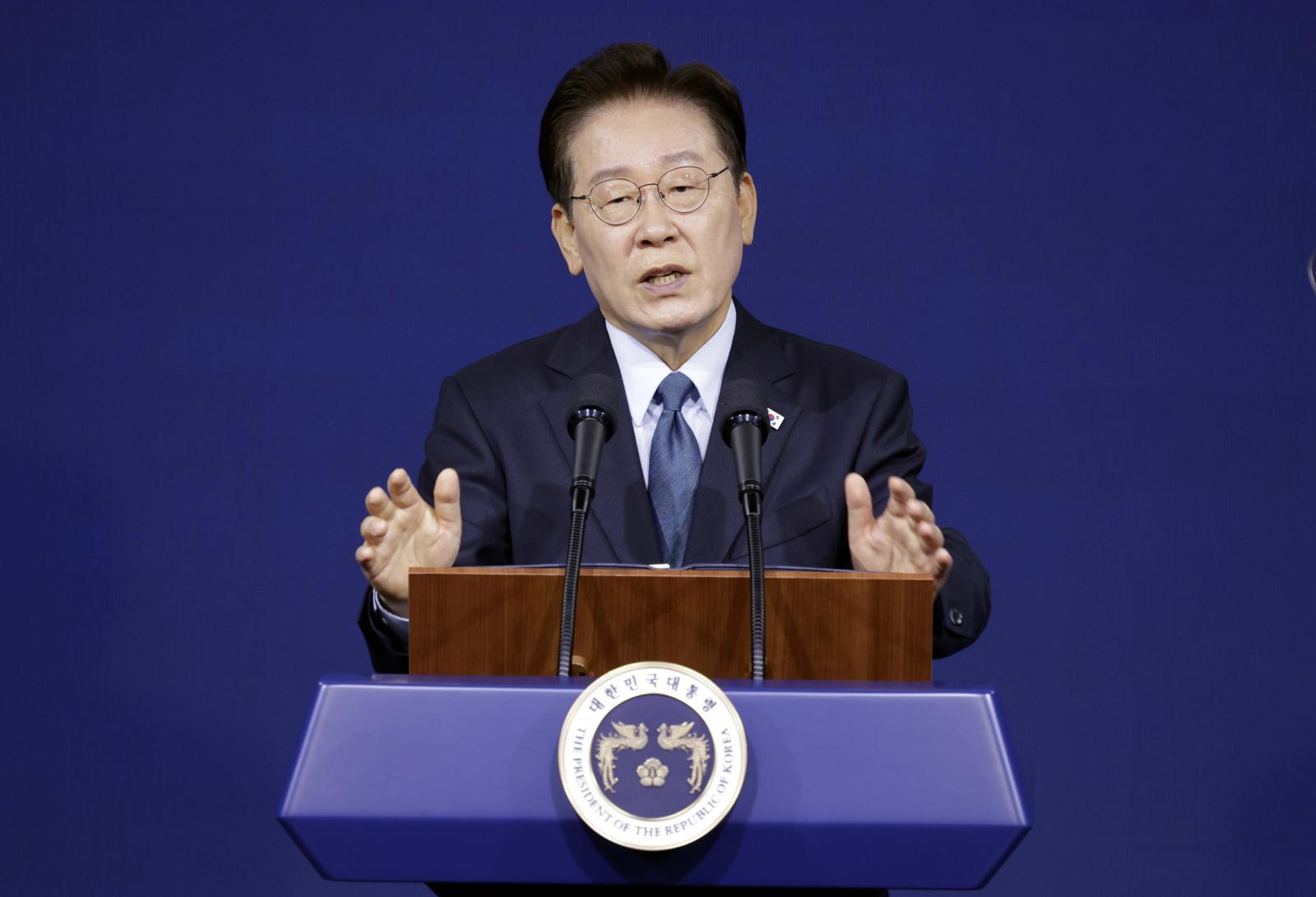
South Korean President Lee Criticizes Pressure Tactics on Companies
Translated from Korean, summarized and contextualized by DistantNews.
At a glance
News
Named sources
Context piece
- South Korean President Lee Jae-myung criticized the idea of pressuring companies to relocate as outdated and ineffective.
- He stated that companies choose locations based on their own strategic considerations, not external pressure.
- Lee made these remarks at a public report session on advanced industrial development in the Chungcheong region.
South Korean President Lee Jae-myung has strongly criticized the notion of pressuring companies to relocate their operations, labeling such tactics as outdated and counterproductive. He asserted that businesses make strategic decisions about their locations based on their own assessments and advantages, not external coercion.
Speaking at a public report session on the development of advanced industries in the Chungcheong region, President Lee emphasized that companies are driven by their own interests and strategic planning. "Where are the companies that move just because there is pressure? Such thinking is outdated," Lee stated, dismissing the effectiveness of such approaches.
His remarks suggest a belief that fostering an environment conducive to business growth, rather than applying pressure, is the key to attracting and retaining industries. This perspective aligns with a focus on regional development and creating competitive advantages for areas like Chungcheong.
The president's comments were made during an event focused on the future of advanced industries in the Chungcheong region, indicating a strategic push to bolster economic development in that area. The emphasis is on creating conditions that naturally draw investment and innovation, rather than relying on forceful measures.
Where are the companies that move just because there is pressure? Such thinking is outdated.
DistantNews Editorial
Originally published by Dong-A Ilbo in Korean. Translated, summarized, and contextualized by our editorial team with added local perspective. Read our editorial standards.
More Stories



From Our Blog

What Gets Lost (and Found) When News Is Translated

The Critical Role of Diaspora Media in Global News

What Travellers Should Know About Countries with Restricted Press

A Digital Nomad's Guide to Following Local News

How the Same Story Looks Different in Different Countries
