


South Korean President questions new law limiting prosecutors' investigative powers
Translated from Korean, summarized and contextualized by DistantNews.
At a glance
News
Named sources
New plan
- South Korean President Lee Jae-myung questioned the implications of a new law that restricts prosecutors' investigative powers.
- The law, set to be promulgated soon, shifts significant investigative authority to the police.
- Lee expressed concern about potential issues arising from the system change and the need for preparedness.
South Korean President Lee Jae-myung has raised questions about the practical implications of an upcoming amendment to the Code of Criminal Procedure, which significantly curtails the investigative authority of prosecutors. The law, poised for promulgation, transfers substantial investigative powers to the police, a move that has generated considerable debate.
This is a complete change to a system that has been in place for decades, so naturally there will be friction, and time, cost, and effort will be needed to adapt and adjust.
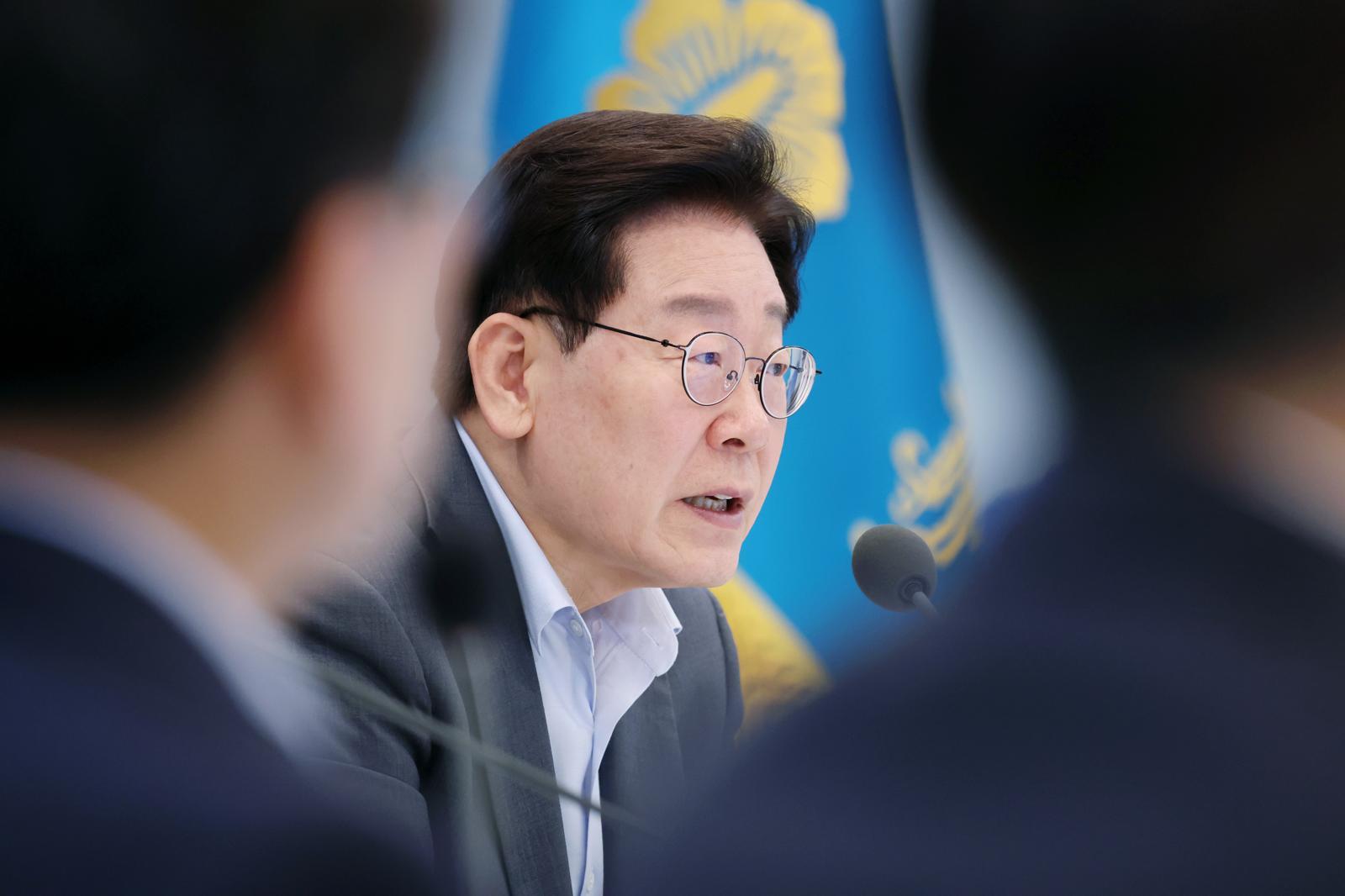
During a briefing on departmental work reports, President Lee instructed his administration to anticipate and prepare for all potential problems stemming from this systemic overhaul. He acknowledged that altering a system in place for decades would inevitably lead to friction and require time, resources, and effort to adapt. "This is a complete change to a system that has been in place for decades, so naturally there will be friction, and time, cost, and effort will be needed to adapt and adjust," Lee stated.
The president specifically pointed to the enhanced role of the police, who will now have the authority to conclude investigations. He noted that previously, even if police wished to overlook certain aspects of a case, it would be transferred to prosecutors, making it difficult to act improperly. Now, however, Lee observed, "it has become very easy to bury a case as long as it doesn't become an internal issue."
it has become very easy to bury a case as long as it doesn't become an internal issue.
Discussions are ongoing regarding the operation of the joint investigation headquarters between prosecutors and police. While some officials suggest a continued collaborative approach, others, including Justice Minister Chung Sung-yun, have voiced concerns about the legal basis for such joint operations and potential issues with evidence admissibility if prosecutors, whose investigative powers are reduced, participate. President Lee suggested a possible model where prosecutors could offer advice and expedite arrest warrant requests within a joint headquarters structure.
The legal basis for operating the joint investigation headquarters is very weak. In my view, it is virtually nonexistent.
DistantNews Editorial
Originally published by Dong-A Ilbo in Korean. Translated, summarized, and contextualized by our editorial team with added local perspective. Read our editorial standards.
More Stories


From Our Blog

What Gets Lost (and Found) When News Is Translated

The Critical Role of Diaspora Media in Global News

What Travellers Should Know About Countries with Restricted Press

A Digital Nomad's Guide to Following Local News

How the Same Story Looks Different in Different Countries
