


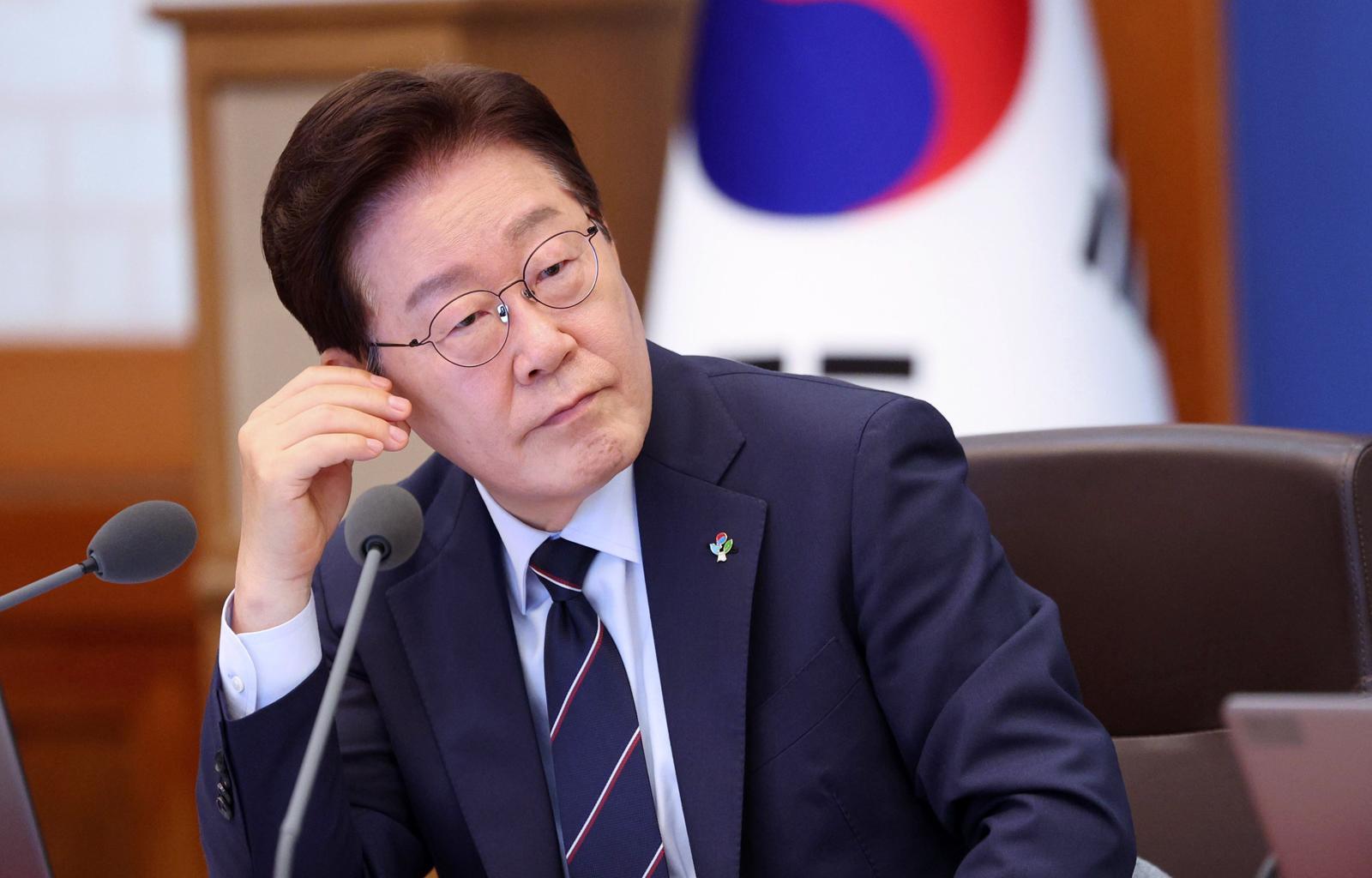
South Korean President's approval rating drops for 5th week; Blue House vows to heed public concerns
Translated from Korean, summarized and contextualized by DistantNews.
At a glance
News
Named sources
Context piece
- South Korean President Lee Jae-myung's approval rating has dropped for five consecutive weeks, with negative evaluations now exceeding positive ones.
- The Blue House acknowledged the decline, attributing it to public sentiment on the economy and overall governance, and vowed to carefully consider public concerns.
- A recent poll indicated a 4.8% drop in positive ratings to 46.7%, while negative ratings rose 5.5% to 49.7%, with factors like election management issues and internal party conflicts cited as contributing to the downturn.
South Korean President Lee Jae-myung's administration is facing a significant dip in public approval, with recent polls showing a five-week decline in his job performance rating. The latest survey reveals that negative evaluations have surpassed positive ones, a concerning trend for the Blue House.
We accept it with gravity and humility. We will more carefully examine what the public is worried about and what they desire.
Officials acknowledged the situation with humility, stating they "accept it with gravity and humility." They pledged to "more carefully examine what the public is worried about and what they desire." The administration views the recent shift in public opinion as a comprehensive reflection of public sentiment regarding the current economic situation and overall governance.
The recent rating changes are seen as a comprehensive reflection of public sentiment on the current economic situation and overall governance.
The drop in approval is attributed to several factors. According to a Realmeter poll conducted from November 15-19 among 2,517 adults, President Lee's positive approval rating fell by 4.8 percentage points to 46.7%, while negative ratings climbed 5.5 percentage points to 49.7%. The poll, with a margin of error of ±2.0 percentage points at a 95% confidence level, also noted 3.6% of respondents were unsure.
Responsibility for election management failures and the ruling party's internal power struggles have acted as negative factors for the overall political situation.
Realmeter pointed to the fallout from perceived mismanagement of election administration and ongoing power struggles within the ruling party as key negative influences. Despite some positive developments, such as the European tour's outcomes and the KOSPI index surpassing 9,000 points, concerns over asset market polarization have also contributed to voter attrition, particularly among centrist and 수도권 (metropolitan area) voters, leading to the continued downward trend.
Despite some positive factors like the European tour's achievements and the KOSPI index exceeding 9,000, concerns about asset market polarization have led to voter departure, especially among centrist and metropolitan voters, continuing the downward trend.
DistantNews Editorial
Originally published by Dong-A Ilbo in Korean. Translated, summarized, and contextualized by our editorial team with added local perspective. Read our editorial standards.
More Stories


From Our Blog

What Gets Lost (and Found) When News Is Translated

The Critical Role of Diaspora Media in Global News

What Travellers Should Know About Countries with Restricted Press

A Digital Nomad's Guide to Following Local News

How the Same Story Looks Different in Different Countries
