


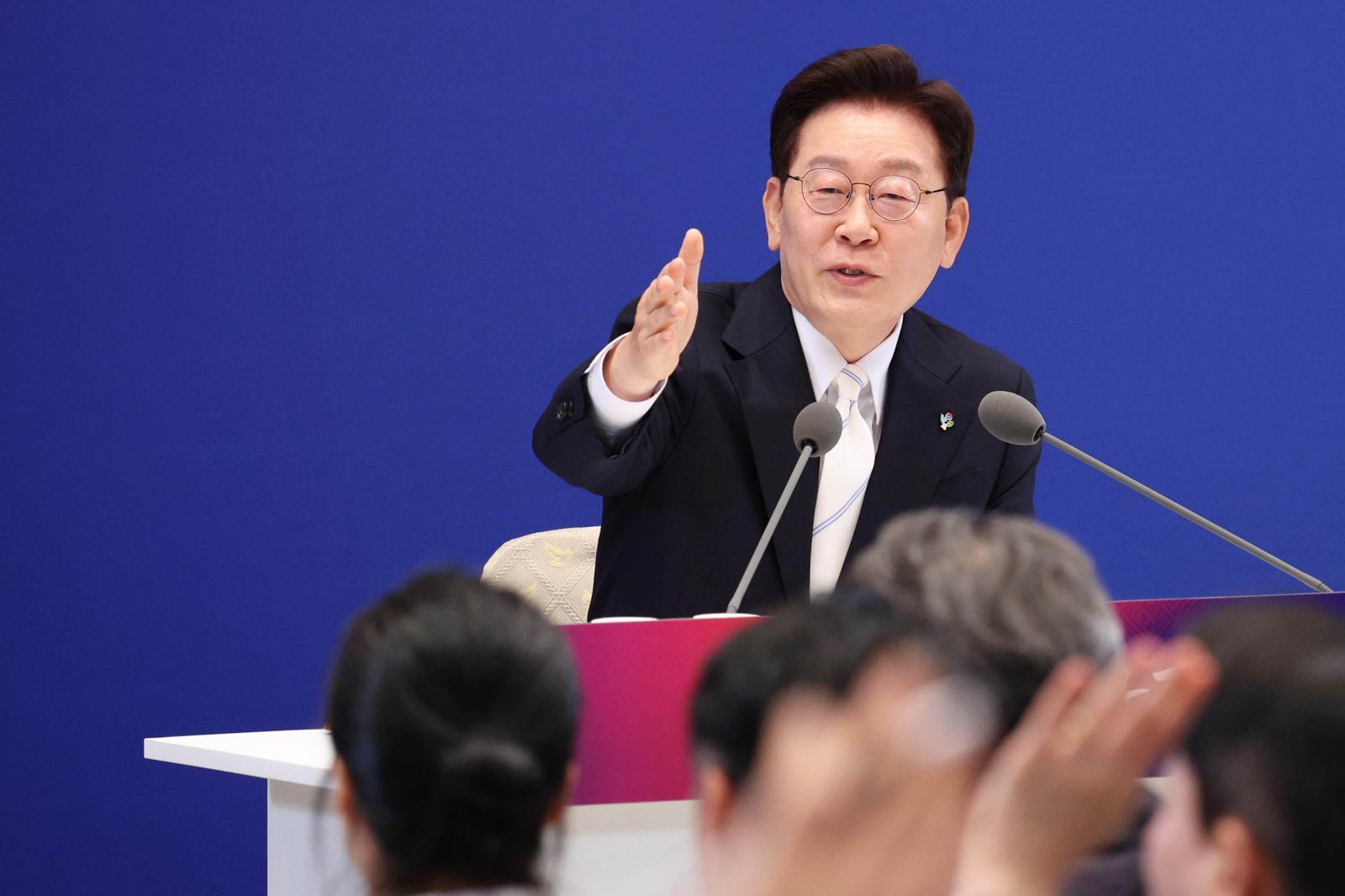
South Korean President Urges Businesses to Invest in Provinces, Vows Policy Favoritism
Translated from Korean, summarized and contextualized by DistantNews.
At a glance
News
Sources not specified
New plan
- South Korean President Lee Jae-myung stated his administration is prioritizing regional development by encouraging businesses to invest in rural areas.
- The government is preparing to legally mandate preferential treatment for regions in fiscal, industrial, and economic policies.
- Lee emphasized that addressing regional disparities is crucial for the nation's survival and highlighted increased financial support and university development for rural areas.
South Korean President Lee Jae-myung is pushing for a significant shift in national development, urging businesses to invest in rural areas and vowing to legally mandate regional favoritism in government policies. "We ask companies, 'If possible, please do it in the provinces,'" Lee said during a press conference marking his first anniversary in office.
If possible, please do it in the provinces.
Lee described tackling regional inequality as "the way for Korea to survive." He outlined a strategy of "giving opportunities to the provinces to the maximum extent possible within our capabilities." This includes increased financial aid, with preferential treatment for local currencies in rural areas compared to Seoul. "In terms of amount, it's quite substantial," he noted, promising further increases.
This is the way for Korea to survive.
The president also detailed plans to bolster provincial universities, aiming to create "10 Seoul National Universities" in the regions and investing heavily in key provincial institutions. This comprehensive approach signals a strong commitment to rebalancing development and opportunity across the country, moving beyond mere encouragement to concrete policy and legal frameworks.
We give opportunities to the provinces to the maximum extent possible within our capabilities.
DistantNews Editorial
Originally published by Dong-A Ilbo in Korean. Translated, summarized, and contextualized by our editorial team with added local perspective. Read our editorial standards.
More Stories


From Our Blog

What Gets Lost (and Found) When News Is Translated

The Critical Role of Diaspora Media in Global News

What Travellers Should Know About Countries with Restricted Press

A Digital Nomad's Guide to Following Local News

How the Same Story Looks Different in Different Countries
