


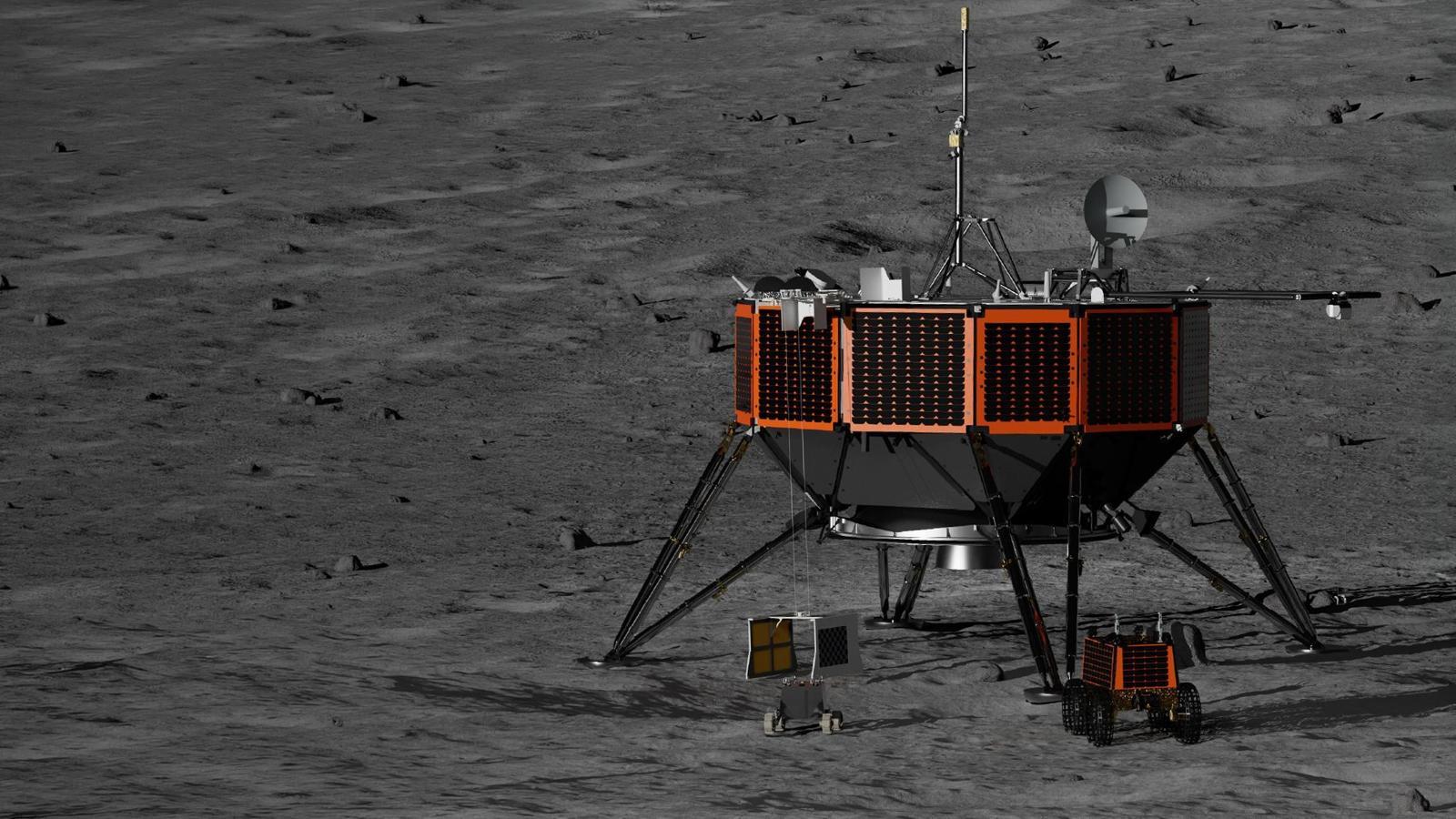
South Korean radiation monitor to land on Moon in 2030
Translated from Korean, summarized and contextualized by DistantNews.
At a glance
News
Official statement
New plan
- South Korea's domestically developed Lunar Surface Radiation Monitor (LVRAD) will be sent to the Moon's south pole in 2030.
- The instrument will be mounted on a private lunar lander operated by Intuitive Machines under a NASA program.
- LVRAD data will help analyze the effects of space radiation on humans, a key risk for long-term lunar missions.
South Korea is set to send its independently developed Lunar Surface Radiation Monitor (LVRAD) to the Moon's south pole in 2030. The instrument will be part of the payload on a private lunar lander built by U.S. company Intuitive Machines, participating in NASA's Commercial Lunar Payload Services (CLPS) initiative.
The agreement to include the LVRAD on the lander was finalized on August 14th, according to the Korea Aerospace Administration (KASA). The flight model of the LVRAD, developed by the Korea Astronomy and Space Science Institute (KASI), is scheduled for completion in 2027 before being shipped to the United States. It will then be integrated into Intuitive Machines' lander for the planned 2030 mission.
LVRAD is designed to precisely measure the intensity of space radiation and the neutron environment on the lunar surface. Lacking an atmosphere, the Moon is directly exposed to high-energy particles from the sun and deep space. Understanding this radiation is crucial, as it can damage human cells and poses a significant risk to the health of astronauts and the safety of lunar exploration missions.
The data collected by LVRAD will be vital for assessing radiation exposure risks for astronauts and enhancing the design and operational safety of both crewed and uncrewed lunar vehicles. KASA administrator Oh Tae-seok stated that the agency aims to "continuously expand international cooperation to advance lunar exploration technology and broaden our contribution to the international community in the field of space science."
We will continuously expand international cooperation to advance lunar exploration technology and broaden our contribution to the international community in the field of space science.
DistantNews Editorial
Originally published by Dong-A Ilbo in Korean. Translated, summarized, and contextualized by our editorial team with added local perspective. Read our editorial standards.
More Stories



From Our Blog

What Gets Lost (and Found) When News Is Translated

The Critical Role of Diaspora Media in Global News

What Travellers Should Know About Countries with Restricted Press

A Digital Nomad's Guide to Following Local News

How the Same Story Looks Different in Different Countries
