

South Korean real estate market favors development over geopolitical fears
Translated from Korean, summarized and contextualized by DistantNews.
At a glance
News
Sources not specified
Context piece
- South Korean real estate investment is driven by market logic rather than geopolitical fears, with buyers focusing on areas with clear development potential.
- Despite economic uncertainty, the market shows selective buying, with areas like Seoul's Nowon and Dobong districts seeing increased transactions due to major redevelopment and transportation improvements.
- Key factors influencing investment include confirmed development projects, infrastructure enhancements, and supply-demand cycles, leading to a more rational and less speculative market.
South Korea's real estate market is demonstrating a new level of maturity, with investors prioritizing concrete development prospects over geopolitical anxieties. During the recent US-Iran tensions, the market did not react with the widespread fear seen during past crises like the COVID-19 pandemic or global financial downturns. Instead, market logic has taken precedence, reflecting a more informed participant base.
This shift is evident in the stable housing price outlook, with the Korea Consumer Sentiment Index hovering around the baseline of 100. Apartment transactions in Seoul and Gyeonggi Province have steadily increased since February. While not reaching the peak levels of the 2020 housing boom, this gradual rise indicates a selective buying trend rather than a speculative frenzy.
Buyers are increasingly discerning, moving away from a blind preference for new apartments. The number of unsold apartments nationwide, while down from its peak, remains above the long-term average. This suggests a market where genuine demand, supported by tangible factors, is driving purchases.
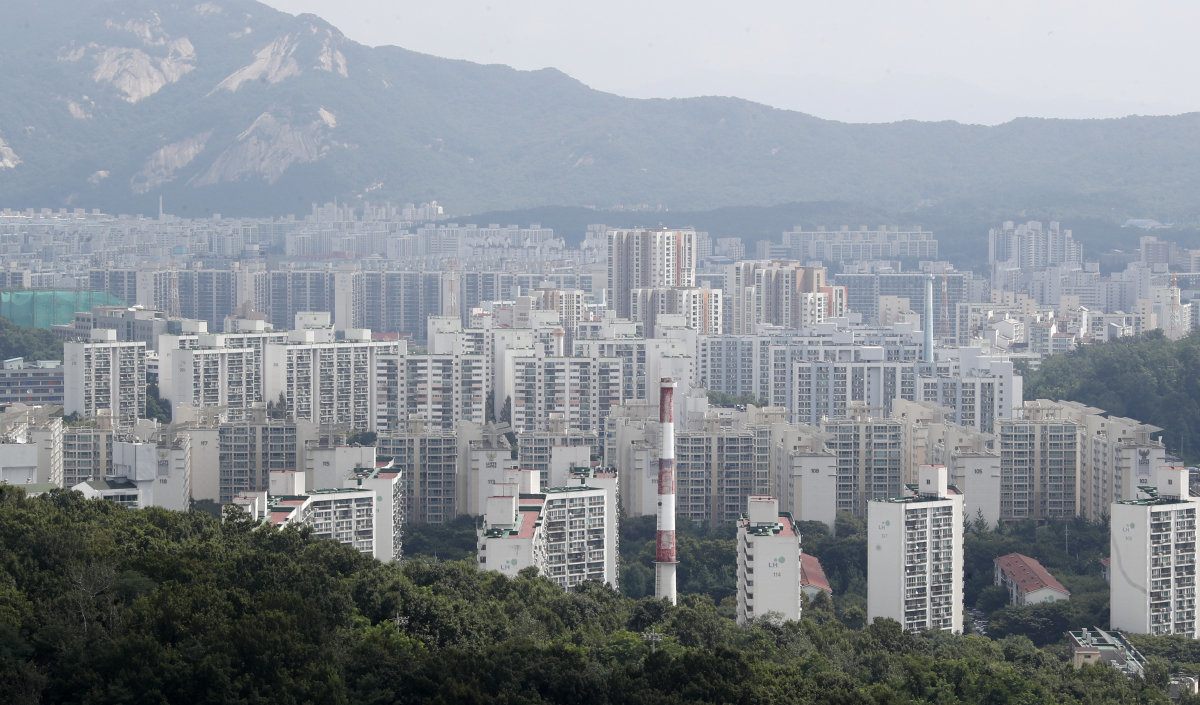
In Seoul, the Nowon and Dobong districts are attracting significant buyer interest. Transactions in these areas surged by 83% and 73% respectively in April compared to the previous year. This activity persists even with predictions of interest rate hikes due to geopolitical events, signaling that buyers perceive value in these locations. The appeal lies in major redevelopment projects, such as the "Mimi Sam" reconstruction in Nowon, and significant infrastructure improvements like the upcoming Seoul Arena at Chang-dong Station in Dobong.
Similarly, in the Gyeonggi Province, areas like Suwon's Paldal-gu and Yongin's Giheung-gu have seen substantial increases in apartment sales. These regions benefit from planned transportation upgrades, including new subway lines and GTX express train extensions, as well as large-scale urban development projects like the Yongin Platform City. This focus on infrastructure and development signals a market that is evolving towards rational investment based on future value rather than short-term speculation.
DistantNews Editorial
Originally published by Dong-A Ilbo in Korean. Translated, summarized, and contextualized by our editorial team with added local perspective. Read our editorial standards.
More Stories


From Our Blog

What Gets Lost (and Found) When News Is Translated

The Critical Role of Diaspora Media in Global News

What Travellers Should Know About Countries with Restricted Press

A Digital Nomad's Guide to Following Local News

How the Same Story Looks Different in Different Countries
