


South Korean Researchers Develop Artificial Vision Tech, Reproducing 78% of Sight in Blind Mice
Translated from Korean, summarized and contextualized by DistantNews.
At a glance
News
Official statement
New plan
- Researchers at the Korea Institute of Science and Technology (KIST) have developed an ultra-thin, transparent neural electrode capable of transmitting light while reading brain signals.
- In experiments with blind mice, the technology reproduced 78% of normal visual responses, demonstrating potential for artificial vision.
- The breakthrough could also advance brain-computer interfaces and restoration of other senses like hearing and touch.
South Korean researchers have achieved a significant breakthrough in artificial vision, developing an ultra-thin, transparent neural electrode that can transmit light while simultaneously reading brain signals. This innovation holds immense promise for restoring sight to those affected by conditions like retinitis pigmentosa, a disease impacting approximately 2 million people globally.
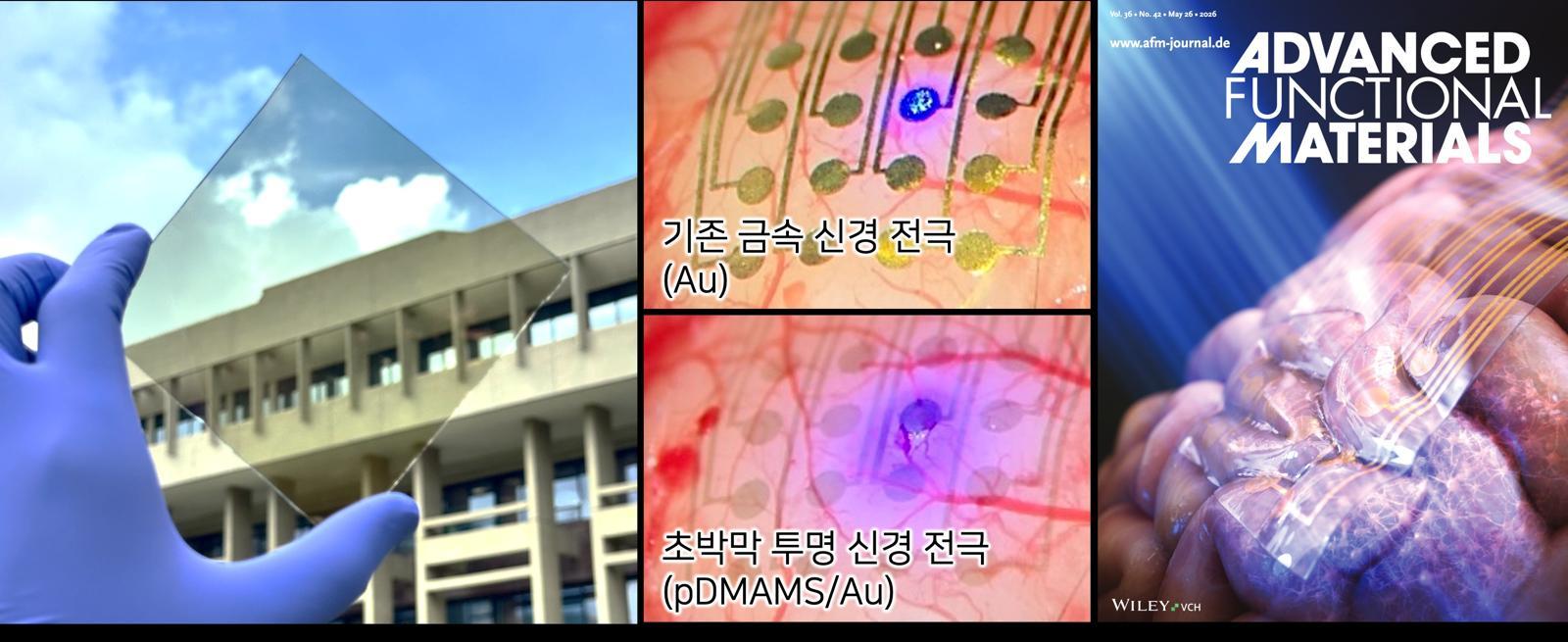
The team at the Korea Institute of Science and Technology (KIST), led by Dr. Hye-jeong Seong and Dr. Mae-soon Lim, focused on stimulating the brain's visual cortex directly. Unlike conventional metal electrodes that block light, or existing transparent electrodes with poor conductivity, KIST's new device overcomes these limitations. They achieved this by coating the electrode surface with a special polymer, allowing the gold film to spread thinly and evenly, reducing its thickness to just 10 nanometers.
With an overall thickness of about 4 micrometers, 15 times thinner than a human hair, the electrode is remarkably thin and flexible, allowing it to adhere closely to the brain's surface. It transmits over 65% of light while maintaining excellent electrical signal measurement capabilities and reducing electrical noise from light stimulation by up to 74%. The electrode also proved durable, maintaining its performance through 20,000 bending cycles.
In trials with blind mice, the electrode was placed on the brain's surface and stimulated with blue light using optogenetics. The results were striking: the technology generated artificial visual neural signals that were 78% consistent with the brain signals of normally sighted mice. KIST highlighted this as proof of concept for inducing vision-like responses by stimulating the brain's visual center with light.
Beyond artificial vision, this technology opens doors for restoring hearing and touch, and could serve as a crucial component for brain-computer interfaces (BCIs) that read and control brain signals. The research, supported by government grants, was recently featured on the cover of the journal Advanced Functional Materials.
This is a breakthrough that proves we can induce vision-like responses by stimulating the brain's visual center with light.
DistantNews Editorial
Originally published by Dong-A Ilbo in Korean. Translated, summarized, and contextualized by our editorial team with added local perspective. Read our editorial standards.
More Stories



From Our Blog

What Gets Lost (and Found) When News Is Translated

The Critical Role of Diaspora Media in Global News

What Travellers Should Know About Countries with Restricted Press

A Digital Nomad's Guide to Following Local News

How the Same Story Looks Different in Different Countries
