


South Korean Ruling Party Aims to Pass Key Economic Bills, Reform Spending by Year-End
Translated from Korean, summarized and contextualized by DistantNews.
At a glance
News
Sources not specified
New plan
- South Korea's ruling party and government plan to pass key legislation, including the Mega Special Zone Act, by year-end.
- They aim to reform mandatory spending, such as education grants, to boost economic growth.
- The strategy focuses on stabilizing prices, driving major projects, and addressing economic polarization.
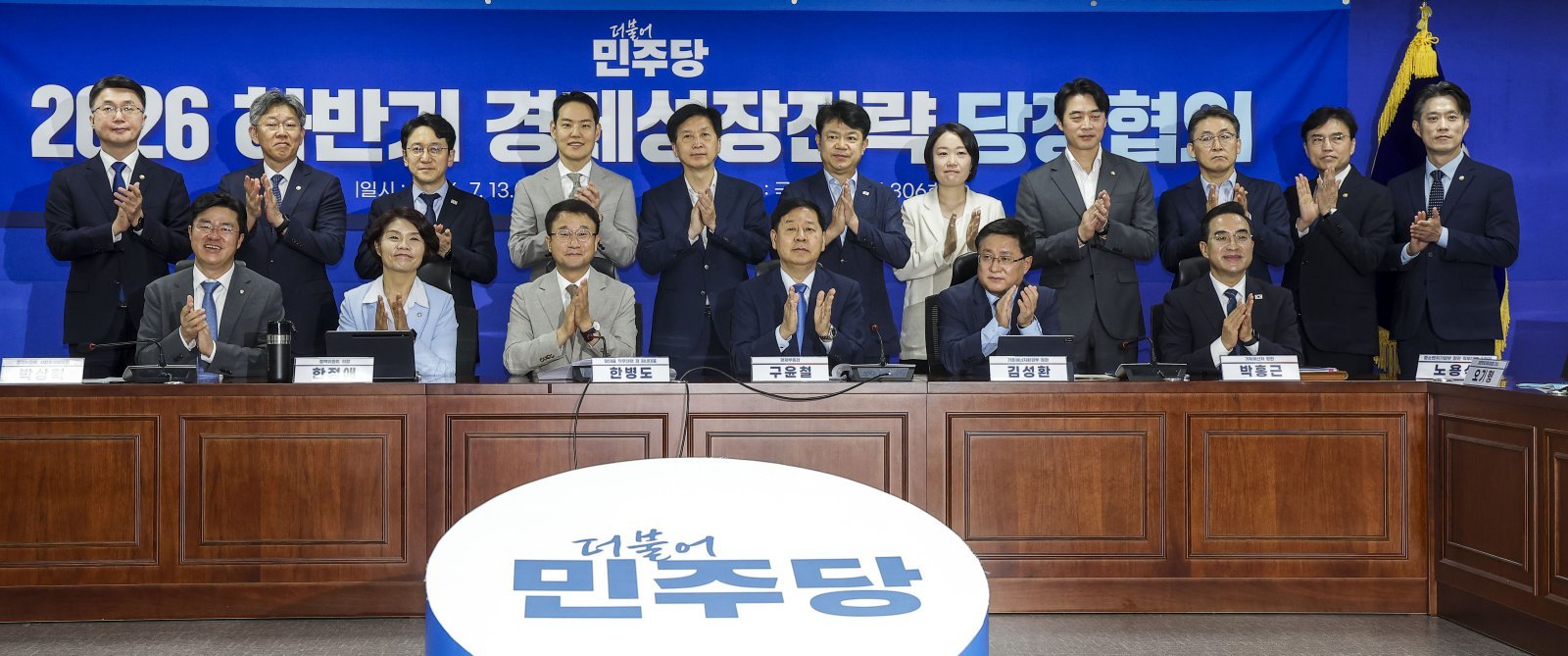
South Korea's ruling party and government have pledged to pass significant legislation by the end of the year, including the Mega Special Zone Act and the Strategic Export Financing Support Act. This initiative is part of a broader strategy to reform mandatory expenditures, such as education grants, and stimulate economic growth in the latter half of 2026.
Han Byung-do, interim leader and floor leader of the Democratic Party, emphasized that the second half of the year is a 'golden time' that will shape the nation's economic future for the next century. He acknowledged that despite positive economic indicators, many citizens do not feel the benefits directly, citing price instability, high exchange rates, and deepening polarization in various sectors as challenges.
The second half of this year is a golden time that will determine the future 100 years of the Korean economy.
The government's economic strategy for the second half of the year prioritizes stabilizing consumer prices to alleviate public burden. Key objectives include accelerating the realization of three major 'mega projects,' fostering new growth engines, promoting regional development led by local initiatives, and implementing structural reforms to combat economic polarization. The party aims to make 2026 a year of economic leap forward towards becoming an indispensable nation.
We must quickly stabilize grocery prices to reduce the burden on the public.
Discussions also touched upon the need for policy adjustments in response to unpredictable global geopolitical and economic shifts. The government plans to strengthen support for the three mega projects, semiconductors, AI data centers, and physical AI, through institutional improvements and favorable investment conditions. Furthermore, efforts will be made to overcome K-shaped polarization by supporting youth, small and medium-sized enterprises, and vulnerable groups.
Finance Minister and Deputy Prime Minister Gu Yoon-cheol outlined a plan focusing on three major areas: economic strategy post-Middle East conflict, boosting potential growth rates, and addressing structural issues like polarization. This includes establishing a comprehensive response system for market stability, expanding housing supply, and securing energy self-sufficiency through strategic economic cooperation. The reform of mandatory spending, previously considered a protected area, will also be pursued, including adjustments to education grants to reflect changing environments and enhance investment stability.
We will also begin to seriously pursue innovation in mandatory expenditures, such as reforming education grants to reflect changes in the environment and enhance investment stability.
DistantNews Editorial
Originally published by Dong-A Ilbo in Korean. Translated, summarized, and contextualized by our editorial team with added local perspective. Read our editorial standards.
More Stories


From Our Blog

What Gets Lost (and Found) When News Is Translated

The Critical Role of Diaspora Media in Global News

What Travellers Should Know About Countries with Restricted Press

A Digital Nomad's Guide to Following Local News

How the Same Story Looks Different in Different Countries
