


South Korean Youth Face 'Red Flag' for Poor Dietary Habits
Translated from Korean, summarized and contextualized by DistantNews.
At a glance
News
Documents & data
New plan
- A survey in South Korea reveals that younger adults (20s and 30s) have significantly poorer dietary habits compared to older generations.
- This age group frequently skips breakfast and consumes insufficient amounts of fruits, whole grains, and milk.
- The findings highlight an urgent need for dietary improvements among young Koreans.
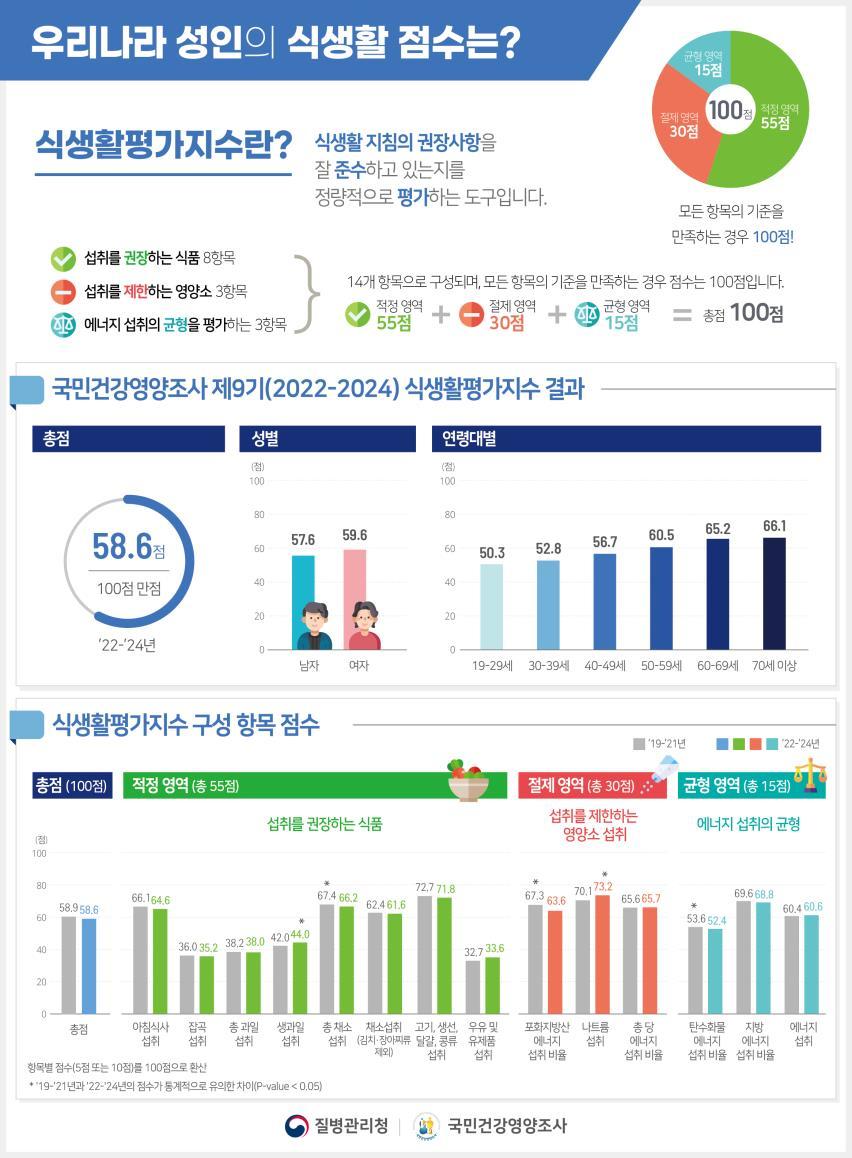
A recent survey on dietary habits in South Korea has revealed a concerning trend: the younger the age group, the more unbalanced their diet becomes. Adults in their 20s and 30s recorded the lowest scores in a dietary assessment index, falling into the 50-point range, while those aged 60 and above scored above 65 points.
The study, based on raw data from the 9th National Health and Nutrition Survey (2022-2024) and published by the Korea Disease Control and Prevention Agency (KDCA), indicates that young adults frequently skip breakfast. Furthermore, their intake of essential food groups like fruits, whole grains, and milk is notably low. These habits underscore a critical need for dietary intervention and education among the youth.
The dietary assessment index evaluates adherence to national dietary guidelines across 14 items. These include the recommended intake of breakfast, whole grains, fruits, vegetables, and milk (in the "appropriate intake" domain), as well as the restricted intake of sodium, saturated fatty acids, and sugars (in the "moderation" domain). The "balance" domain assesses the intake of carbohydrates, fats, and energy.
While the survey did not provide a full breakdown of scores for all age groups beyond the comparison between the youngest and oldest, the data clearly points to a widening nutritional gap. The findings suggest that lifestyle changes and potentially reduced consumption of processed foods may be contributing factors to these less-than-ideal eating patterns among younger South Koreans. The KDCA's publication of these results aims to raise public awareness and encourage healthier eating practices.
DistantNews Editorial
Originally published by Dong-A Ilbo in Korean. Translated, summarized, and contextualized by our editorial team with added local perspective. Read our editorial standards.
More Stories



From Our Blog

What Gets Lost (and Found) When News Is Translated

The Critical Role of Diaspora Media in Global News

What Travellers Should Know About Countries with Restricted Press

A Digital Nomad's Guide to Following Local News

How the Same Story Looks Different in Different Countries
