

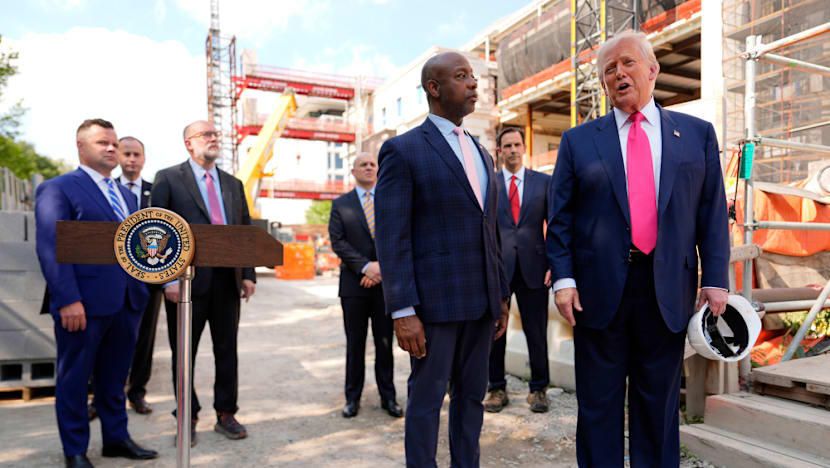

South Koreans vote in local elections seen as gauge of President Lee's first year
Summarized and contextualized by DistantNews.
At a glance
News
Sources not specified
Ongoing story
- South Koreans are voting in local elections that serve as a referendum on President Lee Jae Myung's first year in office.
- The elections for mayors and governors in 16 cities and provinces are seen as a test for the ruling Democratic Party's dominance.
- While polls suggest strong performance for Lee's party, analysts anticipate minimal policy shifts regardless of the outcome.
South Koreans are heading to the polls on Wednesday for local elections, widely viewed as a crucial assessment of President Lee Jae Myung's first year in power. The elections will determine mayors and governors across 16 cities and provinces, marking the first nationwide ballot since Lee's presidential victory last year.
The contest is also a significant test for the conservative People Power Party, gauging its ability to recover from the repercussions of former President Yoon Suk Yeol's failed martial law bid in 2024. Analysts suggest the focus is not just on whether the Democratic Party wins, but by how much. A victory in key regions like Seoul and Busan would be considered a landslide, though failure to secure these could make claiming a sweeping win more difficult.
President Lee has garnered high approval ratings for his pragmatic approach to economic issues, corporate governance reforms, and a stock market rally. Government measures to offset high energy prices have also been noted. However, critics point to challenges in managing housing costs and accusations of using legislative and judicial powers to protect allies from legal scrutiny.
A strong showing for the Democratic Party would solidify Lee's mandate for his pro-market, fiscal policies and his conciliatory stance toward North Korea. Nevertheless, analysts like Jeremy Chan from Eurasia Group anticipate minimal policy changes, with Lee likely to prioritize economic management and market-friendly reforms while avoiding actions that could unsettle investors. The elections also include fourteen parliamentary by-elections, which could reshape the political landscape and influence future presidential races.
The question is not whether the Democratic Party wins many places, but how much it wins by.
DistantNews Editorial
Originally published by The Straits Times. Summarized and contextualized by our editorial team with added local perspective. Read our editorial standards.
More Stories

From Our Blog

What Gets Lost (and Found) When News Is Translated

The Critical Role of Diaspora Media in Global News

What Travellers Should Know About Countries with Restricted Press

A Digital Nomad's Guide to Following Local News

How the Same Story Looks Different in Different Countries
