


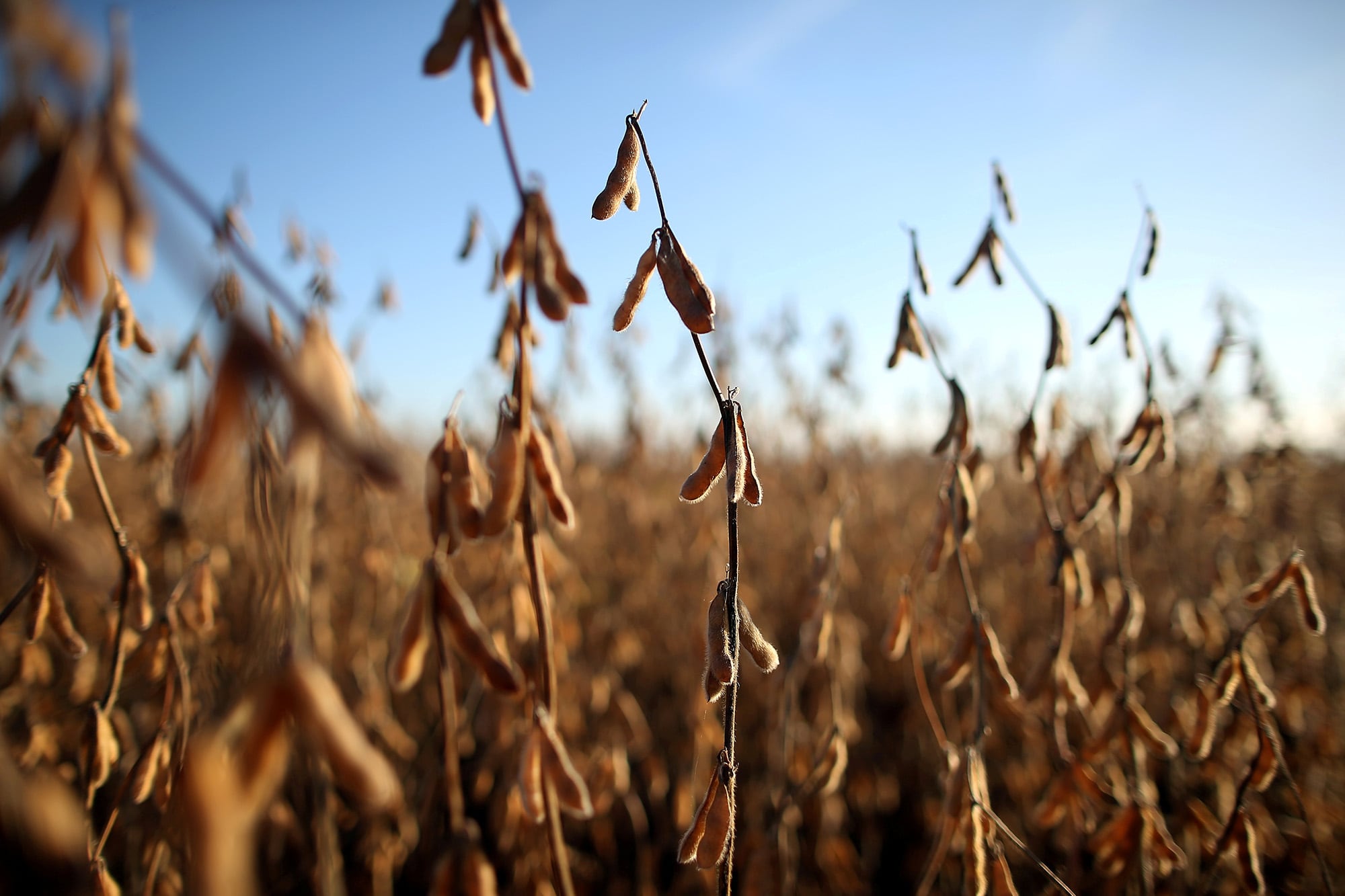
Soybean Prices Hit Four-Month Low, Corn at Eight-Month Minimum Amidst Market Pressures
Translated from Spanish, summarized and contextualized by DistantNews.
At a glance
News
Named sources
Context piece
- Soybean prices on the Chicago Board of Trade hit their lowest point since February, while corn prices reached an eight-month low.
- Factors contributing to the decline include favorable weather in the U.S., abundant grain supply, and weak demand, particularly from China.
- The U.S. Department of Agriculture's monthly report offered no significant surprises, largely confirming market expectations.
Soybean prices on the Chicago Board of Trade have plummeted, reaching their lowest value since February 5. Corn prices also experienced a downturn, hitting an eight-month low. The July soybean contract fell by $2.94 per ton to $409.69, while the corn contract decreased by $2.85 per ton, closing at $162.10.
This price drop is attributed to a combination of factors that have been influencing the market for weeks. These include improving weather prospects for the new U.S. harvest, an increasingly abundant global grain supply, and persistently weak demand, especially due to a lack of significant soybean purchases from China.
The decline has accelerated in recent weeks. In early May, the July soybean contract was trading near $437 per ton, and by early June, it hovered around $434. By Thursday, it had fallen below $410, marking a drop of approximately $27 per ton in just over a month.
The projections were very much in line with what the market expected. There were some minor bearish surprises, but overall it was a neutral report.
The U.S. Department of Agriculture's monthly supply and demand report, a key event for traders, did not introduce major surprises. It generally confirmed the market's existing expectations. The report maintained its soybean harvest estimate for Brazil at 180 million tons and raised its production projection for Argentina's current campaign from 48 to 50 million tons. Analysts described the report as largely neutral, with minor bearish surprises that were already anticipated by the market.
Adding to the downward pressure, investment funds that had accumulated significant long positions in soybeans, corn, and wheat have recently begun to exit these positions and take profits. This movement has further pressured prices. Additionally, weekly U.S. soybean export data showed a 32% decrease, with committed shipments of 352,800 tons for the current and next seasons.
The market was already trading lower before the official data was released. The day already showed a negative bias, and that continued after the report.
DistantNews Editorial
Originally published by La Nación in Spanish. Translated, summarized, and contextualized by our editorial team with added local perspective. Read our editorial standards.
More Stories



From Our Blog

What Gets Lost (and Found) When News Is Translated

The Critical Role of Diaspora Media in Global News

What Travellers Should Know About Countries with Restricted Press

A Digital Nomad's Guide to Following Local News

How the Same Story Looks Different in Different Countries
