


Space: Munich rocket reaches Earth orbit
Translated from German and summarized by DistantNews. Read the original for the full story.
At a glance
News
Named sources
Outcome reported
- Isar Aerospace’s 28-meter Spectrum rocket reached Earth orbit about seven minutes after launching from Andøya, Norway.
- The achievement made Spectrum the first German rocket to reach orbit after an earlier test flight ended because of a valve failure.
- The rocket carried five small satellites and a scientific experiment, while the company said its next flight could be commercial.
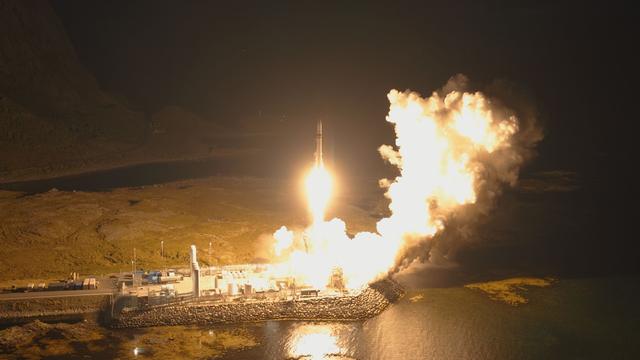
Isar Aerospace has achieved a first for German spaceflight: its 28-meter Spectrum rocket reached Earth orbit on its second test flight.
The rocket lifted off from the company’s launch site in Andøya, Norway, shortly after 10:12 p.m. German time on Saturday. Nine engines in the first stage burned a mixture of 40 tonnes of liquid oxygen and propane as Spectrum climbed into the night sky.
Unlike the first flight, which ended after about 30 seconds because of a valve problem, the rocket continued its ascent. The upper stage separated successfully with its payload, and Spectrum reached orbit roughly seven minutes after launch. Reaching orbit provides the foundation for commercial flights around Earth.
The test mission carried five small satellites and a scientific experiment from universities and companies. The rocket can carry a total payload of one tonne. The customers won the opportunity to fly through a competition organized by the German Aerospace Center, which supported the mission together with the European Space Agency. Isar Aerospace founder Daniel Metzler said the customers understood the risks.
The launch followed several delays. A defective valve prevented a January attempt, a fishing boat in the exclusion zone halted the March attempt, a leak in a pressure vessel caused another delay in April, and a leaking helium tank forced the team to postpone a launch in June. Metzler had nevertheless said he believed the second flight could go relatively far. The company has said the next flight could be purely commercial.
Do we need two, three, four, five attempts? We will find out.
About this summary
Originally published by Süddeutsche Zeitung in German. Translated, summarized, and contextualized automatically by DistantNews, with a note on how the source frames the story. Not individually reviewed before publishing. How this works.
More Stories


From Our Blog

News in Translation: What Gets Lost, and How We Keep the Framing

The Same Story, Different Countries: How Coverage Changes at the Border

Diaspora Media: How Communities Follow News From Home

Traveling Where the Press Is Not Free: How to Read the News There

The Digital Nomad's Guide to Local News
