


SpaceX Rocket Stage to Crash Into Moon Today, South Korea's Danuri to Observe
Translated from Korean, summarized and contextualized by DistantNews.
At a glance
News
Sources not specified
New plan
- A SpaceX Falcon 9 rocket upper stage is expected to crash into the Moon on April 5.
- The impact is predicted to create a crater about 20-30 meters wide.
- South Korea's Danuri lunar orbiter will observe the impact site before and after the collision.
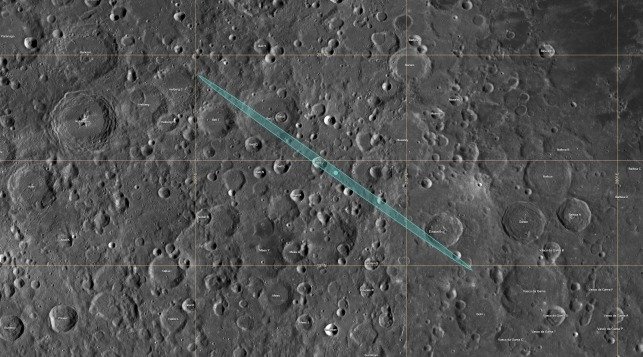
An upper stage of a SpaceX Falcon 9 rocket, drifting in space, is set to collide with the lunar surface on April 5. South Korea's first lunar orbiter, Danuri, will be positioned to observe any changes to the Moon's surface caused by the impact.
The rocket stage, weighing approximately 4.9 tons, is anticipated to hit the Moon near the Einstein crater at around 3:34 PM Korean Standard Time. It will strike the surface at a speed of approximately 2.43 kilometers per second, or about 8,750 kilometers per hour.
Scientists estimate the collision will release energy equivalent to about 3 tons of TNT, likely forming a crater 20 to 30 meters in diameter. Lunar dust and rock fragments are expected to be ejected several kilometers high.
This rocket stage was part of a launch carrying the Blue Ghost lunar lander for Firefly Aerospace, a US space company. After completing its mission, the stage lacked sufficient remaining propellant to perform an escape maneuver from orbit. It entered an unstable orbit influenced by the gravitational pull of the Earth and Moon, eventually setting it on a collision course with the lunar surface. Unlike Earth, the Moon lacks a substantial atmosphere, meaning the rocket debris will not burn up upon entry.
DistantNews Editorial
Originally published by Dong-A Ilbo in Korean. Translated, summarized, and contextualized by our editorial team with added local perspective. Read our editorial standards.
More Stories


From Our Blog

What Gets Lost (and Found) When News Is Translated

The Critical Role of Diaspora Media in Global News

What Travellers Should Know About Countries with Restricted Press

A Digital Nomad's Guide to Following Local News

How the Same Story Looks Different in Different Countries
