

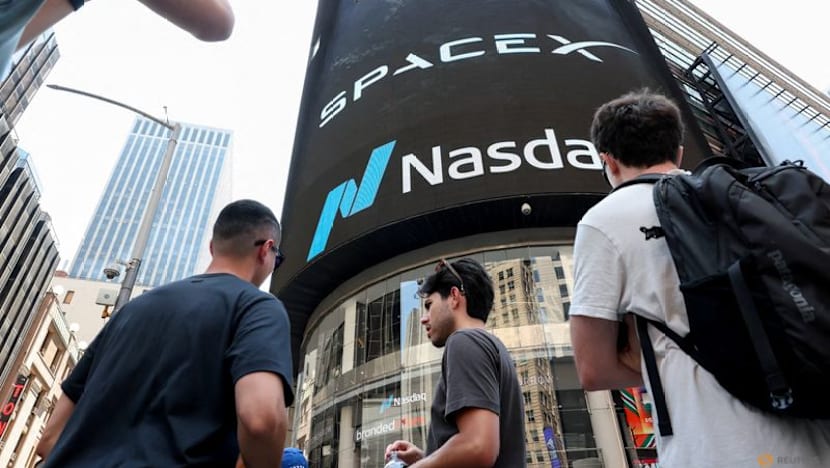
SpaceX's mobile ambitions jolt US telecom market, analysts debate threat
Summarized and contextualized by DistantNews.
At a glance
News
Sources not specified
Context piece
- SpaceX's Starlink division is planning to launch a full mobile service, potentially competing with major U.S. wireless carriers.
- The company acquired significant wireless spectrum licenses from EchoStar and intends to build terrestrial infrastructure.
- Analysts express skepticism about SpaceX's ability to compete directly with established carriers in the short term, citing the immense investment required.
SpaceX's Starlink division is signaling a significant disruption in the U.S. telecom market with its ambition to establish a comprehensive mobile service. The company's plans, outlined recently, could position Starlink as a direct competitor to industry giants like Verizon, AT&T, and T-Mobile.
To facilitate this expansion, SpaceX acquired 65 megahertz of wireless spectrum licenses from EchoStar through two deals totaling $19.6 billion last year. This acquisition provides Starlink with the necessary airwaves to develop its mobile offerings. SpaceX President Gwynne Shotwell confirmed the intention to "build out terrestrial" components, stating the company will develop the infrastructure to make Starlink a "true mobile service." She anticipates attracting a substantial customer base from the existing major carriers.
The spectrum that we purchased from EchoStar does have terrestrial components, so we definitely intend to build out terrestrial.
These remarks represent SpaceX's clearest indication to date that it aims to integrate its satellite network with ground-based infrastructure, moving beyond its current direct-to-device service for areas lacking cellular coverage. The announcement sent ripples through the market, with shares of Verizon, AT&T, and T-Mobile experiencing declines of 2.2% to 4% in after-hours trading. Starlink's connectivity operations are crucial for SpaceX, funding Elon Musk's ventures in AI, data centers, and advanced rocketry.
Unless Starlink can secure an MVNO (Mobile Virtual Network Operator) agreement from one of the carriers, which would provide a baseline of coverage, it's extraordinarily challenging to imagine a direct-to-consumer service from Starlink that could be competitive with carrier services in the next five years.
However, analysts urge caution, noting that building a nationwide wireless business will demand years of substantial investment and flawless execution. The established U.S. wireless carriers have invested hundreds of billions over three decades in spectrum, network development, and subscriber acquisition. Analysts like Craig Moffett of MoffettNathanson believe that without an MVNO agreement, a direct-to-consumer service from Starlink competing with carriers within five years is "extraordinarily challenging."
Despite these hurdles, some investors see significant potential. David Wagner of Aptus Capital Advisors agrees with Elon Musk's assessment that the market might be undervaluing Starlink's mobile ambitions. While the path forward is complex, SpaceX's strategic move into terrestrial mobile services signals a potential paradigm shift in the U.S. wireless landscape.
I definitely think what Elon said on the call about investors undervaluing that side of the business is absolutely correct in my mind.
DistantNews Editorial
Originally published by CNA. Summarized and contextualized by our editorial team with added local perspective. Read our editorial standards.
More Stories


From Our Blog

What Gets Lost (and Found) When News Is Translated

The Critical Role of Diaspora Media in Global News

What Travellers Should Know About Countries with Restricted Press

A Digital Nomad's Guide to Following Local News

How the Same Story Looks Different in Different Countries
