


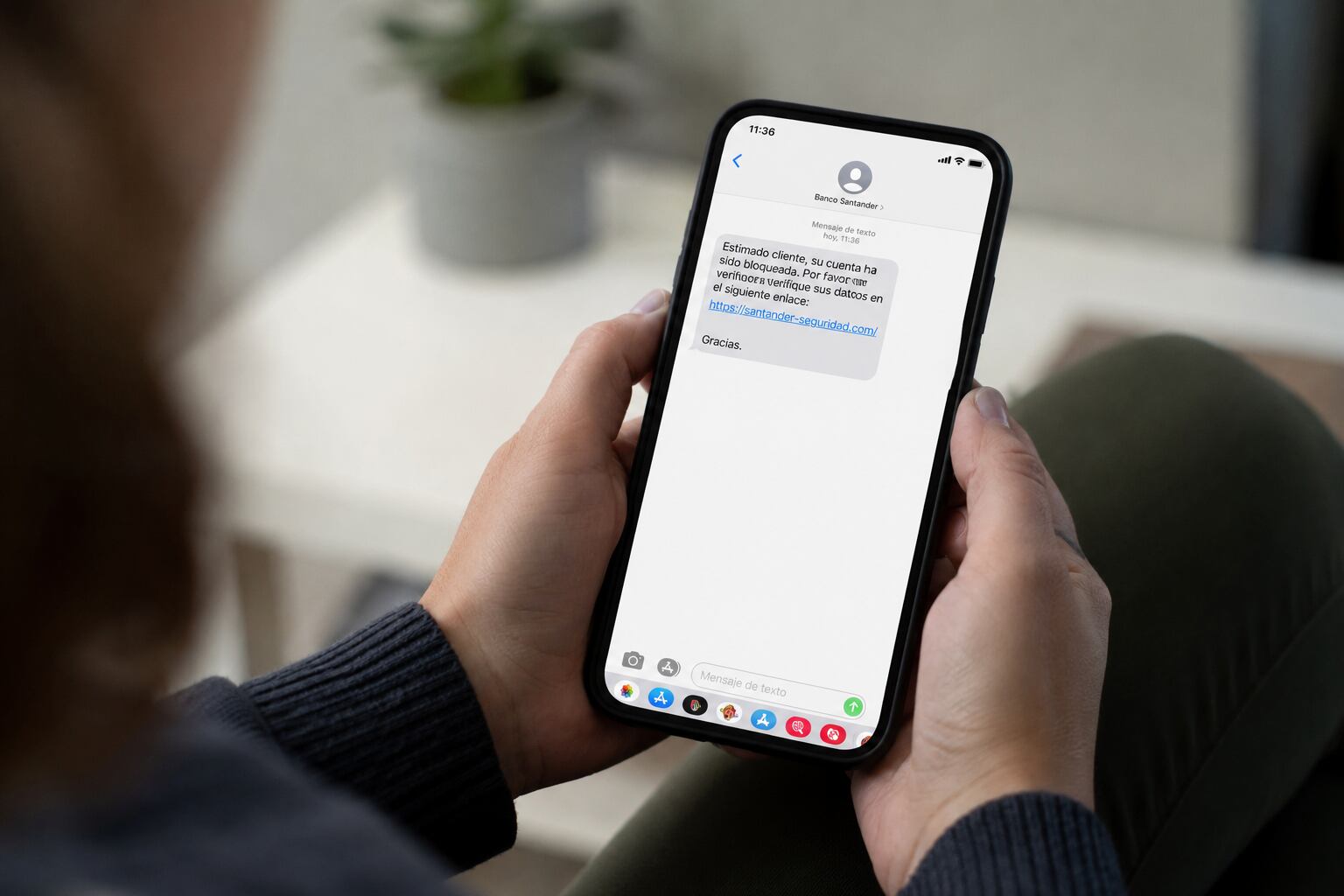
Spain postpones ban on fraudulent SMS messages to September 2026
Translated from Spanish, summarized and contextualized by DistantNews.
At a glance
News
Official statement
New plan
- Spain has postponed the implementation of blocking fraudulent SMS messages until September 15, 2026.
- The measure, originally set to begin June 7, 2024, requires blocking SMS using unregistered sender aliases.
- The delay is due to technical and infrastructure limitations among telecommunications operators.
Spain's government has officially delayed the implementation of a measure designed to combat fraudulent SMS messages until September 15, 2026. The new deadline, published in the Official State Gazette (BOE), pushes back the requirement for telecommunications operators to block SMS messages that use unregistered sender aliases to prevent scams.
The original deadline of June 7, 2024, was established in February 2025. However, the Ministry for Digital Transformation and Public Function cited a lack of technical capacity and infrastructure among operators as the reason for the postponement. A recent mass registration process for sender aliases overwhelmed the validation platforms of telecom companies.
The National Commission on Markets and Competition (CNMC) confirmed that the registry for sender aliases was established on March 28, 2026. During the subsequent registration period, approximately 70,000 applications for commercial aliases were submitted by private corporations and public administrations. These "aliases" are text-based sender names, like "MyBank" or "YourStore," which appear instead of a conventional phone number.
Several messaging providers formally notified the CNMC about the complexity of processing and verifying this volume of identities, stating it exceeds their current technical means. The process requires extensive customer data collection and adaptation of thousands of aliases to new format standards defined by the CNMC, which differ from previous industry standards. The Ministry's decision to extend the deadline aims to prevent operational disruptions that could lead to the incorrect blocking of legitimate aliases used by businesses and institutions, thereby avoiding interruptions in short messaging traffic.
DistantNews Editorial
Originally published by El País in Spanish. Translated, summarized, and contextualized by our editorial team with added local perspective. Read our editorial standards.
More Stories


From Our Blog

What Gets Lost (and Found) When News Is Translated

The Critical Role of Diaspora Media in Global News

What Travellers Should Know About Countries with Restricted Press

A Digital Nomad's Guide to Following Local News

How the Same Story Looks Different in Different Countries
